Why Does a Parked Car Condense Water Inside?
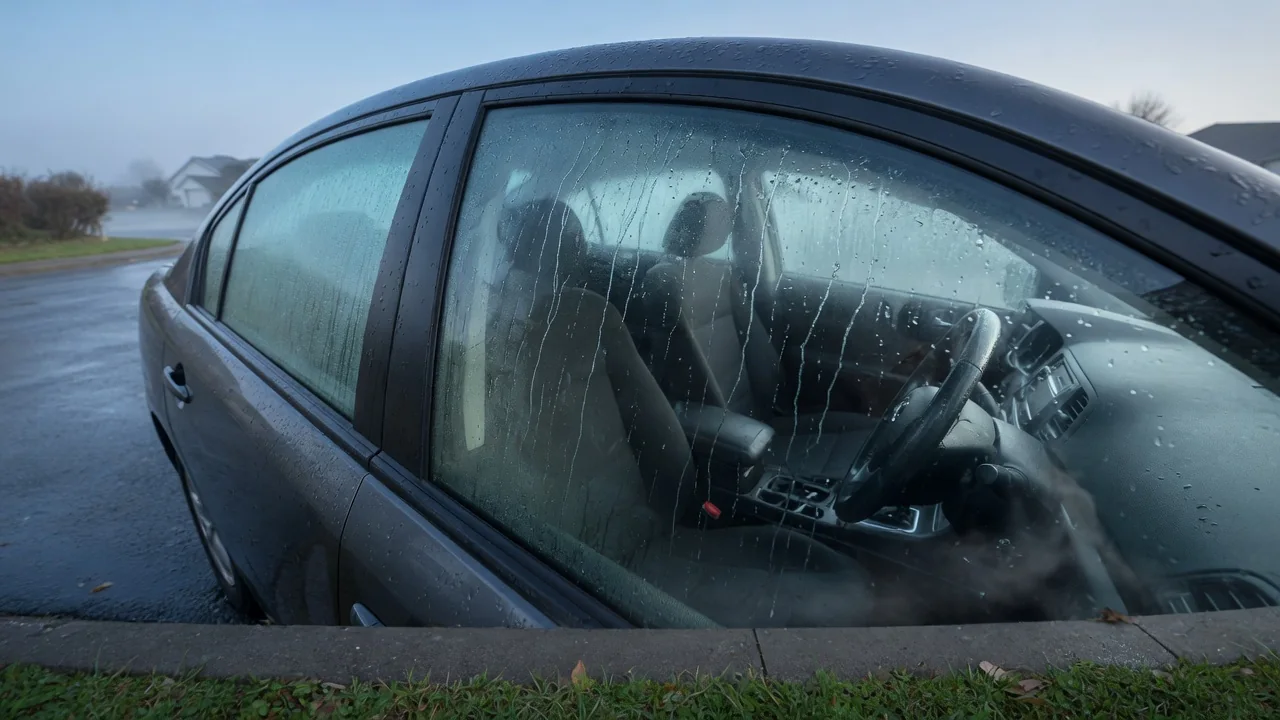
Waking up to fogged windows or beads of water on the inside of the glass is common, especially in cool, damp weather. The short answer to why a parked car condenses water inside is that humid air trapped in the cabin meets surfaces colder than its dew point. Car interior condensation while parked is usually harmless and temporary. When it is heavy, persistent, or paired with wet carpet, it can point to water getting in from outside.
Moist Air Inside a Closed Cabin
Air always carries some water vapor, and how much it can hold depends on its temperature. Warm air can hold more vapor than cool air. When air cools, its relative humidity rises, and once it reaches the dew point, the excess vapor turns back into liquid water. A parked car is a small, mostly closed space, so whatever moisture is inside when you lock the doors stays there through the night as the temperature falls.
Much of that moisture comes from the occupants. Every breath adds water vapor, and a car full of people on a rainy day adds a lot. Wet jackets, umbrellas, damp gym bags, and snow or rain carried in on shoes all release vapor as they dry. Floor mats are a major reservoir: water soaked into a mat or the carpet beneath it keeps evaporating for hours after you park, steadily replenishing the humidity in the cabin. Running the climate system on recirculation also tends to keep humid air inside rather than replacing it with drier outside air.
Vehicle cabins are not airtight. Most have pressure-relief vents that let air escape and outside air enter, but with the engine off and the blower stopped, that exchange is slow. If the outside air is humid too, as it is during fog, rain, or a damp autumn night, there is little drier air available to dilute what is inside.
Cold Surfaces Where Water Collects
Moist air alone does not produce visible water; it needs a surface colder than its dew point. Glass is the usual candidate. Windows are thin, conduct heat readily, and have no insulation behind them. On a clear night, the windshield, rear window, and other glass radiate heat toward the open sky and can cool below the surrounding air temperature. Their inside faces follow, and when they drop below the dew point of the cabin air, vapor condenses as fog or droplets. If the glass falls below freezing, the same moisture can form frost on the inside of the windows.
This explains a familiar pattern. You drive home in the rain with the heater running, which warms the cabin and lets the air hold even more moisture from wet clothes and mats. After you park, the heat leaks away, the glass cools fastest, and by morning the windows are fogged or streaked with water. The sun then warms the glass, the condensation evaporates back into the cabin, and the cycle can repeat the next night because the water never actually left the car.
The condition of the glass matters too. A film of dust, fingerprints, smoke residue, or interior haze gives droplets more places to form and cling, so dirty glass fogs more readily and clears more slowly than clean glass.
Leak Check: Ruling Out Water Getting In
Occasional fogging in cold, damp weather is expected. Suspect a leak when condensation is heavy and returns day after day even in dry weather, when you notice damp carpet, standing water, a musty or mildew smell, water in the trunk or spare-tire well, or fogging that is consistently worse on one side of the car. In those cases the moisture is probably not just coming from occupants; it is being resupplied from outside.
Water can enter through several general routes, though locations and designs vary by vehicle. Worn, cracked, or misaligned door and window seals are common suspects, as are seals around the windshield, rear glass, and tail lamps. Sunroofs rely on drain tubes that can clog with debris and overflow into the headliner or pillars. The cowl area below the windshield wipers has drains that leaves and dirt can block, letting water back up toward the cabin air intake. The air-conditioning system also produces water that normally drains under the car; if that drain is blocked, water can end up on the front floor. Missing or loose body plugs in the floor can let in road spray.
Start by lifting the floor mats and pressing firmly on the carpet; the padding underneath can hold water even when the surface feels dry. Inspect visible seals, clear debris from the cowl area, and consult the owner's manual for the vehicle's sunroof and drain locations. A gentle garden hose test, with a helper inside watching for drips while you wet one area at a time, can help pinpoint an entry point; avoid a pressure washer, which can force water past seals that are otherwise fine. If fogging comes with a sweet smell or a greasy film on the inside of the windshield, have the heater core and cooling system inspected, since coolant in the cabin is a separate problem that should not be ignored.
Practical Implications and Limits
For everyday condensation without a leak, the goal is to leave less water vapor in the car when you park. Running the air conditioning for the last part of a drive helps because the compressor removes moisture from the air, even when the heater is also on; many vehicles engage the compressor automatically in defrost mode. Switching from recirculation to fresh air, taking wet coats and umbrellas out, and drying soaked mats outside the vehicle all reduce the moisture available overnight. Reusable desiccant bags can absorb a modest amount of vapor but cannot keep up with an active leak.
There are limits to what any of this can achieve. In consistently humid climates or during sharp temperature drops, some fogging will form no matter how dry you keep the interior. Parking in a garage reduces how cold the glass gets but does not remove moisture already inside. Leaving a window slightly open improves air exchange, but it trades that benefit against rain getting in and security, so it is not always practical. Whatever the cause, clear the glass fully before driving, because a partially fogged windshield limits visibility.
Persistent moisture is worth addressing rather than tolerating. Damp carpet and padding can develop mold and odors, and long-term water exposure can contribute to floor corrosion and, in vehicles with wiring or electronic components under the seats or carpet, to electrical problems. Thoroughly drying a soaked interior may require lifting the carpet. If you cannot find the entry point yourself, a dealer or body shop can perform a more systematic water-leak diagnosis.