Why Does a Fuel Gauge Move After Parking on a Hill?
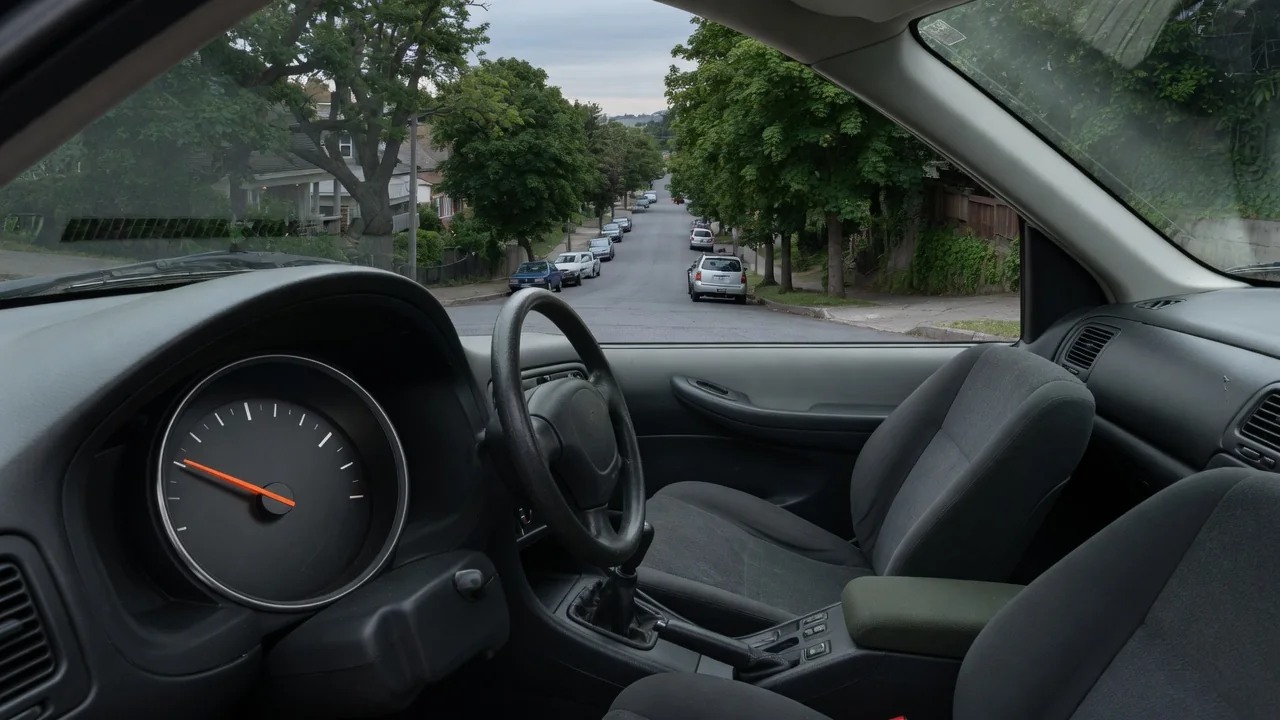
Parking on a slope and returning to a fuel gauge that reads differently than before can be unsettling. If you have wondered why does a fuel gauge move after parking on a hill, the answer usually lies in how fuel settles inside the tank, how the tank is shaped, and how the instrument cluster filters the sender signal before showing it to you.
Fuel level sensing
Most vehicles measure fuel with a sender unit mounted inside the tank. A common design uses a float on a pivoting arm connected to a variable resistor, so the electrical signal changes as the float rises and falls with the liquid surface. Other designs use a vertical tube or a capacitive probe. In every case, the sensor reports the height of the fuel at one particular spot, not the true volume of fuel in the whole tank.
That distinction matters because the gauge has to translate a single height reading into a fraction of a tank. The translation assumes the vehicle is sitting level, with the fuel surface parallel to the tank floor. When that assumption is broken, the height at the sender no longer represents the volume correctly. Where the sender sits, whether the tank has one or two senders, and how the signal is processed all differ between vehicles, which is why some cars react to slopes far more than others.
Incline effect
Liquid always finds its own level, so when a car is parked nose up or nose down, the fuel pools toward the low end of the tank. If the sender happens to sit at that low end, the float rides higher and the gauge reads fuller than reality. If the sender sits at the high end, the float drops and the gauge reads lower. The same logic applies when the car leans sideways on a cambered street or a sloped driveway.
Tank shape amplifies or softens the effect. A long, shallow tank lets fuel travel a considerable distance from one end to the other, so a modest incline can change the level at the sender noticeably. Saddle-shaped tanks that straddle a driveshaft or exhaust, and tanks with irregular molded contours, can trap fuel in one lobe on a slope. Internal baffles slow sloshing while driving, but they cannot stop fuel from eventually settling toward the lowest point once the car is parked.
What to observe
The timing of the change is a useful clue. Many instrument clusters deliberately smooth, or damp, the fuel signal so the needle does not swing with every corner, braking event, or bump. While driving, the display averages readings over a period of time. After the ignition is switched off and back on, some vehicles take a fresh reading fairly quickly, so the gauge may jump to reflect the tilted fuel surface rather than the smoothed value shown before parking.
Watch what happens after you drive away onto level ground. A gauge that slowly returns to roughly its earlier reading over the next several minutes is behaving as designed, since the smoothing logic needs time to accept the new level. The direction of the shift should also be consistent: facing uphill produces one result and facing downhill the opposite on the same car. Distance-to-empty estimates may move as well, because they are calculated from the same sender signal.
Everyday Use and Observations
In daily driving, the effect tends to be most visible around the middle of the tank and at lower levels. A nearly full tank leaves little room for the surface to shift at the sender, while a partly filled tank gives the fuel space to redistribute. Drivers who park on the same steep driveway each night often learn their car's pattern, such as a gauge that shows a little extra in the morning and settles back after a few blocks.
Low fuel situations deserve more caution. A reading that looks comfortable on a slope may overstate what is actually available, and a low fuel warning may appear or disappear depending on which way the car is facing. On a steep incline with very little fuel, the pickup inside the tank can also be left with less fuel around it. Keeping a reasonable reserve, rather than relying on the last sliver of the gauge, removes most of the uncertainty that hills introduce.
Limits and Next Steps
Slope alone does not explain every odd gauge reading. A gauge that moves erratically on flat roads, drops to empty and recovers, stays pinned at full long after a fill-up, or never returns to a sensible reading after level driving points toward something other than normal settling. Possible causes include wear on the sender's resistive track, a sticking or damaged float, wiring or connector problems, or a fault within the instrument cluster, and telling them apart requires testing rather than guesswork.
A simple first step is to compare readings after refueling and over a tank of level driving, noting whether the gauge tracks distance traveled in a believable way. If a warning light or stored fault code accompanies the behavior, treat the code as evidence to interpret rather than proof that a specific part has failed, since definitions can vary by manufacturer. The owner's manual may describe how the gauge behaves on inclines, and a qualified technician can confirm the sender signal with vehicle-specific information.