Why Does a Car Roll Back Slightly on a Hill?
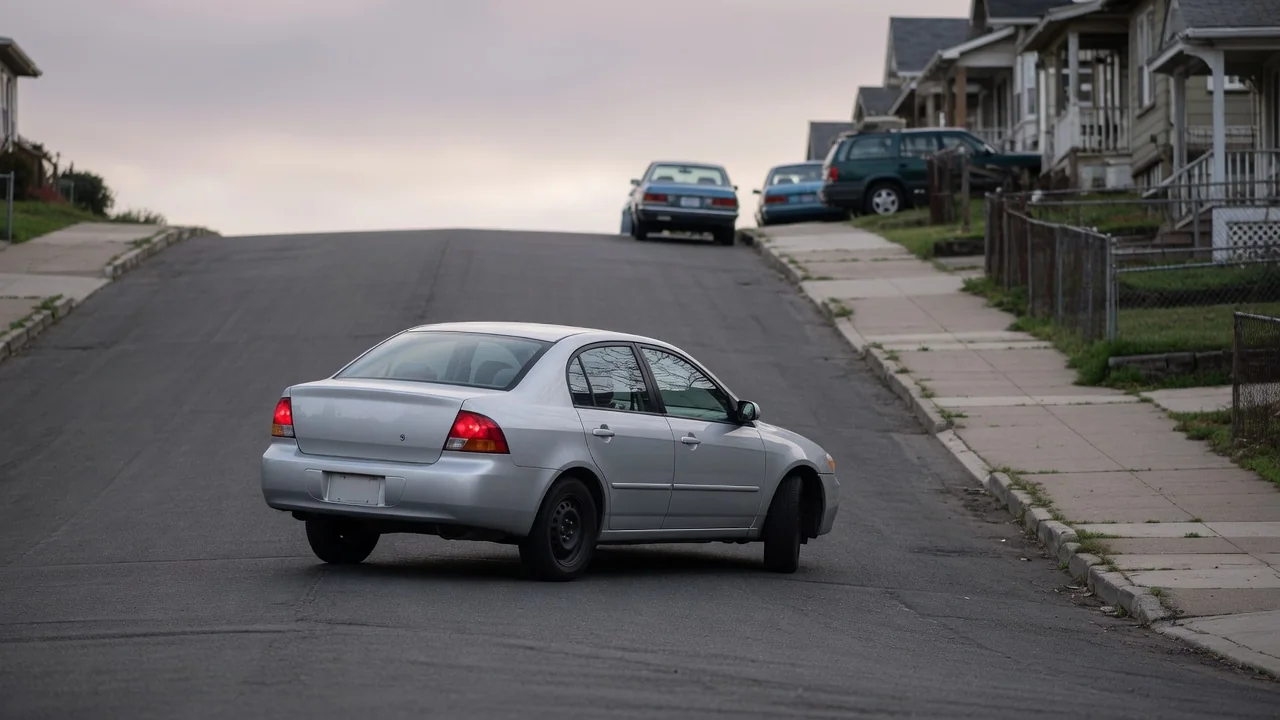
Many drivers wonder why does a car roll back slightly on a hill when they move from the brake to the accelerator. The short answer is timing: for a brief moment, the brakes have let go but the drivetrain is not yet delivering enough force to the wheels. Understanding that gap explains what is normal, what varies by vehicle, and what deserves attention.
Gravity
On a slope, the weight of a vehicle no longer presses straight down through the tires. Part of that weight acts along the road surface, pulling the car downhill. The steeper the grade, the larger that pull becomes. While the brake pedal is pressed, friction at the pads and rotors resists it completely. The instant the pedal is released, something else has to supply an equal force at the wheels, or the car will begin to move backward.
That replacement force comes from the engine or motor through the drivetrain, and it rarely arrives instantly. A heavily loaded vehicle, a trailer, or a steep driveway all increase the downhill pull, so the same car may sit still on a gentle incline yet drift back on a sharper one. Drivers often notice this difference between an empty car and one carrying passengers and luggage, even though nothing mechanical has changed.
Hold systems
A conventional automatic with a torque converter usually produces creep at idle, a gentle forward push transmitted through fluid. On mild grades this creep can balance gravity, so the car holds or barely moves. On steeper hills, idle torque is not enough and the vehicle settles backward until the driver adds throttle. Dual-clutch and automated manual transmissions behave differently because their clutches must physically engage, which can leave a short pause with little or no drive.
Many modern vehicles add hill start assist, which keeps brake pressure applied for a short time after the pedal is released, then lets go as drive torque builds. Some also offer an auto hold function that keeps the car stationary until the accelerator is pressed. How long the pressure is held, how steep the slope must be to trigger it, and whether it works in reverse all depend on the manufacturer, so the owner's manual is the right reference.
Safe starts
In a manual car, the classic hill start uses the parking brake to hold the vehicle while the driver brings the clutch to its bite point, the position where the engine begins to load and the nose lifts slightly. Releasing the parking brake at that moment, while adding a little throttle, transfers the holding job from the brakes to the drivetrain with almost no rollback. Rushing the sequence leaves a gap, and gravity fills it.
In an automatic, a smooth and prompt move from brake to accelerator usually keeps backward movement to a few inches at most. Leaving extra space behind the car ahead at a stoplight on a grade gives everyone a margin, since the vehicle in front may drift back as well. Holding a car on a hill by slipping the clutch or balancing on the throttle generates heat and wear, so the brakes should do the waiting.
Everyday Use and Observations
Day to day, a small rollback tends to show up in predictable places: steep intersections, parking garage ramps, and inclined driveways. Drivers may notice it more with a cold engine, when idle behavior and transmission response can differ from a fully warmed drivetrain, or with the air conditioning running. Stop-start systems add another variable, because the engine must restart before it can deliver torque, though many such vehicles hold brake pressure during the restart to cover that delay.
Electric and hybrid vehicles show their own patterns. Some electric models simulate creep, others hold automatically, and others will roll freely until the accelerator is pressed, depending on the selected drive mode. A driver switching between vehicles may be surprised by a car that behaves differently from the one they know. Learning how a particular model responds on a quiet slope, away from traffic, removes that surprise before it matters at a busy junction.
Limits and Next Steps
Hold functions are aids, not guarantees. They typically release after a brief interval, may not activate on shallow grades, and can be disabled by a fault elsewhere in the braking or stability system. A warning light or stored fault code related to these systems is evidence to interpret, not proof that a specific part has failed, and manufacturer-specific codes need confirmation against information for that exact vehicle before any conclusion is drawn.
A change in behavior is the meaningful signal. If a car that once held steady now rolls back noticeably farther, hesitates before taking up drive, flares in engine speed without moving, or shows a clutch bite point that has shifted, a qualified technician should inspect it. Possible contributors range from clutch wear to transmission fluid condition or a disabled assist feature, and only proper diagnosis can separate them. Until then, using the parking brake on hill starts provides a dependable backup.