Why Does a Clutch Pedal Feel Different in Traffic?
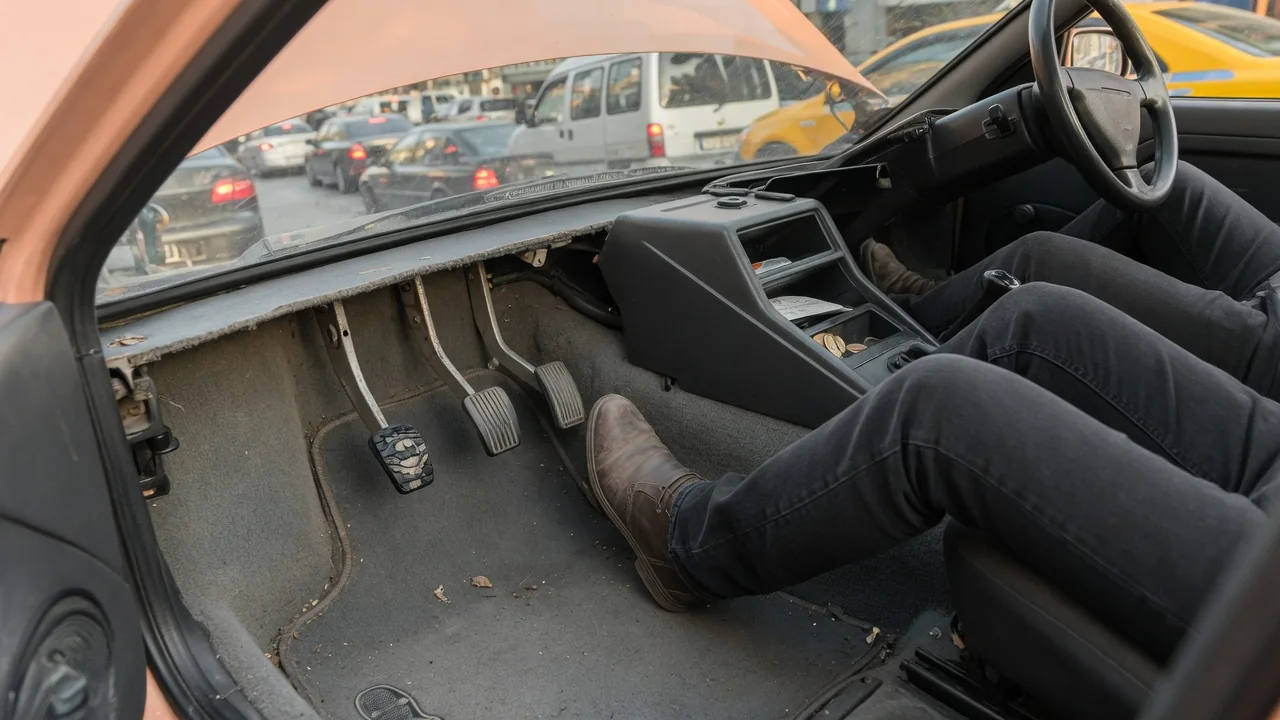
Many drivers of manual cars notice it after twenty minutes of crawling: the pedal that felt crisp on the open road now seems softer, heavier, or engages at a different point. Asking why does a clutch pedal feel different in traffic leads to three overlapping explanations, namely heat building in the clutch and its hydraulics, the sheer number of pedal strokes, and the driver's own tiring leg.
Repetition
Stop-and-go driving compresses a huge amount of clutch work into a short distance. On a highway cruise the pedal may go untouched for miles, while a crawling queue can demand a full stroke every few seconds. Each launch from rest involves a moment of slip as the friction disc matches engine speed to the gearbox, and slip creates heat. With little airflow through the bellhousing at walking pace, that heat accumulates in the flywheel, pressure plate and disc faster than it can escape.
Repetition also acts on the person operating the pedal. The left leg holds against the diaphragm spring's resistance again and again, and a tired calf or thigh tends to release less smoothly, so the engagement can seem grabby or vague even when the hardware has not changed. Drivers may notice this more in vehicles with heavier clutches, such as trucks or performance models, and less in small cars with light, assisted pedals. Separating bodily fatigue from mechanical change is the first useful observation.
Pedal travel
Pedal travel is the distance the pedal moves, and the bite point is the part of that travel where the clutch begins to transmit drive. In heavy traffic, some drivers find the bite point seems to shift higher or lower, or the pedal feels spongy near the top. In hydraulically operated systems, heat soaking into the slave cylinder and fluid can influence that feel, particularly if the fluid is old and has absorbed moisture, because overheated fluid may form vapor that compresses.
Cable-operated clutches behave differently. A cable can stretch slightly or bind in its sheath as underhood temperatures rise, changing free play at the top of the stroke. Many modern cars use self-adjusting mechanisms or concentric slave cylinders inside the bellhousing, so the way travel responds to heat depends heavily on design. A hot friction disc and pressure plate can also expand and alter the engagement position temporarily. Because layouts vary so widely, a change that is normal on one vehicle may be noteworthy on another.
When to inspect
A slight change that disappears once the car cools and traffic clears is often just the system responding to temperature. Inspection becomes worthwhile when the change persists, worsens over weeks, or arrives with other signs. Those include a pedal that stays near the floor or returns slowly, difficulty selecting first or reverse, grinding when engaging gears, engine speed rising without matching acceleration, a sharp burning smell, or shudder as the vehicle moves off. Each points toward a different part of the system.
A sinking or soft pedal suggests looking at the hydraulic side, including fluid level and condition and any dampness around the master or slave cylinder. Slipping under load points toward the friction surfaces, while judder may involve the flywheel, contamination, or mounts. None of these symptoms identifies a failed component by itself; they narrow the search. Where the clutch shares a reservoir with the brakes, a falling fluid level deserves prompt professional attention, since it concerns more than gear changes.
Everyday Use and Observations
Driving habits shape how much heat the clutch sees in a jam. Holding the car on a slope by slipping the clutch, creeping forward with the pedal partly released, or resting a foot on the pedal all keep the friction surfaces rubbing or the release bearing loaded. Leaving a gap, then moving forward with one clean engagement, generates far less heat than constant inching. Selecting neutral and releasing the pedal during longer stops also rests both the release mechanism and the driver's leg.
Careful observation makes any later diagnosis easier. It helps to note whether the feel changes only after long queues, only on hot days, or also on a cold morning start, and whether it recovers after a few minutes of steady cruising. Seat position matters too, since a seat set too far back forces the leg to stretch and tire sooner. Worn pedal bushings or a floor mat bunched under the pedal can mimic mechanical trouble, and both are simple to check visually.
Limits and Next Steps
Pedal feel alone cannot reveal how much friction material remains or whether a hydraulic seal is leaking internally. Much of the clutch sits inside the bellhousing, out of sight, and confirming its condition can require testing or disassembly by a qualified technician. Vehicles with dual-mass flywheels, hill-hold functions, or electronic clutch actuation add further variables, and the owner's manual or manufacturer service information is the right reference for what counts as normal adjustment, fluid type and maintenance on a given model.
A sensible next step is to describe the pattern clearly to a workshop: when the change appears, how long it lasts, and what accompanies it. If the pedal ever fails to return, gears become hard to engage, or the clutch slips noticeably, continuing through heavy traffic risks leaving the vehicle stranded and adding damage, so having it assessed soon is wiser. If the feel simply drifts in a jam and returns afterward, gentler technique and routine checks at scheduled services are usually a reasonable response.