Why Does a Car Feel Different With a Full Load?
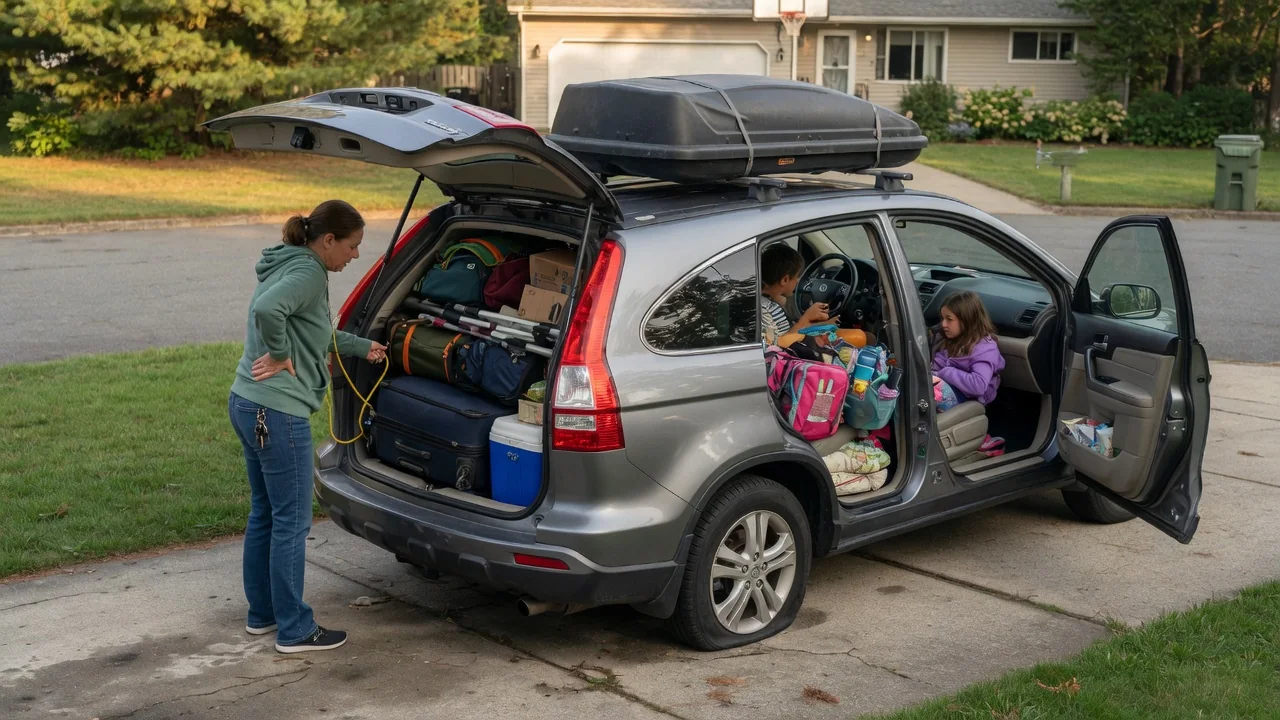
Anyone who has packed a vehicle for a family trip knows the sensation: the steering feels heavier, the brake pedal needs more travel, and the body settles lower over bumps. So why does a car feel different with a full load? The answer comes down to added mass and how the engine, brakes, suspension and tires each respond to carrying it.
Acceleration
Acceleration depends on how much force the drivetrain can deliver relative to the mass it has to move. Add several passengers and a trunk full of luggage, and the same engine output now has to push noticeably more weight. The result is a slower response when pulling away from a stop, longer time needed to merge onto a highway, and more throttle required to hold speed on a grade. Nothing has gone wrong mechanically; the power-to-weight ratio has simply shifted against the engine.
How strongly this shows up varies by vehicle. A small-displacement engine in a compact car tends to reveal the extra weight more clearly than a large engine in a pickup built for hauling. Automatic transmissions may hold lower gears longer or downshift more readily on hills, and engine speed can sit higher than usual. Electric and hybrid vehicles often mask the change at low speeds because of strong initial torque, though the added mass still draws more energy and can shorten driving range.
Ride height
Springs compress in proportion to the weight placed on them, so a loaded vehicle sits lower, usually most visibly at the rear where cargo and back-seat passengers are carried. That lower stance uses up part of the suspension travel before the car even moves. With less travel left in reserve, a sharp bump or dip can push the suspension onto its bump stops, producing a harsh thud that the same road would never cause with only a driver aboard.
A sagging rear also changes the vehicle's attitude. The nose tips slightly upward, which can lighten the front axle, alter steering feel and aim the headlights higher than intended, sometimes dazzling oncoming drivers. Ground clearance shrinks too, so speed bumps and steep driveways may scrape where they never did before. Some vehicles have self-leveling or air suspension that corrects much of this automatically, while others offer a manual headlight adjustment, so the effect differs considerably from one design to another.
Tire/load checks
Tires are the only parts carrying the full weight, and they react to it directly. Under a heavier load the sidewalls flex more and the contact patch grows, which builds heat and can make the steering feel vague or slow to respond. Many manufacturers list a separate, higher inflation pressure for fully loaded driving. That figure is typically shown on a placard in the door jamb or fuel filler area and in the owner's manual, and it should be checked for the specific vehicle.
The same placard usually states the maximum combined weight of occupants and cargo, and every tire carries a load rating molded into its sidewall. Before a heavy trip, it is worth checking pressures when the tires are cold and looking for bulges, cracking or worn tread, since an underinflated or damaged tire is under the greatest stress when loaded. Roof boxes, bike racks and trailer tongue weight all count toward the total, and they are easy to overlook when estimating what the car is carrying.
Everyday Use and Observations
Braking is where many drivers notice the difference first. A heavier vehicle carries more momentum at any given speed, so the brakes must convert more energy into heat to slow it down. Stopping distances grow, the pedal may need firmer pressure, and long downhill stretches can heat the brakes enough to reduce their effectiveness. Leaving a larger gap to traffic ahead and using a lower gear on descents helps keep the system working within its comfort zone.
Cornering and general ride behavior change as well. Extra weight, especially when carried high on a roof rack, raises the center of gravity and increases body roll, so the car leans more and takes longer to settle after a lane change. Dampers work harder to control the heavier body, which can make the ride feel floaty over undulations. Crosswinds may push a loaded car around more, and fuel consumption generally rises. Placing heavy items low and as far forward in the cargo area as practical keeps handling more predictable.
Limits and Next Steps
Every vehicle has a maximum weight it is engineered to carry, covering the structure, axles, suspension, brakes and tires together. Staying within that figure matters because the systems are designed as a set; exceeding it can lengthen stopping distances beyond what the brakes can manage reliably, overheat tires and strain suspension components. The limit differs widely between a small hatchback and a full-size truck, so the owner's manual and the load placard are the right references rather than assumptions based on available space.
It also helps to separate normal loaded behavior from signs of wear. A car that bottoms out with modest cargo, keeps bouncing after bumps, pulls to one side under braking or sits unevenly may have tired dampers, weakened springs or brake issues that the extra weight is merely exposing. Those symptoms are evidence worth investigating, not proof of a specific failed part, and a qualified technician can inspect the vehicle to confirm the cause before the next heavily loaded trip.