Why Does a Clean Work Surface Matter for Car Electronics?
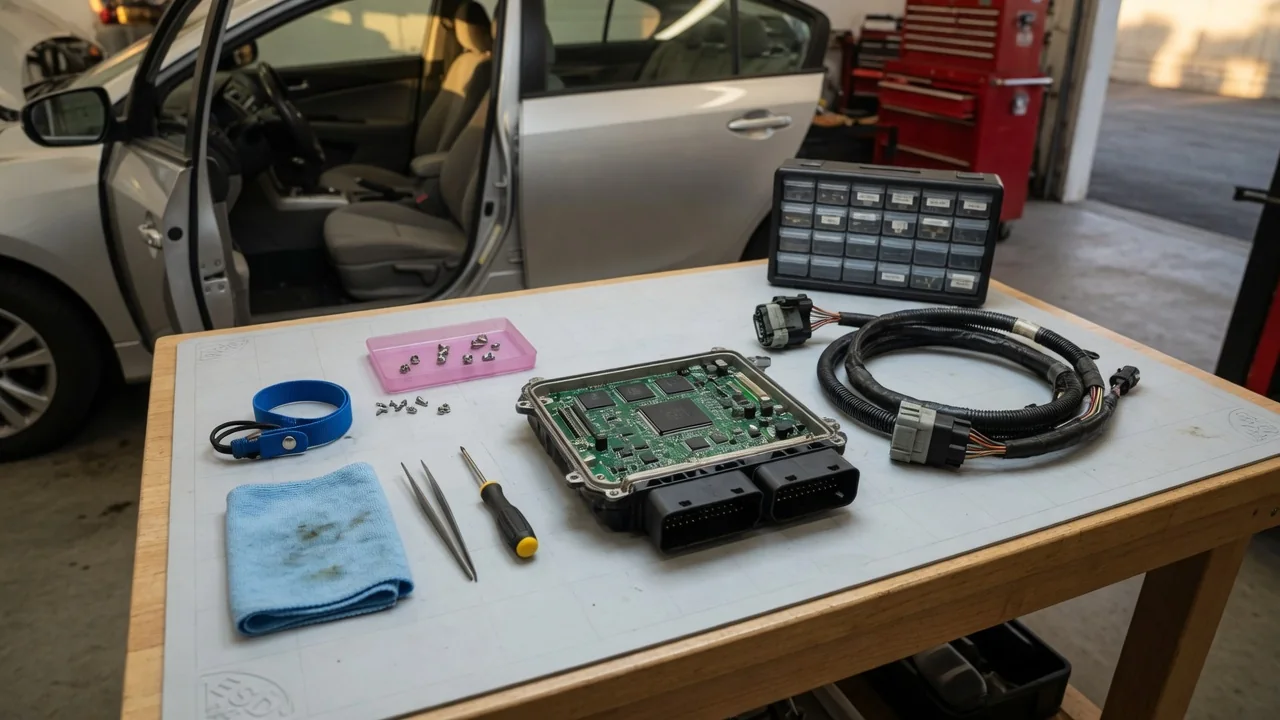
Modern vehicles rely on control modules, sensors and wiring harnesses that handle vibration and weather well once installed, but they are more vulnerable while unplugged on a bench. Debris, spilled fluids, static discharge and misplaced parts can turn a simple sensor swap or module removal into a new fault. This guide explains why a clean work surface matters for car electronics, focusing on connector protection, static control and organization in a home workshop.
Connector protection: keeping contacts and seals intact
Many automotive connectors are designed to be protected only when they are mated. Once unplugged, both halves expose terminals and seals to whatever is on the surface around them. Metal filings from drilling or grinding, sanding dust, sand tracked in from the driveway and oily residue are common in a garage. Conductive particles can lodge between closely spaced terminals, grit can scratch the plating on contact surfaces, and oil films can trap dirt that interferes with a clean connection. Sealed connectors add another concern: their rubber seals and gaskets keep moisture out only if they seat cleanly. A seal that picks up debris on a dirty bench may not close fully when reconnected, which can allow water to enter later. Resulting corrosion often shows up as an intermittent fault well after the job seemed finished, which makes it hard to trace back to its cause.
Simple habits reduce this risk. Wipe the bench with a clean, lint-free cloth before starting, and keep grinding, cutting or drilling away from the area where electronics are handled. Avoid setting a connector face-down on any surface you have not cleaned, and cover or bag open harness ends if they will be disconnected for a while. Keep coolant, brake fluid, solvents and drinks off the electronics bench, since a spill can reach exposed terminals before you notice it. Avoid touching terminals with bare fingers, because skin oils and dirt transfer easily to contact surfaces.
Connector housings also carry small plastic features such as locking tabs and secondary terminal locks. Pressing a connector onto a cluttered surface, or dropping it among loose tools, can crack or distort these parts, leaving a connector that seems seated but works loose over time.
Static: why sensitive modules need a controlled surface
Electrostatic discharge happens when charge built up on a person or object jumps to something at a different potential. Walking across a floor, shifting on a seat or handling plastic packaging can build charge on your body, and a discharge into an electronic component can damage semiconductor parts even when it is too small to feel. Such damage is not always immediate; a component may keep working but fail earlier or behave erratically. Vehicle modules usually include some protection on their connector circuits, but the amount varies by design, and a module lying on a bench with exposed pins is in a different situation from one installed and connected. Where a manufacturer's service information specifies static handling precautions for a part, those instructions take priority over general advice.
The work surface plays a direct role here. Plastic bags, foam packaging, synthetic rags and plastic trays are insulators that can hold charge, and a cluttered bench tends to collect them right next to the parts being handled. Clearing them away reduces stray charge sources. A static-dissipative mat connected to a suitable ground, used with a grounded wrist strap, gives charge a controlled path instead of through the component. Without that equipment, touching bare grounded metal before handling a module, keeping it in its antistatic packaging until installation and holding it by the housing rather than the pins are reasonable general precautions. Dry air and some floor and clothing materials tend to increase static buildup, so conditions in the workshop matter as well.
Organization: preventing lost parts and mix-ups
Electrical work often involves removing trim panels, brackets and covers, which produces a pile of screws, clips, fasteners and sometimes fuses or relays. Screws that look alike may differ in length, and a longer screw driven into the wrong hole can reach a circuit board, harness or connector behind a panel. Laying parts out in the order they came off, using a divided tray or labeled containers, and photographing connections before unplugging them makes reassembly more reliable. An organized car electronics clean bench also makes it obvious when something is missing, rather than leaving a clip or seal to be discovered on the floor after the panel is back on.
Connector identification is another organizational task. Connector keying and color coding usually prevent wrong connections, but similar-looking plugs in the same area can still cause confusion. A small tag or piece of labeled tape on each harness end removes the guesswork. Tool placement matters too: a wrench or screwdriver left loose near battery terminals or an open fuse box can create a short circuit, so keep metal tools on the bench and off the vehicle's electrical components.
Practical implications and limits
A clean, orderly surface lowers the odds of contamination, static damage and assembly errors, but it does not replace the correct procedure for the vehicle. Steps such as disconnecting the battery, following the manufacturer's precautions for airbag and other safety systems, and completing any programming, coding or relearn procedure after replacing a module are vehicle-specific. They come from the service information for that model, not from general workshop practice, and skipping them can cause faults no matter how tidy the bench is.
Precautions should also scale with the job. Unplugging a weather-sealed lamp connector calls for less care than handling a bare circuit board, and a home workshop does not need laboratory conditions to work on car electronics responsibly. Many modules are not designed to be opened, and doing so can compromise their sealing. When the work happens inside the car, the seat or floor becomes the work surface by default, so carrying a clean tray or mat for removed parts brings the same benefits to the cabin.
Finally, if a problem appears after electrical work, a dirty bench is only one possible cause. Check that every connector is fully seated and locked, that seals are in place and that no fastener or clip was left out before drawing conclusions.