Why Does a Car Feel Slippery on Painted Road Lines?
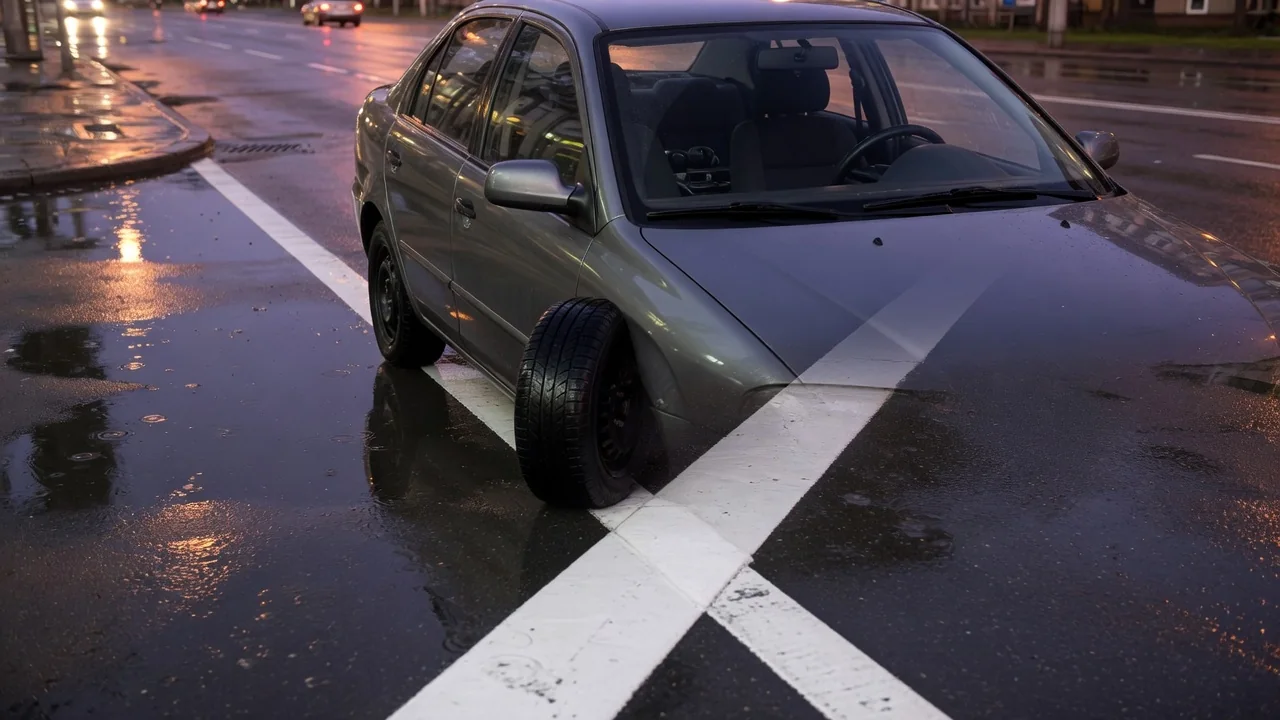
Drivers often ask why a car feels slippery on painted road lines, especially once rain starts falling. The short answer is that lane stripes, crosswalk bars, and turn arrows are a different surface from the asphalt around them, and water changes how tires grip each one. Understanding that friction difference explains the brief wiggle or lightness felt through the steering wheel.
Paint and water
Asphalt has a rough texture made of coarse aggregate, with tiny peaks and valleys that give water somewhere to go and rubber something to key into. Road marking paint and thermoplastic material fill those valleys, leaving a smoother, more sealed surface. In dry weather the difference is small enough that most drivers never notice it. In the wet, a thin film of water sits on top of the marking instead of draining into the texture, and available friction drops more than it does on the surrounding pavement.
Markings do not all behave the same way. Many contain glass beads for nighttime reflectivity or gritty additives meant to restore some texture, and a fresh marking may grip better than an old one polished by years of traffic. Broad markings such as crosswalk blocks, stop bars, and arrows present a much larger smooth area than a narrow lane stripe. After a dry spell, the first rain also lifts oil and dust, so painted areas can look glossy and feel especially slick.
Tire contact
A tire grips the road through a contact patch roughly the size of a hand, and its tread grooves exist to channel water away so rubber can touch the surface. On textured asphalt, the pavement itself helps break up the water film. On a painted line, the tread has to do more of that work alone, so grip depends heavily on tread depth, rubber compound, and inflation pressure. Worn tires with shallow grooves clear less water and reveal the change in friction sooner.
Because most markings are narrow, often only the tires on one side of the car are on paint while the others remain on asphalt. That uneven grip is what produces a light tug at the steering wheel, a small sideways step during a lane change, or a wheel that spins briefly when pulling away. How strongly it registers varies with vehicle weight, tire width, and which wheels are driven. Motorcycles and bicycles feel it far more, since they rely on two small contact patches.
Smooth inputs
Each tire has a finite amount of grip to share among braking, accelerating, and cornering. On a wet painted surface that total is smaller, so a sudden demand can exceed it where the same input on asphalt would not. Braking hard across a crosswalk, accelerating briskly with a drive wheel sitting on a stop bar, or turning sharply over a painted arrow are typical examples. Gentle, progressive use of the pedals and steering keeps the demand below what the surface can supply.
In practice, that means finishing most braking before reaching large markings, easing onto the throttle when leaving a stop line, and crossing lane stripes at a steady speed without abrupt steering. Electronic aids may step in: anti-lock brakes can pulse through the pedal, and traction control may trim engine power or flash an indicator. These systems help manage the grip that exists, but they cannot create more. Their tuning and how noticeable they feel differ from one vehicle to another.
Everyday Use and Observations
The sensation shows up most at intersections, where crosswalks, stop bars, and arrows cluster exactly where drivers brake, turn, and accelerate. It also appears during highway lane changes in rain, over the chevrons in merge zones, and on the coated floors of parking garages. Similar low-friction patches include metal plates, manhole covers, and tar repair strips, which behave much like paint when wet. The first minutes of a shower tend to be worst, before steady rain rinses away surface grime.
A useful observation is that paint-related slip is brief and tied to a location. It begins as the tire reaches the marking and ends when it returns to asphalt, usually within a fraction of a second. Cold weather can make it more pronounced, particularly on tires designed for warm conditions, because the rubber stiffens. A front-wheel-drive car may show it as light steering or wheelspin at the front, while a rear-wheel-drive car may feel the tail shift slightly under power.
Limits and Next Steps
Reduced friction on markings explains a momentary, repeatable slip, not a car that feels loose everywhere. If the vehicle wanders, pulls consistently, or feels unstable on plain wet asphalt, the cause is more likely in the car than the road. Low or uneven tire pressure, shallow or irregularly worn tread, aged rubber, alignment problems, or worn suspension and steering parts can all reduce wet grip. A qualified technician can inspect these items and judge them against the requirements for that particular vehicle.
A stability or traction indicator that flickers as a wheel crosses a wet line generally shows the system doing its job. A warning that stays lit deserves diagnosis, and any stored fault code should be treated as evidence to interpret for that specific vehicle, not proof that a part has failed. Sensible next steps include checking pressures against the vehicle's tire placard, looking over the tread, slowing down in rain, and leaving extra following distance near heavily marked intersections.