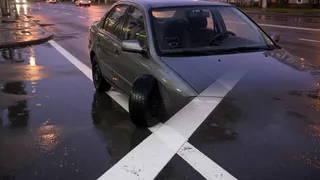
When driving on roads that may be slippery:
When driving on roads that may be slippery, the essential answer is to reduce speed, increase following distance, and make every steering, braking, and throttle input slower and smoother than normal. Slippery conditions reduce available traction whether the surface is wet, icy, snow-covered, or coated with loose gravel or leaves. A route segment that looks ordinary can hide a sudden change in travel conditions, so the driver must read road classification, lane layout, traffic signs, and surface appearance continuously. The goal is to keep the tires near their available grip limit without abrupt weight transfer, because sudden inputs are what turn a minor loss of traction into a skid.
Direct answer
The core technique is to drive as if the tires have only a fraction of their normal grip. Begin by reducing speed before entering a curve, intersection, bridge, shaded area, or any route segment where the road surface may change. Brake gently and early, accelerate gradually, and steer with small, deliberate movements. A lower entry speed gives the tires reserve traction for cornering and stopping, which matters because stopping distances grow quickly on wet leaves, packed snow, or ice. Driving slower also gives you more time to recognize a slick patch before it becomes an emergency.
Watch the road ahead for visual clues about travel conditions. Dark, glossy pavement may indicate water or ice, while dull or textured surfaces can signal better grip. Changes in lane layout, shaded sections that hold frost, and traffic signs warning of bridges or curves are cues to adjust before reaching the hazard. If the vehicle begins to slide, ease off the accelerator or brake gently and look where you want the vehicle to go. Smooth correction is safer than a fast steering reaction, which can overload the tires and make the slide worse.