Why Do Stored Tires Need Attention? Pressure, Flat Spots and Inspection
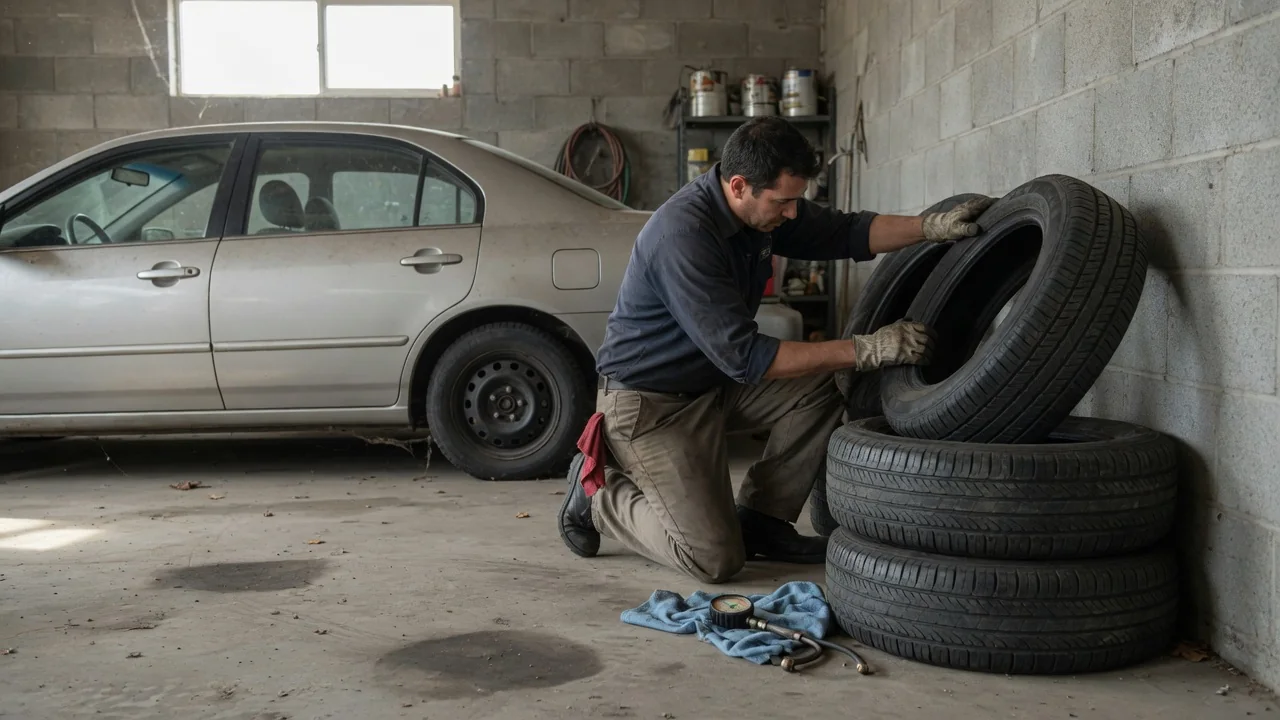
A car parked for a season can look unchanged, but its tires keep changing the whole time. Air slowly escapes, the same small patch of rubber carries the vehicle's weight day after day, and the compound keeps aging whether or not the wheels turn. That is why stored tires need attention: not constant work, but a few deliberate checks before, during, and after storage. This guide explains the three main concerns, pressure, flat spots, and inspection, and where general advice stops.
Pressure: Why Tires Lose Air While Parked
Even a healthy tire is not a perfectly sealed container. Air gradually migrates through the rubber itself, and small losses can also occur at the valve core, around the valve stem, and where the tire bead seats against the wheel. During normal driving, owners tend to notice and correct this at fuel stops or through a tire pressure monitoring warning. In storage, nobody is watching, so gradual loss continues uninterrupted for weeks or months. A slow leak from a nail, a corroded wheel lip, or an aging valve can also go unnoticed because the car never moves.
Temperature adds another layer. Tire pressure rises and falls with the temperature of the air inside, so a car stored in an unheated garage through a cold season will read lower than it did when it was parked in mild weather, even without any actual leakage. Underinflation matters in storage because a soft tire deflects more under the vehicle's weight. A larger, more deformed contact patch increases stress on the sidewall and makes flat spotting more likely. A tire left nearly flat for a long period can also suffer sidewall damage that is not obvious from the outside.
The reference point is the cold inflation pressure specified by the vehicle manufacturer, usually shown on a placard on the driver's door jamb or in the owner's manual, not the maximum pressure molded into the sidewall. Some owners add a modest amount of extra pressure before storage to offset expected losses, but it should never exceed the sidewall maximum, and the tires must be returned to the recommended pressure before the car is driven. Checking with a reliable gauge while the tires are cold gives the most meaningful reading.
Flat Spots: What Happens When Tires Sit in One Position
A flat spot forms when the section of tread touching the ground stays compressed in the same shape for a long time. The rubber and internal cords, particularly nylon used in some tire constructions, can take a temporary set, much like a cushion that keeps an imprint after someone sits on it. When the car finally moves, the flattened area produces a rhythmic thump or vibration that is often felt through the steering wheel or seat at certain speeds.
Many flat spots are temporary. As the tire flexes and warms up during driving, the rubber and cords usually recover their round shape and the vibration fades. Whether this happens depends on how long the vehicle sat, how heavy it is, how much pressure was in the tires, the storage temperature, and the tire's construction. Long periods without movement, low pressure, cold conditions, and heavy loads all make a deeper set more likely. If vibration persists after the tires have been driven and warmed up, the deformation may be permanent, or another cause, such as a balance problem or internal damage, may be responsible.
Common ways to reduce flat spotting include keeping pressure at the proper level, rolling the vehicle a short distance periodically so a different section of tread carries the load, and using curved tire cradles designed to spread the contact area. For very long storage, some owners support the vehicle on jack stands to take weight off the tires; in that case, the vehicle manufacturer's guidance on lift points and suspension should be followed.
Inspection: What to Check Before and After Storage
Inspection serves two purposes: it records the condition of the tires before storage, and it catches problems before the car returns to the road. Before parking the vehicle, look over each tire for embedded objects, cuts, bulges, and uneven wear, and note tread depth and pressure. Starting with known values makes it easier to tell later whether one tire is losing air faster than the others, which can point to a puncture or a valve or bead seal problem rather than ordinary seepage.
After storage, and at intervals during a long layup, check pressure first, then inspect the sidewalls and tread closely. Fine cracks in the rubber, often called weather checking or dry rot, indicate aging of the compound. Sunlight, ozone, heat, and certain chemicals accelerate this process, and ozone can come from equipment commonly found in garages, such as electric motors and furnaces. Bulges or blisters on a sidewall suggest internal damage, and the tire should not be used until a qualified tire professional examines it. Valve stems deserve a look as well, since rubber stems also age and can crack where they meet the wheel.
Tire age needs its own check. The manufacturing date is encoded at the end of the DOT code on the sidewall, typically as a week and a year. A tire can have plenty of tread left and still be old, and storage does not stop aging. Vehicle and tire manufacturers publish their own guidance on age-related inspection and replacement, so that guidance is a better reference than tread depth alone.
Practical Implications and Limits
How much attention a stored car's tires require depends on the length of storage and the environment. A vehicle parked for a few weeks in a stable, sheltered space may need little more than a pressure check before driving. A car stored for a full season in a garage with large temperature swings, or outdoors in direct sun, benefits from periodic checks and some planning against flat spots. Keeping the car out of sunlight and in a cool, dry space with steady temperatures slows rubber aging in general.
The same principles apply to seasonal tire sets stored off the vehicle, such as winter or summer tires waiting for their next season. Cleaning them before storage and keeping them away from sunlight, heat sources, solvents, and ozone-producing equipment helps preserve them. Mounted and unmounted tires are often stored differently, so it makes sense to follow the tire maker's recommendations for the way the set is kept.
There are also limits to what an owner can determine. A visual check and a pressure gauge reveal surface damage, air loss, and obvious deformation, but they cannot confirm the condition of the internal structure. A tire that vibrates after warm-up, loses air repeatedly, shows bulges, or has extensive cracking needs a professional inspection, which may include dismounting it. Storage care reduces risk; it does not reverse aging or guarantee that a tire is fit for service. Before the first drive, set pressures to the recommended values, start gently, and pay attention to any unusual noise or vibration.