Why Do Car Tires Need Extra Attention Before Summer Travel?
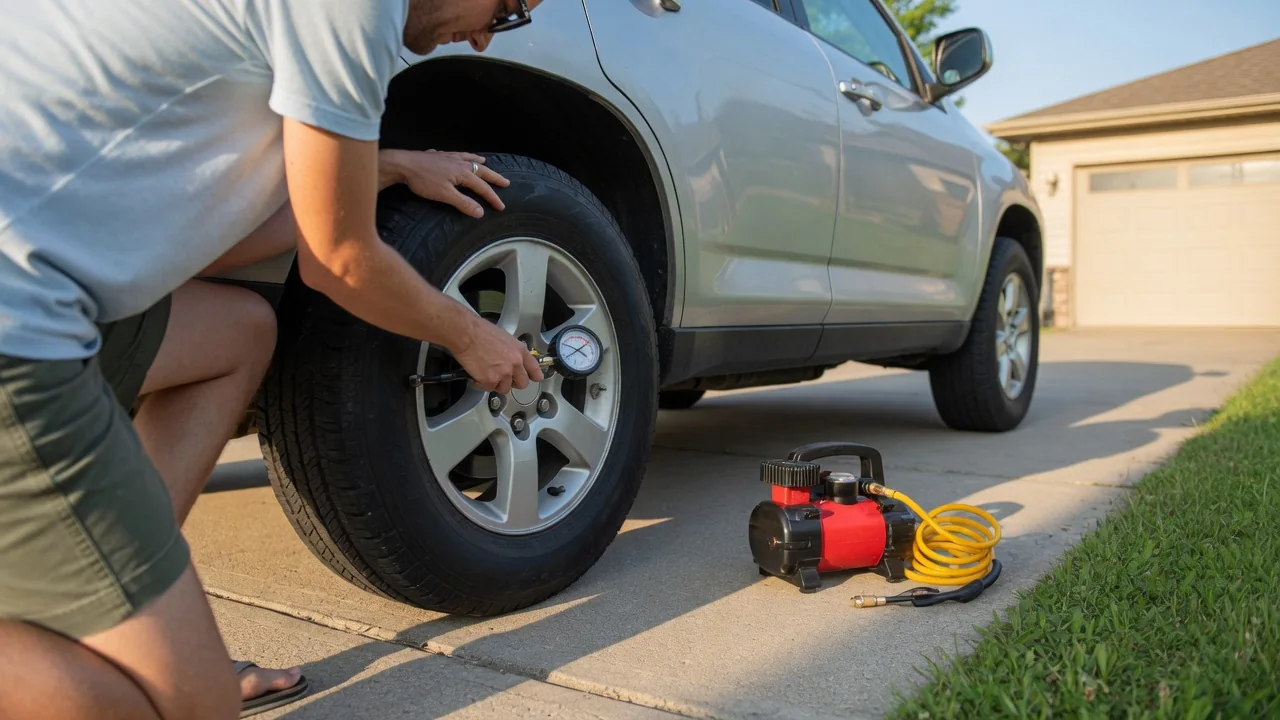
Why do car tires need extra attention before summer travel? Long highway stretches, hot pavement and a fully packed vehicle ask more of the tires than daily commuting does. Heat builds faster in a tire that is underinflated, worn or overloaded, and a small weakness that goes unnoticed around town can become a roadside problem far from home. Pressure, wear and load deserve a careful look first.
Cold-pressure check
Tire pressure rises as the air inside warms, so a reading taken after driving or in direct afternoon sun appears higher than the true baseline. A cold-pressure check means measuring before the car has been driven, or after it has sat for several hours, ideally in the morning shade. That reading is the one to compare against the vehicle maker's recommended figure, which is usually printed on a placard in the driver's door jamb and repeated in the owner's manual.
The number molded into the sidewall is the tire's maximum, not the target for the vehicle, and the two are easy to confuse. Some vehicles list different pressures for front and rear axles, and some give a separate figure for a full load or sustained highway speed. An underinflated tire flexes more with every rotation, and that flexing generates heat on top of what hot pavement already adds. Releasing air from warm tires to match the cold figure leaves them low once they cool.
Tread and damage
Tread depth matters in summer because sudden thunderstorms leave standing water on roads, and shallow grooves cannot channel it away quickly. Most tires have wear bars molded across the main grooves; when the surrounding tread blocks sit level with those bars, the tire has reached the end of its useful life. Checking several points across the width matters, since a tire can look healthy on the outer shoulder while the inner edge, hidden beneath the car, is nearly smooth.
Wear patterns also tell a story. Worn shoulders on both sides often go with running low on air, a worn center strip can point to overinflation, and one-sided wear may suggest an alignment or suspension issue worth having checked. Sidewalls deserve the same scrutiny: bulges, cuts, embedded nails and fine cracking from age all weaken the structure. Heat and sustained speed stress these weak spots, and the date code on the sidewall shows how old the rubber is regardless of remaining tread.
Trip load
A vacation load is rarely like a commuting load. Passengers in every seat, luggage, a cooler, a roof box or a hitch-mounted bike rack can add hundreds of pounds, and each tire carries its share. The same door-jamb placard that lists pressures typically states the maximum combined weight of occupants and cargo. Exceeding it, or loading heavily on tires that are low on air, makes the sidewalls deflect further and run hotter over long highway hours.
A loaded vehicle often shows visible signs: the rear sits lower, the tires bulge more at the bottom, and steering may feel lighter or less settled. Some manufacturers specify a higher pressure for a full load, while others use a single figure for all conditions, so the manual for the specific vehicle is the reference. Towing adds tongue weight to the rear axle, and trailer tires have their own pressure and load ratings that need checking separately from the tow vehicle.
Everyday Use and Observations
Many warning signs appear in ordinary driving in the weeks before a trip. A steering wheel vibration that arrives at highway speed can indicate a balance problem or a tire that is no longer round. A steady pull to one side, a rhythmic thump or a humming noise that changes with speed are all worth noting. One tire that repeatedly needs topping up likely has a slow leak from a puncture, a valve stem or the bead where rubber meets wheel.
The tire pressure monitoring light is helpful but not a substitute for a gauge. Many systems alert only after pressure has dropped well below the recommended value, and some measure pressure indirectly through wheel speed rather than with sensors inside each wheel, so behavior varies by vehicle. A light that comes on during a cool morning and goes out later still signals marginal pressure. The spare deserves a look too, since compact spares often require much higher pressure and some cars carry only a sealant kit.
Limits and Next Steps
A driveway inspection has limits. Internal damage from a pothole strike or from being driven while flat may leave no outward sign, and the inner sidewall is hard to see without lifting the car. Age matters as well, because rubber hardens over time even on a vehicle that covers few miles, and recommendations on replacement age differ among tire and vehicle makers. Any bulge, exposed cord or deep sidewall cut means the tire should not be driven on at highway speed.
When something looks doubtful, a tire shop can dismount and inspect the tire, confirm whether a puncture sits in a repairable area, and check balance and alignment before departure. Scheduling this a week or two ahead leaves time for replacements to be ordered if needed. On the road, a quick gauge check on cold mornings and a walk-around glance at fuel stops catch changes early. The trip load, the heat and the hours at speed all reward that small routine.