What Causes Tire Flat-Spot Noise After Parking?
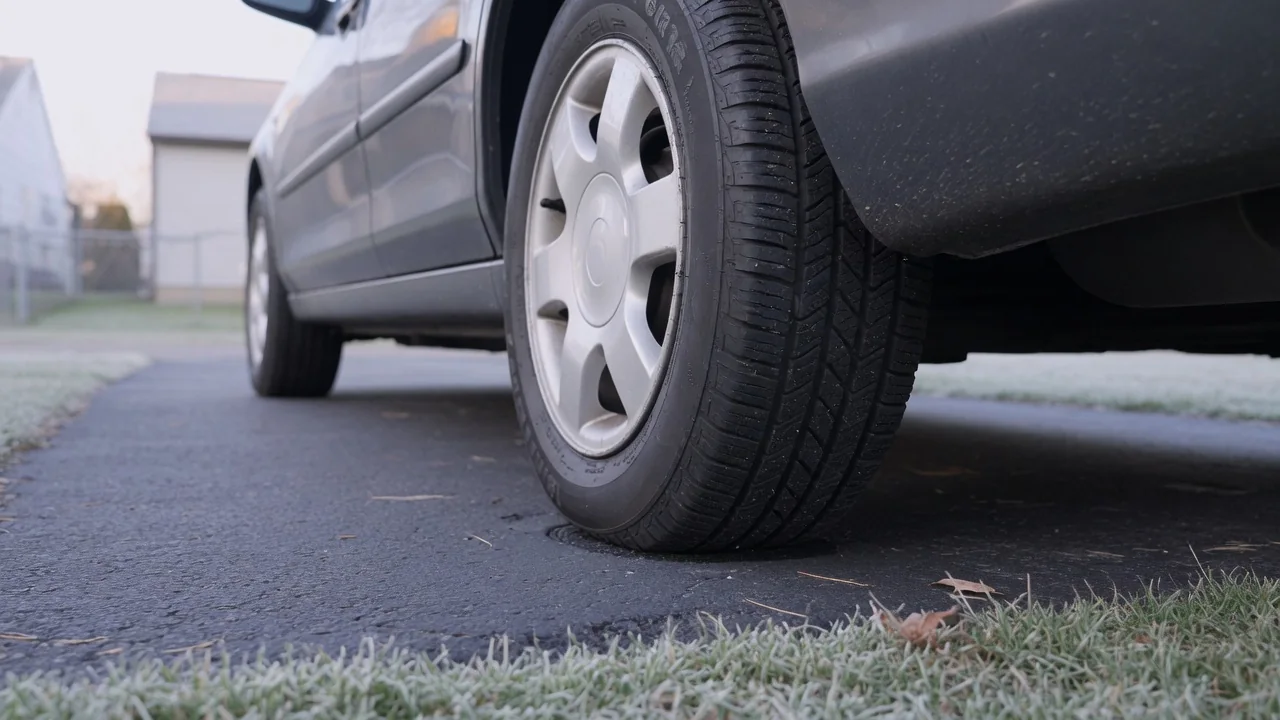
Many drivers hear a rhythmic thump or wub-wub sound in the first minutes of driving after a car has been parked, and the cause is usually the tires. While the car sits, its weight presses a small section of each tire flat. That section can keep its shape for a short time once the wheels start turning. Knowing what causes tire flat-spot noise after parking helps you tell a harmless, temporary effect from a sign of damage that needs attention.
Temporary Deformation: Why a Parked Tire Holds Its Shape
A tire is not a rigid hoop. Its casing is made of layers of rubber reinforced with textile cords, typically polyester or nylon in the body and cap plies, with steel belts beneath the tread. When the vehicle is stationary, the part of the tire touching the ground is compressed into a flattened footprint. The cords and rubber in that area stay bent, stretched or compressed for as long as the car remains parked. Rubber and many synthetic fibers are viscoelastic, which means they respond to a sustained load partly like a spring and partly like a material that slowly gives way. Over time, the loaded section relaxes into its new shape and develops what engineers call a temporary set. When the car moves again, that section no longer matches the round profile of the rest of the tire.
As the wheel rotates, the flattened area meets the road once per revolution. Each pass produces a small change in rolling radius and stiffness. The suspension and body pass this along as a thump, a hum that pulses with speed, or a light vibration in the steering wheel or seat. The tire flat spot sound typically gets faster as the car speeds up, because the flattened section strikes the road more often. Flexing and rolling gradually work the deformed area back toward its original shape, so in the normal case the noise fades as driving continues. How long it lasts depends on tire construction, inflation pressure, vehicle weight and how long the car was parked, and it can differ noticeably from one tire design to another.
Temperature: How Heat and Cold Change the Flat Spot
Temperature has a large effect on how pronounced a flat spot becomes. A tire that has just been driven is warm, and warm rubber and cords are more pliable. If a car is parked right after a drive, the loaded section flattens while it is soft, then cools and stiffens in that position. As the tire returns to the outside air temperature, the material effectively locks in the deformation. This is why the effect is often most noticeable after an overnight stop that follows a longer trip, since the tire cooled slowly under load for hours.
Cold weather makes the problem worse in a different way. Low outside temperatures make rubber compounds and reinforcing fibers stiffer, so a tire that has taken a set needs more flexing and more heat before it rounds out again. Cooler air inside the tire also lowers inflation pressure. That enlarges the contact patch, so more of the tire is deformed while the car sits. Some reinforcing materials, nylon in particular, are commonly associated with more noticeable flat spotting in cold conditions. However, modern tire constructions differ widely, and the effect of any given material depends on the overall design. As driving warms the tire, it becomes more flexible and the flat spot usually disappears faster.
Persistent Fault: When the Noise Does Not Go Away
Not every thump after parking is a temporary flat spot. A useful general test is whether the noise fades once the tires warm up. If the sound or vibration remains after a reasonable period of normal driving, or returns at highway speed when the tires are warm, something more lasting is likely involved. One possibility is a permanent flat spot. A vehicle left stationary for a very long time, especially on underinflated tires or in heat, can deform the casing so much that it never fully recovers. Hard braking that locks the wheels on a vehicle without working anti-lock brakes can also scrub a flat area into the tread. That is a wear problem rather than a deformation, and it will not go away with driving.
Internal tire damage can produce a similar rhythm. A shifted belt, a separation between plies, or a bulge in the sidewall changes the tire's shape in one area and creates a once-per-revolution thump that does not fade. This kind of damage can follow a hard hit on a pothole or curb, and it can be a safety concern because a separating tire may fail. Irregular tread wear, such as cupping or scalloping caused by worn suspension parts or poor alignment, creates a growling or rhythmic noise that changes with speed and road surface.
Parts outside the tire can mimic flat-spot noise as well. A bent wheel, a lost balance weight, a worn wheel bearing or a warped brake rotor can all produce a noise or vibration that changes with speed. Wheel bearing noise often changes when the vehicle turns. Brake-related pulsation tends to appear or get stronger when braking. These are general patterns rather than reliable diagnoses, and the exact behavior varies by vehicle design.
Practical Implications and Limits
For most drivers, a mild thump that clears up in the first stretch of driving needs no repair. Keeping tires at the pressure listed on the vehicle's door placard or in the owner's manual limits how much of the tire deforms while parked. This reduces both how strong temporary flat spots are and how long they last. Avoiding hard acceleration or high speeds until the noise fades gives the tire a chance to round out evenly. If a car will sit unused for a long time, several steps can reduce the risk of a lasting set: move it from time to time, follow the tire or vehicle manufacturer's storage guidance, or take weight off the tires with suitable supports.
You can only judge so much by ear. Flat-spot noise, imbalance, internal damage and drivetrain problems can sound alike, and the same symptom can have different causes on different vehicles. Have the tires and wheels inspected by a qualified technician if you notice persistent vibration, noise that grows over time, a visible bulge, uneven wear or a change in handling. A technician can check for runout, balance, internal separation and related parts. Tire construction and recommended inflation also vary, so when deciding how to store, inflate or service a specific set of tires, follow the vehicle and tire manufacturers' guidance over general explanations.