Why Do Some Cars Have High Door Sills?
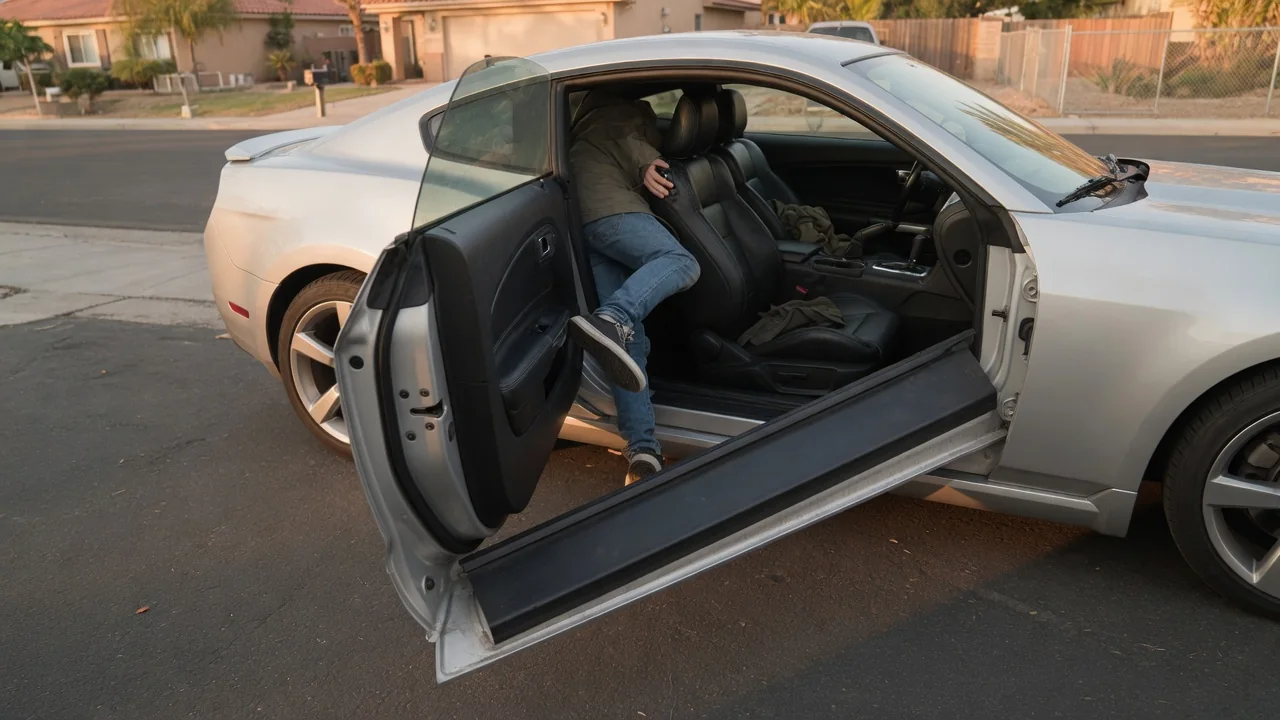
Anyone who has swung a leg over a tall, wide threshold has probably wondered why do some cars have high door sills. The answer lies in how the body is engineered: the sill is a major structural member, and its height and width reflect choices about stiffness, crash protection, ground clearance and packaging. Those choices shape how easily people get in and out.
Body construction
In a unibody vehicle, the sill, often called the rocker panel, is a boxed steel or aluminum section running between the front and rear wheel openings beneath the doors. It ties the floor pan to the pillars and helps the shell resist bending and twisting. Because a taller or wider box section is stiffer for a given amount of material, engineers sometimes enlarge the rocker rather than add weight elsewhere, and the result is a threshold that sits noticeably higher than the cabin floor.
Certain body styles lean on the sills more heavily. Convertibles lose the bracing a fixed roof provides, so their rockers are often reinforced to recover rigidity. Sports cars built around a central tub may have very deep side members that occupants must climb across. Side-impact protection also plays a part, since a strong sill helps manage loads when another vehicle strikes the doors. Many electric vehicles place the battery pack under the floor, and the sill structure beside it is commonly strengthened to shield the pack.
Step-over height
Step-over height describes how far a foot must rise to clear the threshold, and it can be judged in two ways: the sill's height above the ground and its height above the interior floor. A crossover with generous ground clearance may have a sill well off the pavement yet nearly level with the carpet. A low coupe can present the opposite, with a sill close to the road but a floor dropped well below it, creating a tub you step down into.
Width matters as much as height. A broad sill pushes the seat farther inboard, so the leg has to travel across a longer span before the foot lands on the floor. Body-on-frame trucks and off-road vehicles add another variable, because the cabin sits above a separate frame and the floor itself is elevated. Running boards or side steps are often fitted to break the climb into two smaller moves. These dimensions differ by model, trim, suspension and tire size, so similar-looking vehicles can feel quite different.
Usability
How demanding a sill feels depends on its relationship to the seat. When the cushion sits near a standing adult's hip height, a person can turn, sit and pivot their legs in with little effort, even if the threshold is fairly tall. A low seat behind a high, wide sill is harder, because the occupant must fold down, lift the knees and slide across at once. Drivers with limited hip or knee mobility, shorter adults and children tend to notice that combination first.
The rest of the door opening affects the experience too. A steeply raked windshield pillar, a low roofline or a door that opens to a narrow angle can force the head and shoulders to duck while the feet are still clearing the sill. Getting out is often trickier than getting in, since a heel can catch the threshold lip as the leg swings outward. Some designs wrap the door bottom over the sill so the surface stays cleaner and clothing is less likely to brush road grime.
Everyday Use and Observations
A few minutes with the doors open reveals most of what matters. Look at how far the scuff plate stands above the carpet, how wide it is, and how much distance separates it from the seat cushion edge. Try entering with the door only partly open, as it would be in a tight parking space, because a restricted opening magnifies a tall sill. Check the rear doors separately, since they are often shorter and the wheel arch can intrude into the foot path.
Daily habits expose details a quick test misses. Lifting a child into a seat, loading a rear passenger with a cane, or stepping in during rain or slush all feel different across a high threshold. Worn scuff plates and scuffed outer seat bolsters on a used vehicle show where occupants drag feet and slide across. The sill area also commonly houses door seals, drain openings and the designated lifting points, whose exact locations vary and should be confirmed in the owner's manual.
Limits and Next Steps
Sill height is a fixed feature of the body and cannot be meaningfully reduced after purchase. Because the rocker is part of the crash and stiffness structure, cutting, reshaping or drilling it is a poor idea, and corrosion or collision damage in that area deserves assessment by a qualified body shop. Add-on side steps, grab handles and seat aids can ease entry on some vehicles, but mounting provisions and suitability depend on the specific model, so fitment should be verified before buying.
For shoppers, the practical step is to test entry and exit in person with everyone who will ride regularly, wearing ordinary shoes and clothing. Published specifications rarely describe step-over height directly, and ground clearance figures alone do not show how the sill relates to the floor or seat. Some vehicles with adjustable suspension can lower themselves for easier access, though availability and behavior differ by manufacturer and trim. Comparing several body styles back to back is the most reliable way to judge comfort.