Why Do Prototype Cars Wear Camouflage?
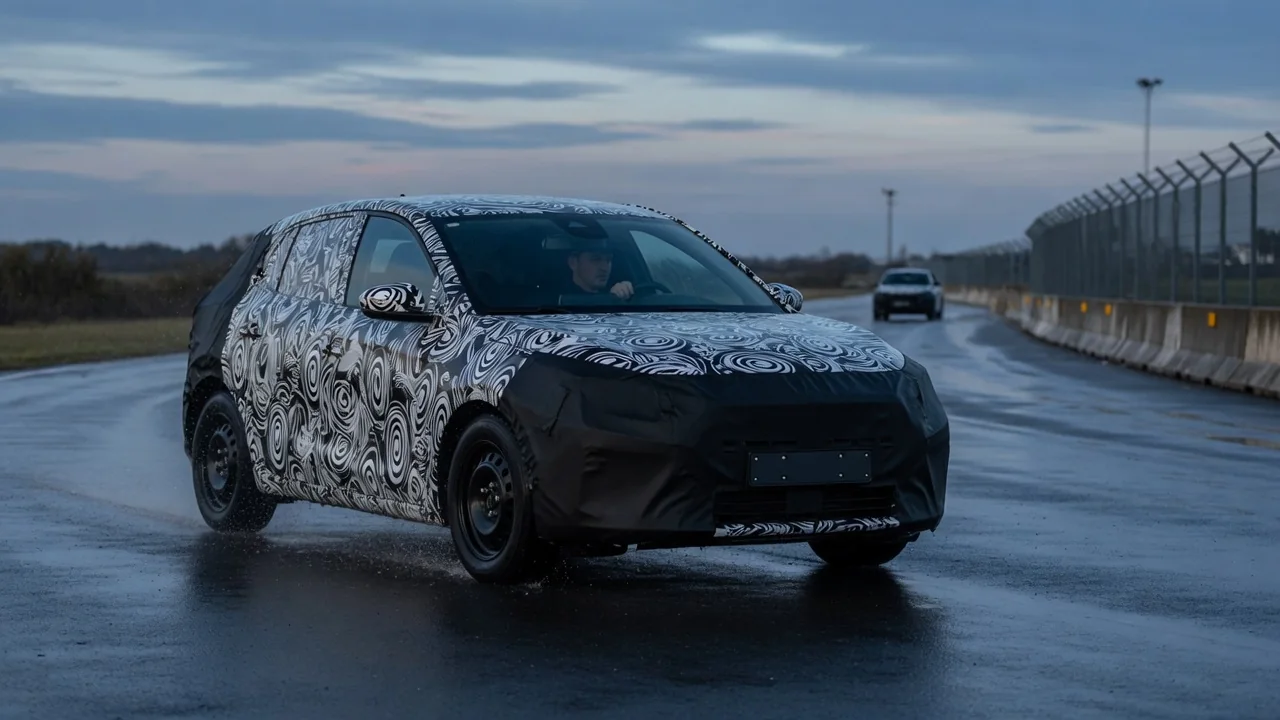
Prototype cars wear camouflage because automakers need to test unfinished vehicles in the real world while keeping the final design private until an official reveal. The swirling wraps, bulky panels, and taped-over details are not decoration. They are practical tools for hiding shape, styling cues, and sometimes even which model is underneath. The main test car camouflage reason also explains why these vehicles look so odd and why the disguise can only do so much.
Shape Concealment: Hiding Lines, Surfaces, and Details
Much of what makes a new car recognizable comes from its surfaces: the creases along the doors, the curve of the roofline, and the shape of the grille and lights. People see these features largely through how light falls across the body. A smooth, single-color paint finish shows every highlight and shadow, which makes it easy for an observer or a camera to read the contours. Camouflage works by disrupting that information.
The best-known technique is a vinyl wrap printed with dense, high-contrast patterns such as swirls, geometric shapes, or irregular blocks. These patterns break up reflections and make it hard to tell where one panel ends and another begins. They can also make it harder for cameras to focus cleanly on body lines, which reduces the value of long-distance photos. The idea is related to older dazzle-style camouflage. Rather than making a vehicle invisible, it makes the vehicle's form harder to interpret.
Wraps are often combined with physical disguises. Engineers may attach foam padding, plastic cladding, or temporary panels to change the apparent shape of bumpers, fenders, or the rear end. Lights may be covered or replaced with temporary units. Badges may be removed or taped over. Distinctive elements such as grilles or wheel designs may be hidden behind generic covers. Inside, dashboards and seats are frequently draped with cloth. Some early test vehicles go further and use the body of an existing model to carry new mechanical components, so the outside reveals little about the final product.
Public Testing: Why Prototypes Leave the Proving Ground
If camouflage is so much trouble, why not keep prototypes behind closed doors? Because private proving grounds cannot reproduce everything a car will face once it is sold. Engineers need to see how a vehicle behaves in ordinary traffic, on worn and uneven pavement, on long highway stretches, and in city stop-and-go driving. They also need a range of climates and elevations. Extreme heat, deep cold, dust, and humidity all affect engines, batteries, cooling systems, climate control, seals, and electronics in ways that are difficult to simulate fully.
Durability and reliability testing also depends on piling up large amounts of real-world driving, and some of that mileage is most practical on public roads. Testing in different regions helps confirm that a vehicle works with local fuels, road conditions, and driving patterns. Driver-assistance systems in particular benefit from exposure to real lane markings, signs, traffic behavior, and weather.
Once a prototype leaves a controlled facility, anyone can see and photograph it. Enthusiast outlets and photographers who specialize in capturing test cars actively look for them, especially near areas known for vehicle testing. Camouflage lets the manufacturer continue necessary work in public while limiting how much of the finished design leaks out. Keeping the design under wraps also helps the automaker control the timing of its official announcement and avoid pulling early attention away from models currently on sale.
The Limits of What Camouflage Can Hide
Camouflage reduces how much detail can be read from a car, but it cannot change the fundamentals. Overall length, height, and width stay visible, along with the wheelbase, track width, and the basic relationship between the wheels and the body. The glass area and roof height are hard to disguise without blocking the driver's view. Someone who knows cars well can often identify the general size class and body style. They may even make a reasonable guess about the underlying platform when surface details are hidden.
There are engineering trade-offs as well. Padding and added panels change airflow around the body, which can affect aerodynamic measurements, wind noise, fuel or energy consumption, and cooling. Covered vents or lights may need to be opened up for certain tests. For this reason, some evaluations are done with minimal or no disguise in controlled settings. The amount of camouflage on a given test car usually reflects what the team needs to measure at that stage. As a program gets closer to production, test cars often appear with lighter disguise, though this varies by manufacturer and project.
Camouflage also has to coexist with road rules. A prototype driven on public roads still needs working lights, adequate visibility for the driver, and whatever registration local regulations require. That limits how much of the car can be covered, particularly around lamps, mirrors, and windows.
Practical Implications for Drivers and Enthusiasts
For drivers who come across a disguised car, the most useful takeaway is that a test vehicle is a work in progress. Trim, wheels, interior materials, and even mechanical specifications may change before production. A prototype might also be an engineering mule rather than an accurate preview. Drawing firm conclusions about a future model from a single camouflaged sighting is risky. Spy photos are best treated as hints rather than confirmation.
On the road, test cars should be treated like any other vehicle. They may drive at unusual speeds, repeat the same routes, or travel in small convoys while engineers gather data. Some carry extra equipment such as sensors or data-logging hardware. Following closely or trying to keep pace to take photos creates the same risks as any other distracted or aggressive driving.
For enthusiasts tracking upcoming models, camouflage is a reminder of the gap between public curiosity and an automaker's product schedule. The disguise protects design work. The real answer about what a car looks like and how it performs arrives with the official reveal and production specifications. Until then, camouflage mainly tells you that development is underway, not exactly what will reach showrooms.