Why Do Dark Paint Colors Show Dust So Quickly?
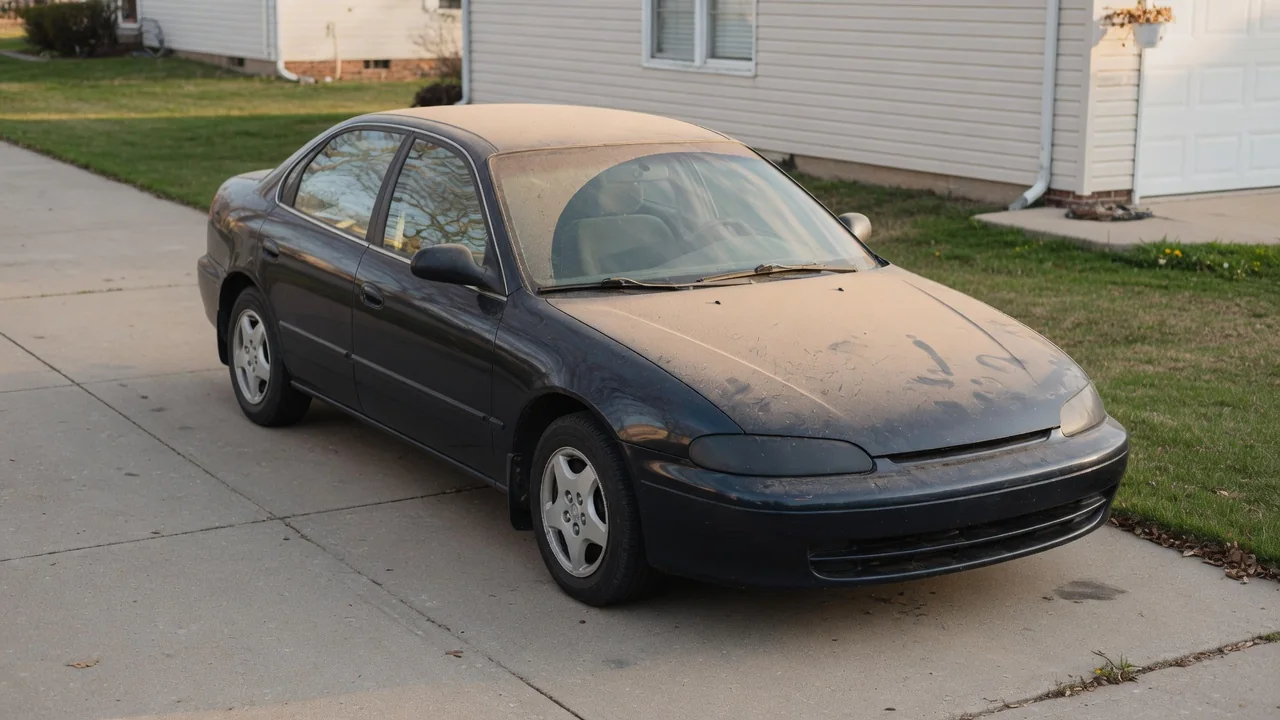
A dark car can look spotless in the morning and dusty by afternoon. In many cases it is not collecting much more dust than a lighter car; the dust is simply far easier to see. Dark car paint dust visibility comes down to three things: contrast between pale particles and a deep finish, static charge that helps fine dust cling, and cleaning habits that either protect or mark the surface.
Contrast: why pale dust stands out on dark paint
Everyday airborne dust is a mix of fine soil and road particles, pollen, ash, and other debris. Much of it looks light gray, tan, or yellowish when it accumulates. A black, navy, or dark gray panel absorbs most of the visible light that hits it, while those particles scatter light back toward your eyes. The eye is very sensitive to that difference in brightness, so even a thin layer reads as an obvious film. On white, silver, or beige paint, the dust is close to the color and brightness of the finish, so the same amount blends in.
Gloss makes the effect stronger. A clean clearcoat over a dark base behaves much like a dark mirror: it reflects light in a single direction, so from most angles the panel looks deep and uniform. Dust breaks that smooth surface into countless tiny scattering points that send light in every direction. The result is a grayish, frosted haze that flattens the depth of the color. The same optical principle explains why water spots, fingerprints, and fine swirl marks are also more noticeable on dark paint.
Lighting and position matter as well. Low-angle sunlight or a bright light skimming across a panel highlights dust more than overhead, diffuse light. Horizontal surfaces such as the hood, roof, and trunk lid collect the most because particles settle on them by gravity. Metallic and pearl finishes contain reflective flakes that break up reflections, so they can mask light dust somewhat better than a solid dark color, although the difference depends on the specific paint.
Surface charge: how static helps dust cling
Automotive paint is built from insulating layers of primer, base coat, and clearcoat, so electric charge that forms on the outer surface does not drain away quickly. Charge can build through the triboelectric effect, in which two materials that touch or rub and then separate exchange electrons. Airflow and airborne particles striking the body while driving, as well as wiping the paint with a dry cloth or duster, can all leave the surface charged. A charged panel attracts fine particles, including ones that carry no charge of their own, so the smallest dust can hold onto paint more firmly than gravity alone would suggest.
The color of the pigment does not fundamentally change this behavior. Static depends mainly on the outermost material, meaning the clearcoat and any wax or sealant on top of it, along with conditions such as humidity. In dry air, charge tends to persist longer, while moisture in the air helps it dissipate, which is one reason dust can seem especially clingy in dry, windy weather. In other words, static affects light and dark cars broadly alike, but dark paint is where the result becomes visible.
Surface condition also plays a role. Residue from some detail sprays, an oily road film, or leftover product that was not fully buffed off can leave the paint slightly tacky, which holds dust in place. Some protective products are marketed as reducing static or dust attraction; actual results vary with the product and conditions, and no coating stops dust from landing.
Gentle cleaning without marring dark paint
The contrast that makes dust obvious also makes dark paint unforgiving of scratches. Dust contains hard mineral grains, and dragging them across clearcoat with a dry towel or firm pressure creates fine marring and swirl marks that show clearly in sunlight. The most important rule is to avoid dry-wiping dusty paint, even with a soft cloth.
For a light layer of dust on an otherwise clean car, a rinseless or waterless wash product made for automotive paint is a common approach. Spray generously so the surface is well lubricated, use a clean, plush microfiber towel folded into quarters, wipe with light pressure in straight lines, and turn to a fresh side often. Follow with a second dry microfiber to buff off remaining moisture. Wax-treated cotton dusters are another option some owners use for very light, dry dust, but they need an extremely light touch and regular cleaning, and they should not be used on gritty or damp dirt.
When dust is heavy or has mixed with moisture into a gritty film, a full wash is safer. Rinse thoroughly first to remove loose particles, then use a car shampoo intended for automotive finishes rather than household dish soap, which can strip wax or sealant. The two-bucket method, with one bucket for soapy water and one for rinsing the mitt, helps keep grit off the paint. Work from the top down, wash in the shade on cool panels to reduce water spotting, and dry with a soft drying towel or a blower. Keep wheel brushes and towels separate from paint tools.
Practical implications and limits
Visible dust on a dark car is normal and is not a sign of a paint defect. Because every contact with the paint carries some risk of marring, chasing each new layer of dust can do more harm over time than leaving light dust until the next proper wash. Reducing exposure is often more effective: a garage or carport, parking away from gravel roads, construction sites, and heavy pollen sources, or a clean car cover placed only on a clean car, since a cover over dirty paint can rub grit into it.
A wax, sealant, or ceramic coating creates a slicker surface that releases dust more easily and lowers friction during cleaning, but it does not keep dust from settling. Specialty finishes are a separate case: matte and satin paints generally need dedicated care products and should not be polished or waxed with conventional products, so the owner's manual or the paint manufacturer's guidance should take priority over general advice for any specific vehicle.
For anyone weighing a color choice, the general tendency is that dark solid colors show dust, water spots, and swirls most readily; mid-tone silvers and grays usually hide everyday dust well; and white masks dust but can reveal dark road grime and tar. These are visual tendencies rather than rules, and individual shades vary. Local climate, driving conditions, and parking habits ultimately influence how dirty a car gets more than its color does.