Why Do Cars Need a Cabin Air Return Path?
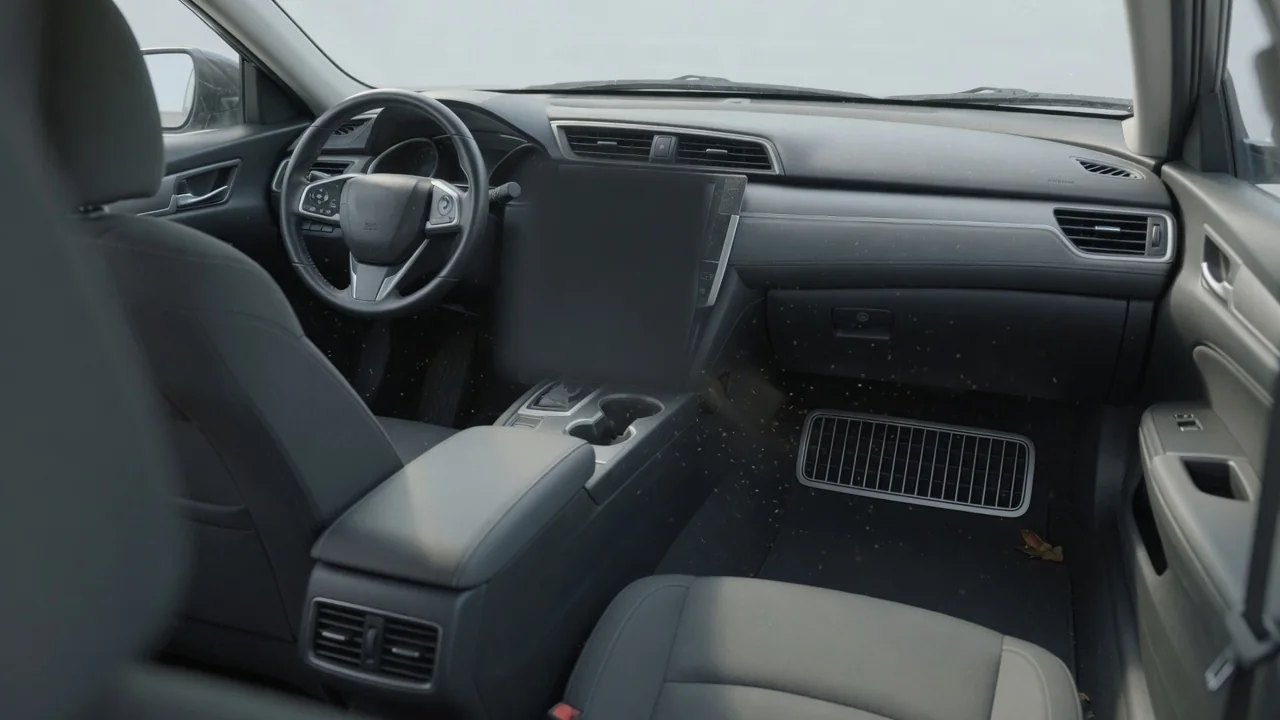
All the air a car's blower pushes into the cabin has to go somewhere. A cabin air return path is the route that lets that air leave the passenger compartment. During recirculation it flows back to the HVAC intake. When fresh air is being drawn in, it exits through vents in the body. Without a clear exit, airflow weakens, pressure builds, and heating, cooling and defogging all suffer. This article explains why that path matters and what can block it.
Recirculation
In recirculation mode, the HVAC module closes or partly closes its fresh-air door and draws air from inside the cabin through a recirculation inlet. In many vehicles this inlet sits low on the passenger side near the HVAC housing, often around the glove box area, though the exact location varies by design. Air leaves the dash and floor outlets, mixes with the cabin air, moves through the passenger compartment and is pulled back to that inlet. This continuous loop is the most direct form of a cabin air return path. If air cannot travel back freely, the blower draws through a restricted opening, and the whole loop delivers less air than it was designed to.
Recirculation is useful because cabin air is often closer to the target temperature than outside air. On a hot day, the evaporator has less heat to remove from air that has already been cooled once. Recirculation also limits how much outside odor, exhaust and dust enters the cabin. The tradeoff is that the same air also keeps the moisture and carbon dioxide that occupants exhale. That is why windows can fog more readily in recirculation mode, and why many systems either encourage or automatically switch back to fresh air under certain conditions.
Fresh-air mode depends on a different return path. Air enters through the cowl intake near the base of the windshield, so an equal amount has to leave the cabin. That job usually falls to pressure relief vents, sometimes called body exhausters or extractor vents. These are typically one-way flaps placed toward the rear of the body, often hidden behind a bumper cover or inside a rear body panel. They open under slight cabin pressure to let air escape, and they close to resist water, dust and exhaust gases trying to enter.
Fan efficiency
Most cabin blowers use a centrifugal, or squirrel-cage, fan driven by an electric motor. The amount of air it delivers depends on the total resistance of the circuit. That includes the intake, cabin air filter, evaporator, heater core, ducts, outlets and finally the exit from the cabin. As resistance rises, a fan running at a given speed moves less air. The return path is part of that circuit. When the cabin cannot vent or recirculate freely, the resistance rises, and so does the pressure working against incoming air. The motor keeps drawing electrical current and spinning, but less useful airflow comes out of the vents. Selecting a higher fan setting in that situation mostly adds noise rather than recovering the lost volume.
Reduced airflow affects more than comfort. Cooling capacity depends partly on how much air passes across the evaporator. With less air moving, the air that does come out may feel cold, yet the cabin cools down more slowly. Defrost and defog performance depends on moving enough dry air across the inside of the glass, so a restricted circuit can slow how quickly windows clear. A related, well-known effect involves the doors. Pressure relief vents also let air escape when a door is shut. When they are restricted, trapped air cushions the door, and it can feel harder to close unless a window is slightly open.
Obstructions
On the recirculation side, the most common obstructions are ordinary objects. Floor mats that ride up, bags, papers or clothing in the front passenger footwell can partially cover the inlet grille. Debris that gets past the grille can also collect inside the HVAC housing. In many designs, the cabin air filter sits downstream of both the fresh-air and recirculation intakes. A heavily loaded filter can therefore restrict airflow in either mode. Leaves and other debris packed into the cowl area can restrict the fresh-air intake in a similar way.
On the exit side, pressure relief vents can be blocked from inside or outside the vehicle. Inside, cargo pressed tightly against trunk or cargo-area trim may cover openings that lead to the vents. Outside, mud, road debris or damage behind a bumper cover can keep a flap from opening fully. Aftermarket sound deadening, body repairs or trim changes can unintentionally seal these passages. A flap can also stick open or tear, which keeps the outlet clear but may let exhaust, dust, water or extra road noise into the cabin.
The path between the outlets and the exits matters too. In many cabins, air headed for the rear seats travels partly along the floor and under the front seats. Tightly packed storage under the seats or bulky items in the rear footwells can disrupt that distribution. The result can be uneven temperatures front to rear, even when the system itself is working normally.
Practical implications and limits
Some symptoms point toward the return path rather than the refrigerant or the blower itself. Examples include airflow that seems weak in every mode, doors that close noticeably harder than they used to, and windows that clear more slowly than expected. Opening a window slightly and noticing that airflow from the vents improves can be a rough hint, but it is not a diagnosis. Owners can keep the passenger footwell clear, replace the cabin air filter on the interval in the maintenance schedule, and avoid wedging cargo against rear trim panels. Inlet and relief vent locations differ between vehicles, so the owner's manual or official service information is the right place to confirm them.
A clear return path is necessary for good HVAC performance, but it does not guarantee it. It will not make up for low refrigerant charge, a failing blower motor or speed controller, a stuck blend or mode door, or a restricted evaporator or heater core. Recirculation also is not meant to be a permanent setting, because humidity and stale air build up over long drives. When airflow, temperature or fogging problems persist after obvious obstructions are removed, a technician can measure system behavior and isolate the cause. Guessing at parts based on symptoms alone is unlikely to fix the problem.