Why Do Carmakers Build Concept Cars? Design, Technology and Limits
Concept cars often look as if they rolled out of a science fiction film, yet most never reach a dealer lot. So why do carmakers build concept cars at all? A concept is a working tool, not a finished product. It lets a manufacturer test design directions, demonstrate engineering ideas and gauge reactions before committing to the very high cost of series production. Understanding the purpose of concept car development also explains why the showroom version usually looks and behaves differently.
Design exploration
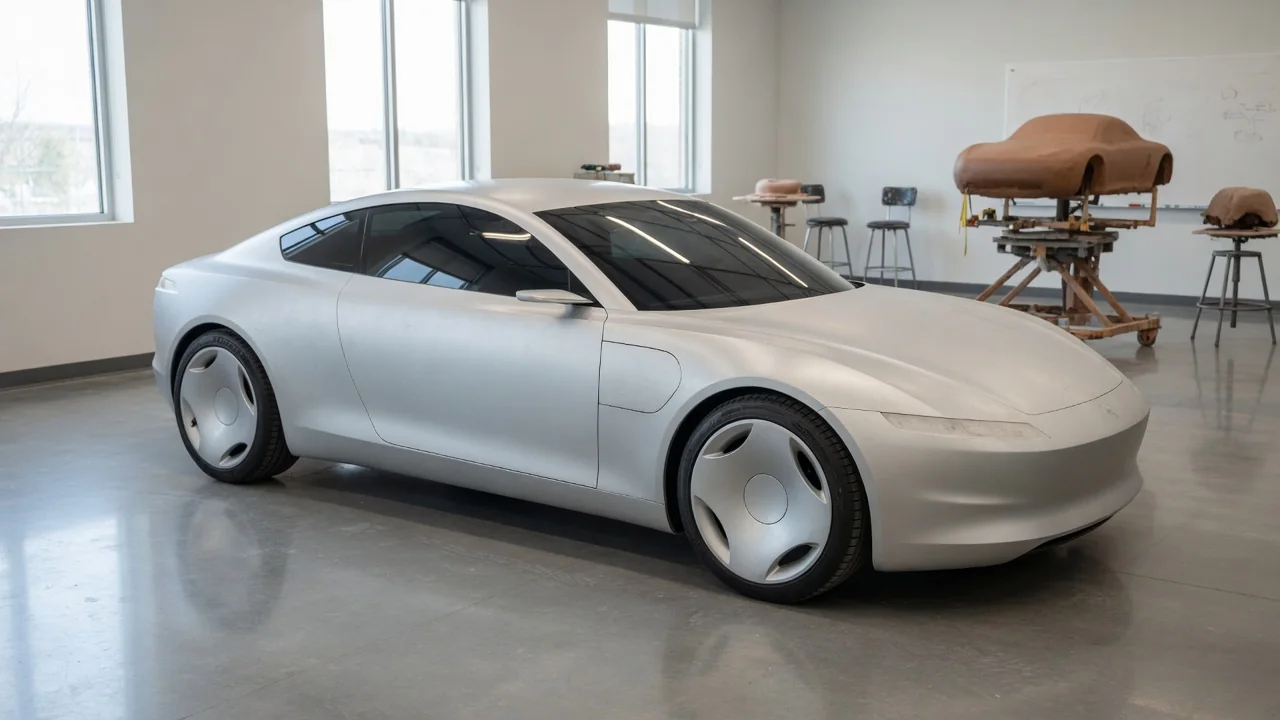
Design studios use concepts to explore ideas without the full set of constraints that govern a production vehicle. Designers can try unusual proportions, very short overhangs, low rooflines, dramatic lighting signatures or open, lounge-like interiors to see whether an idea holds together as a complete object. Sketches and digital renderings are useful early on, but a full-size physical model shows things a screen can hide: how light moves across a surface, how a stance reads from across a room, how large or cramped a cabin feels when you stand beside it. That is why the process typically moves from sketches to digital models and scale or full-size clay models before a finished show car is built.
Concepts also help define a brand's visual language. A grille shape, a lamp graphic, a character line along the side or a particular dashboard layout may first appear on a show car and later be adapted across several production models. Inside the company, a physical concept gives designers, engineers, marketers and executives a shared reference point. Debating a real object is easier than debating a description, and it helps teams agree on a direction before detailed engineering starts.
Finally, concepts are a way to test reactions. Showing a design at an auto show or a press event generates feedback from journalists, enthusiasts and potential customers. That response is informal rather than a controlled study, but it can influence whether a design direction is refined, toned down or dropped.
Technology showcase
The second major reason is technology. A concept can carry ideas that are not yet ready for sale: new electrified or alternative-fuel powertrains, different battery packaging approaches, automated-driving hardware, new instrument and infotainment interfaces, novel lighting, or alternative materials such as recycled fabrics and lightweight composites. Because the vehicle is not intended for customers, engineers can demonstrate a concept in its most ambitious form and show how it might change the shape or layout of a car.
It is important to separate demonstration from validation. Some concept cars are static display pieces with no working powertrain. Others are drivable prototypes, often limited to low speeds or controlled environments. Screens may run prerecorded animations, and sensors may be mockups rather than functioning systems. A feature shown on a concept proves that a company is working on the idea, not that the system has passed the durability, safety and regulatory testing required for public roads.
Showcasing technology also sends signals beyond potential buyers. It tells investors, suppliers, prospective employees and industry partners where a manufacturer intends to go. Suppliers sometimes help develop components for a concept, which gives both sides a chance to evaluate a part in a complete vehicle context before any commitment to volume production.
Production limits
Most concepts change significantly, or disappear, because production cars must meet requirements that show cars can ignore. Crash structures, pedestrian protection rules, minimum lighting and visibility requirements, and regulations for mirrors or camera systems all affect shape. They influence hood height, bumper design, pillar thickness and window size. Very large wheels with thin tires, tiny side mirrors, hidden door handles or unusual door mechanisms may not survive once ride comfort, legality in different markets and real-world usability are considered.
Manufacturing is another filter. A concept is usually built largely by hand, with panels shaped individually and tolerances adjusted one piece at a time. Mass production requires stamping dies and tooling that can repeat the same shape thousands of times, parts that can be sourced reliably, and a design that fits an existing platform and assembly line where possible. The vehicle must also survive years of heat, cold, vibration and corrosion, and it must be serviceable at a reasonable repair cost. Practical needs such as easy entry and exit, headroom, cargo space and outward visibility push the design toward compromise.
Then there is the business case. Even an admired concept may not justify the investment if the expected market is small, the price would be too high or the timing is wrong. Some concepts are never intended for production; others are close previews of an upcoming model, sometimes described as production-intent concepts. The label a manufacturer uses varies, so the purpose of a specific show car is not always obvious from its appearance.
Practical implications and limits
For shoppers, a concept is best read as an indication of direction rather than a promise. A feature seen on a show car may arrive years later, in a simpler form, only on higher trim levels, or not at all. Decisions about buying or waiting for a vehicle should rest on official production announcements and published specifications, not on what appeared at an auto show.
For owners and anyone using a car catalog or repair manual, the distinction matters in another way. Owner's manuals, service procedures and parts listings describe production vehicles, not their concept predecessors. If a production model shares a name or styling cues with an earlier concept, its manual remains the authority on how its systems actually work, what maintenance they need and what limitations they have. Performance, range or efficiency figures quoted for a concept are often targets or estimates, while the figures that apply to your car are those published for the specific production version, market and configuration.
Keep in mind that the reasons described here are general patterns across the industry, not fixed rules. Manufacturers differ in how many concepts they build, how closely their concepts preview production models and how openly they describe a show car's purpose. Treat each concept on its own terms, and rely on production documentation whenever real-world operation or repair is involved.