What Happens Between a Concept Car and Production?
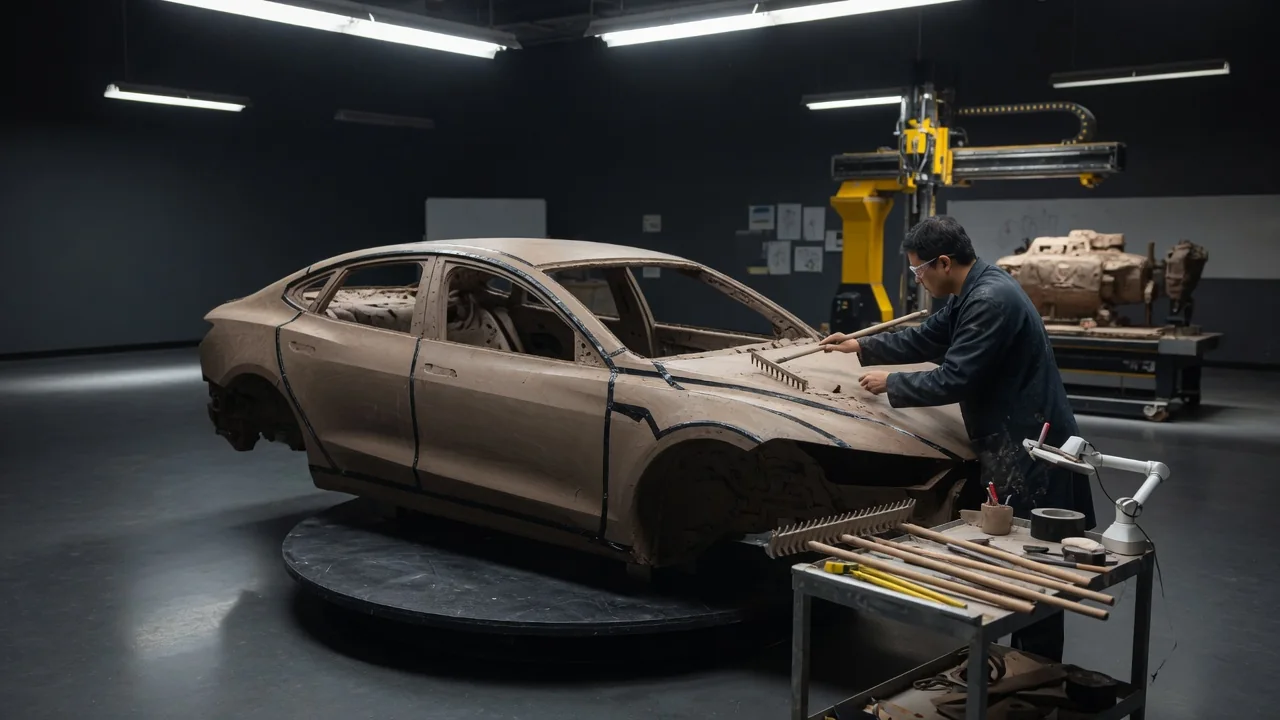
A concept car is a statement of intent, not a finished product. It can preview a design direction, test public reaction to a technology, or set a mood for a brand, and it is often built by hand without most of the constraints a road car must meet. What happens between a concept car and production is a long sequence of engineering decisions, which fall into three broad stages: proving feasibility, engineering for safety, and preparing for manufacturing.
Feasibility: Can the Idea Become a Real Car?
Concept vehicles range from static clay or fiberglass models to drivable prototypes with limited capability. The first question in any production program is whether the design can be packaged around real hardware. Engineers check whether the shape leaves room for the powertrain or battery, suspension travel, cooling airflow, steering lock at the front wheels, occupant headroom, cargo space, and driver visibility. Show cars often use very large wheels with thin tires, extremely low rooflines, tiny mirrors, and minimal ground clearance. Each of those features has to be measured against what a car needs to do on public roads, in bad weather, and over years of use.
Feasibility is also a platform and business decision. Most new production vehicles are built on a shared architecture, so the team must decide whether the concept fits an existing platform or justifies a new one, which is far more expensive. Regulations that differ by market, such as lighting placement, rear visibility, bumper requirements, and pedestrian protection rules, are reviewed early because they can force visible changes. The business case weighs projected sales volume, target price, and the investment needed for tooling. The outcome can be cancellation, a substantial redesign, or approval of a program that keeps the concept's character while adjusting its proportions.
Safety Engineering: From Show Stand to Crash Standards
Concept cars are generally not built to pass crash tests. A production vehicle must meet the safety regulations of every market where it will be sold; in the United States, manufacturers certify compliance with the Federal Motor Vehicle Safety Standards themselves. Many manufacturers also treat independent consumer crash ratings as design targets. Meeting these expectations shapes the body structure: crumple zones, load paths that route crash energy around the passenger compartment, side-impact protection, and roof strength. This is a common reason production pillars are thicker, beltlines sit higher, and dramatic glass areas shrink compared with the show car.
Much of this work happens in computer simulation before physical parts exist, allowing engineers to evaluate many structural variations quickly. Restraint systems such as seatbelts and airbags are then tuned to the specific structure and interior layout. Driver assistance hardware adds its own constraints, because radar units and cameras need mounting points with a clear field of view, which affects grille, bumper, and windshield design. Electrified vehicles add requirements for protecting the high-voltage battery and safely isolating electrical systems after a collision.
Testing moves through stages of physical prototypes. Early mules often hide new components under an existing body, later engineering prototypes carry the real structure, and validation vehicles are used for crash testing, durability driving, hot and cold climate trials, corrosion exposure, and noise and vibration work. Findings from each stage feed back into the design, so the car keeps changing well after the concept is approved.
Manufacturing: Building Thousands Instead of One
A concept car may have panels shaped individually and gaps adjusted by skilled craftspeople. Production demands that every unit come out the same. Design for manufacturing reviews whether sheet metal can be stamped without tearing or wrinkling, which limits very deep draws and razor-sharp creases and explains why crisp concept lines often soften. Plastic parts need draft angles so they release from molds, panel gaps need realistic tolerances, and the assembly sequence must work for both robots and line workers within the time available at each station.
Tooling is one of the largest commitments in the process. Stamping dies, injection molds, and assembly fixtures take a long time to build and are costly to change, so programs set a design freeze after which alterations become difficult. At the same time, purchasing teams source thousands of components from suppliers who must prove their parts meet specifications consistently. Before public launch, pilot builds run on the actual assembly line to expose fit problems, process bottlenecks, and quality issues, and output is then ramped up gradually toward full production rates.
Practical Implications and Limits
For buyers and owners, the main takeaway is that a concept vehicle's features, materials, or performance claims are not a reliable guide to what the showroom version will offer. Items such as camera-based mirrors, unusual interior materials, or experimental controls may be dropped for cost, regulatory, or durability reasons, appear only in certain markets, or arrive years later. The owner's manual and service information describe the production vehicle for a specific market and trim, and those are the documents to rely on.
Even thorough validation cannot reveal every issue before thousands of cars are in daily use. Early production vehicles may receive software updates, running changes on the assembly line, or recall campaigns as problems surface at scale. For maintenance and repair, this means parts and procedures can differ within the same model year, so looking up parts by VIN rather than by model name alone reduces the chance of ordering the wrong component.
The stages described here are a general pattern, not a fixed formula. Manufacturers name and organize their development phases differently, and the time from concept to showroom varies widely depending on whether a program uses an existing platform, a new architecture, or a low-volume specialty process. Some concepts are near-final previews of an upcoming car, while others were never intended for production, and from the outside it is usually impossible to tell which is which.