Why Do Car Computers Share Sensor Data?
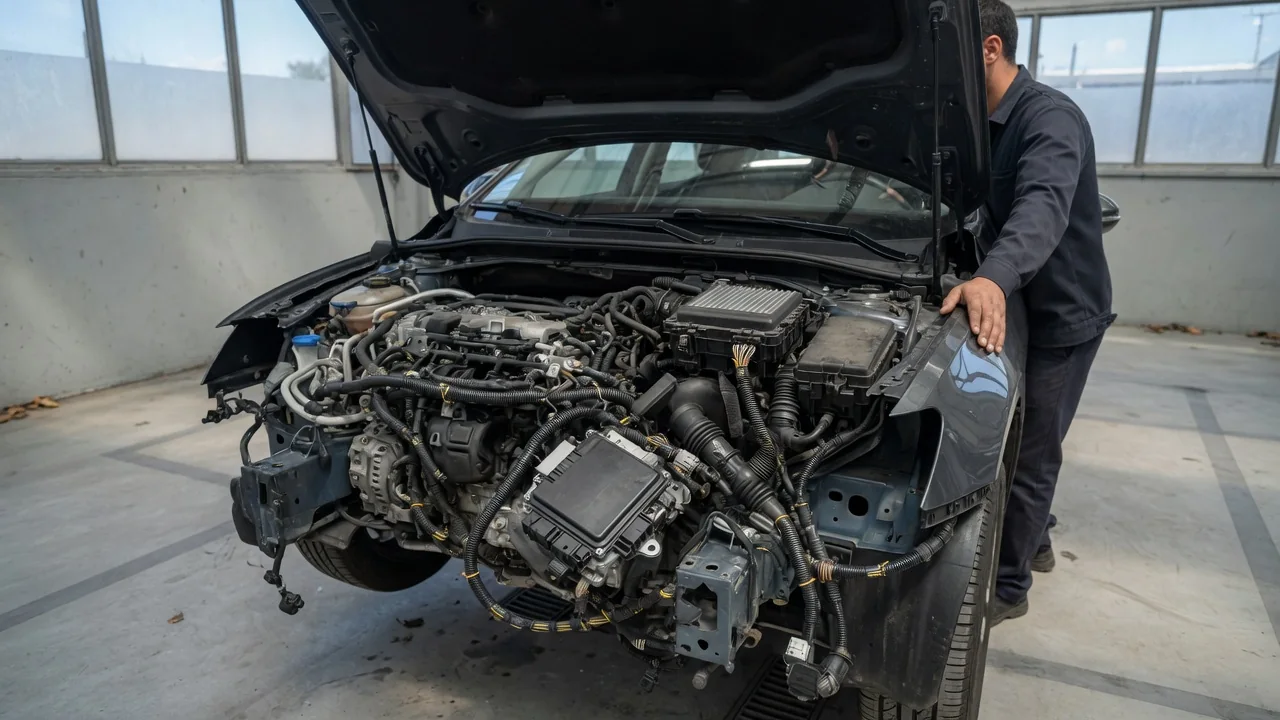
Modern vehicles rely on many electronic control modules, and few of them work alone. The engine computer, transmission controller, brake module, instrument cluster and body electronics constantly exchange readings over an in-vehicle network. Knowing why car computers share sensor data explains a lot about how today's cars are built. It also explains why one failed part can trigger several warnings at once, and why diagnosis often starts with the whole network rather than a single component.
Common signals
Most vehicle modules share sensor data over a network such as the Controller Area Network, or CAN bus. This network links control units through shared wiring, usually a twisted pair. Each module does not own a private set of sensors. Instead, a sensor is usually wired to one module, which reads it, converts it into a digital value and broadcasts that value as a message. Any other module that needs the information listens for that message and uses it. Many vehicles also have additional networks, such as slower buses for comfort features. A gateway module connects these networks and passes selected messages between them.
Some signals are needed by almost every system. Wheel speed is a classic example. Sensors at each wheel feed the anti-lock brake module, which in many designs also supplies vehicle speed to other modules. That speed value can be used by the speedometer, transmission shift logic and cruise control, and sometimes by speed-sensitive features such as power steering assist or radio volume. The engine control module shares engine speed and engine load, which help the transmission choose shift points. Coolant temperature can drive the gauge, the cooling fan strategy and climate control decisions. Other commonly shared values include accelerator pedal position, brake pedal status, steering angle, yaw rate, gear position, outside air temperature and battery voltage. Which module owns each signal varies by manufacturer and model year.
Modules also use the network to coordinate actions, not just to exchange readings. When a stability control system detects a skid, it may ask the engine computer to reduce torque. A transmission controller may request a brief torque reduction during a shift. These requests only work if both sides interpret the same shared values the same way.
Efficiency
The most direct benefit is fewer duplicated parts. If five modules each needed their own speed or temperature sensor, the car would carry extra sensors, connectors and wiring. All of these add cost, weight, assembly time and possible failure points. A single sensor that is read once and broadcast on the network can serve every module that needs it. As vehicle electronics multiplied, replacing many dedicated point-to-point wires with a shared bus became one of the main reasons network architectures turned into standard practice.
Sharing also improves consistency. When the speedometer, transmission and stability system all use the same speed value, they work from one version of the truth. Separate sensors would give several slightly different readings. A single shared value makes coordinated behavior more predictable, such as torque reduction during a skid or adjusted shift timing on a grade. A shared network also makes it practical to add features through software. A new function can often use signals already on the bus instead of requiring new hardware.
Networks are designed to handle this traffic in an orderly way. On CAN, each message carries an identifier that sets its priority. Time-critical information such as braking or powertrain data can therefore get access to the bus ahead of less urgent messages like comfort settings. Modules also check message integrity and can detect when expected messages stop arriving, which matters when something goes wrong.
Fault effects
The trade-off is that one fault can show up in several places. Because a shared signal feeds multiple systems, a failed sensor, a damaged wire or a faulty reading module can cause symptoms far from the actual problem. A bad wheel speed sensor, for example, commonly turns on the ABS and traction or stability control warnings. On some vehicles it can also affect the speedometer, cruise control availability or transmission shifting. To the driver this can look like several unrelated failures, when the root cause is one sensor or its circuit.
Modules usually respond to missing or implausible data with fallback strategies. A controller may substitute a default value, or compare one signal against related signals to judge whether it makes sense. It may also disable a dependent feature or enter a reduced-function mode, often called limp mode. Diagnostic trouble codes are typically stored in whichever modules notice the problem. That can include both the module that owns the sensor and the modules that use its data.
Network faults create a different pattern. A module can stop communicating because of a power, ground or wiring problem. The bus itself can be disrupted by a short or a failing component. In either case, other modules may log lost-communication codes, often in the U-code range, and several warning lamps can light at once. Low system voltage, such as from a weak battery, can also make modules behave erratically or report communication errors. For this reason, voltage is usually one of the first things technicians check when many warnings appear together.
Practical implications and limits
For owners and technicians, the main lesson is to look at the whole picture before replacing parts. A full scan that reads codes from all modules, not only the engine computer, shows which symptoms share a common input. Generic OBD-II code readers mainly access emissions-related powertrain data, so they may miss codes stored in brake, body or chassis modules. Professional or manufacturer-level scan tools typically see more. Where live data is available, a technician can compare the same signal as reported by different modules to find where it goes wrong.
Repairs can involve more than replacing hardware. Modules depend on each other's data and configuration, so a replacement control unit may need programming, coding or a relearn procedure. On vehicles that require it, some sensors, such as steering angle sensors, may need calibration after an alignment or a component replacement. Aftermarket electronics spliced into network wiring can disrupt communication, so they deserve a close look when unexplained network faults appear.
Any general explanation has limits. Network layout, the number of buses, which module owns a given sensor and how each system reacts to a missing signal all differ between manufacturers, models and even model years. Some safety-related functions use redundant sensors or dedicated wiring instead of relying only on shared messages. For a specific vehicle, the factory service information is the reliable reference for wiring diagrams, module responsibilities and the correct diagnostic sequence.