Why Can a Loose Trim Clip Sound Like a Mechanical Fault?
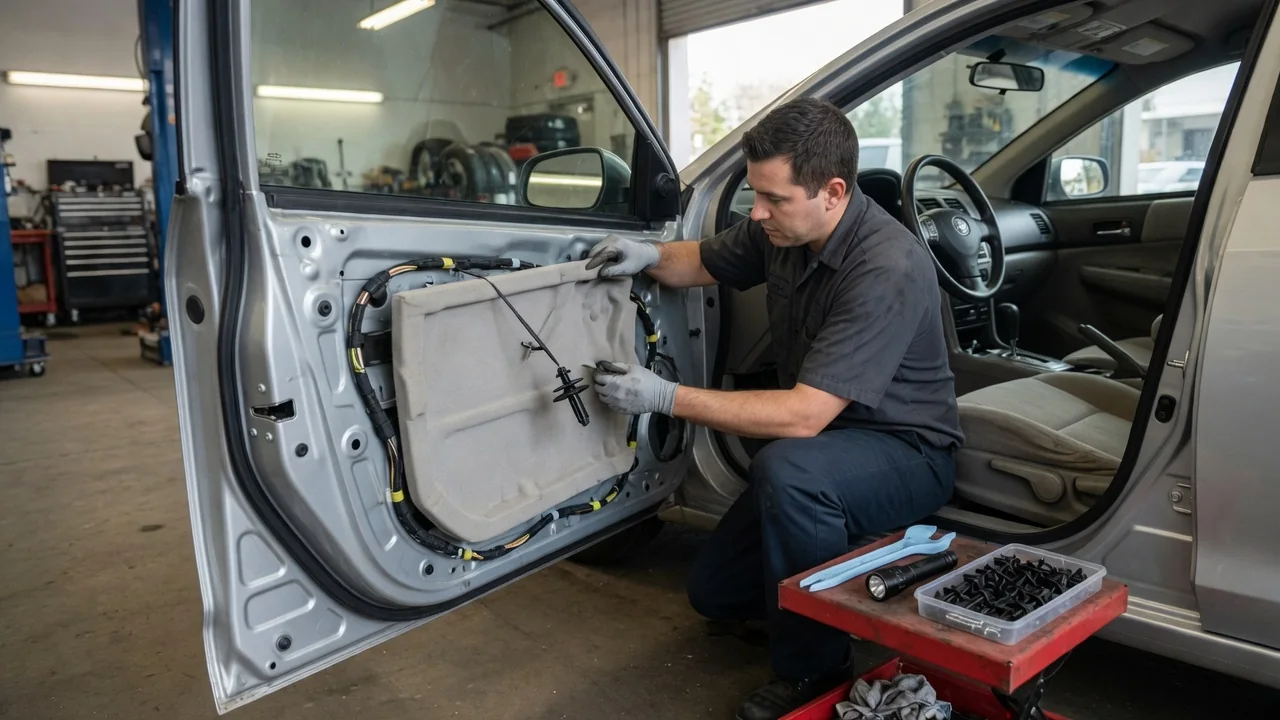
A loose trim clip is one of the cheapest parts in a car, yet its noise can convince an owner that something expensive is failing. A rattle that seems to come from the suspension, a tick that follows engine speed, or a buzz that appears only on rough pavement may all start at a panel that has lost its grip. Knowing why this happens makes car trim rattle diagnosis more methodical and helps you avoid chasing the wrong fault.
Sound Travel: Why the Source Is Hard to Pin Down
A vehicle body is a network of stiff, connected structures: stamped metal shells, brackets, reinforcements, and plastic panels fastened to them. Vibration from the engine, tires, driveline, and suspension enters the body through mounts and bushings and then travels through solid material. This structure-borne vibration can move a long way from where it began before it becomes audible. A trim panel held by clips is part of that path. When a clip loosens, the panel gains a small amount of freedom and starts striking the metal behind it or a neighboring piece of trim. The sound is created at the panel, but the energy driving it came from a mechanical source elsewhere, so the noise naturally shares that source's timing and rhythm.
The cabin then makes locating the noise harder. It is a small enclosed space with reflective surfaces such as glass and hard plastic, and human hearing is poor at pinpointing sounds in reverberant spaces. Hollow sections like door shells, pillars, and the area behind the dashboard can behave like resonant cavities that amplify certain frequencies. As a result, a clip inside a door card or pillar cover can seem to come from a wheel, the floor, or the front suspension.
The character of the sound adds to the confusion. A plastic panel tapping against metal can resemble a loose heat shield, a worn stabilizer link, or a knock from a joint or bushing. Because the panel is excited by road and engine inputs, the rate of the tapping often rises with vehicle speed or engine speed, which is exactly what owners expect from a mechanical fault. These are general mechanisms; how strongly a particular vehicle transmits and amplifies vibration depends on its construction, materials, and condition.
Reproduction: Recreating the Noise on Purpose
Reliable diagnosis starts with making the noise happen when you want it to. Note the conditions that trigger it: road surface, speed, engine load, outside temperature, steering input, braking, window position, and whether the climate fan or audio system is on. Trim noises often depend on body flex and temperature. Plastic contracts in the cold and can fit differently in its clips, so some rattles appear on cold mornings and fade once the cabin warms up. Noises tied closely to a specific motion, such as turning at low speed or braking firmly, keep mechanical components higher on the list.
Next, try to separate the possible inputs. Listen with the vehicle stationary while gently varying engine speed, then compare the same road at different speeds. Switch off the fan and audio to rule out ducts and speakers. Driving slowly and diagonally over a driveway lip or similar incline twists the body and often provokes trim and body noises without large suspension loads. If a passenger presses a hand firmly against a suspect panel and the noise changes or stops, that is a strong clue. The driver should stay focused on driving and leave the probing to someone else.
Some noises can also be reproduced with the vehicle parked. Tapping panels with a knuckle, pushing and pulling on trim edges, closing doors, and rocking one corner of the car by hand can each excite different parts. A sound that repeats when you press a specific panel points toward trim. A sound that appears only under weight transfer, braking, or steering while driving leaves mechanical causes as serious candidates.
Inspection: Confirming Where the Noise Comes From
Start with a visual and hands-on check of the interior. Look for uneven gaps, panel edges that sit proud, trim that moves under light pressure, and areas that may have been disassembled before for audio, alarm, or window work, because clips are often damaged during removal and reinstallation. Also empty door pockets, the glovebox, the center console, and seat-track areas. Loose objects are not trim, but they produce very similar sounds and are easy to rule out.
If a panel needs to come off, plastic trim tools reduce the risk of breaking clips or marring surfaces. Clips can become brittle with age, and many are not designed for repeated use. Once the panel is off, look for broken clip heads left in their holes, mounting holes that have worn oversized, and rub marks such as shiny spots, scuffed paint, or compressed foam that show where parts have been contacting each other. Replace clips with the correct type for that location. Follow the vehicle's service information for removal order and precautions, especially near pillars, the steering wheel, and the dashboard, where airbag components may be present.
If the interior does not explain the noise, the inspection should move underneath and around the chassis. Heat shields, exhaust hangers, stabilizer links, bushings, and brake hardware can all produce rattles and knocks. Clunks associated with steering or braking deserve a proper mechanical inspection before anyone settles on trim as the answer, because those systems affect control of the vehicle.
Practical Implications and Limits
In practice, it makes sense to check simple, inexpensive causes early, but not in place of safety-relevant ones. Certain signs suggest something beyond loose trim: a noise that changes character or grows louder over time, or one accompanied by changes in steering feel, braking behavior, handling, warning lights, fluid leaks, or unusual smells. Those point toward a mechanical inspection regardless of how much the sound resembles a rattle.
There are also limits to what any owner or technician can conclude from sound alone. More than one source can be active at once, and fixing the loudest one sometimes reveals a quieter one that was masked. Noises that depend on temperature or a particular road may not appear during a short shop visit, so a phone recording with notes on speed, temperature, and road conditions can help a technician reproduce them. Some vehicles have recurring noise locations, but that is vehicle-specific knowledge best taken from the manufacturer's service information rather than generalized. A repaired clip can also loosen again if its mounting hole is worn or the panel is distorted. The most dependable confirmation is a change made at one suspected location that consistently eliminates or alters the noise under the same conditions that used to produce it.