How to Tell Whether a Car Exhaust Rattle Is Loose Hardware
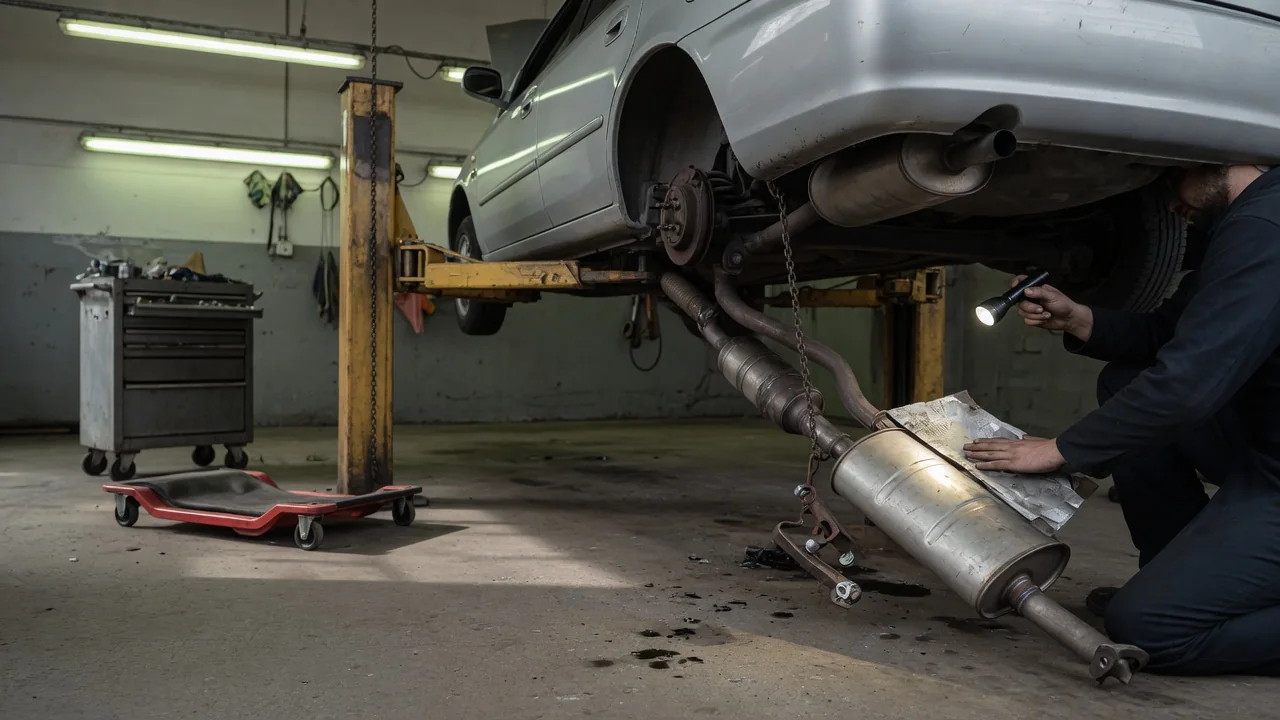
An exhaust rattle can come from something as minor as a loose heat shield or as involved as a failing internal component. Learning how to tell whether a car exhaust rattle is loose hardware starts with careful listening and looking from a safe distance, never by reaching toward pipes that stay dangerously hot long after the engine stops. These observations help you describe the problem accurately to a shop.
Listen at idle
Idle is the most useful starting point because the engine produces steady, low-frequency vibration without road noise masking the sound. With the vehicle parked on level ground, the parking brake set and the transmission in park or neutral, stand beside the car and note where the noise seems to originate. A thin, tinny buzz that comes and goes with small changes in engine speed often points to sheet metal, such as a heat shield, vibrating against a pipe or the underbody.
Compare what you hear on a cold start with what you hear after the engine warms. Metal expands with heat, so a loose clamp or shield may rattle when cold and quiet down later, or the reverse. A deeper knocking that follows engine movement can suggest a pipe touching a crossmember because a hanger has let it sag. A sound like gravel shaking inside a can is different in character and may indicate broken material inside a muffler or catalytic converter rather than external hardware.
Look for hanging pieces
A visual check from outside the vehicle can confirm what your ears suggest. With the engine off, crouch at the rear and sides and look along the underbody with a flashlight, keeping your hands and face well clear. Look for a tailpipe that sits lower on one side, a muffler tilted from its usual position, or a thin metal panel drooping below the pipe. Rubber hangers that have torn or slipped off their pegs often leave a section visibly sagging.
Rust is a strong clue. Heat shields are commonly held by small fasteners or spot welds that corrode away, leaving the shield attached at one corner and free to flap. Clamps and flange joints may show heavy scaling, missing bolts or black soot streaks where gas has been escaping. Layouts vary widely: some vehicles have long single pipes, others dual systems, and many have plastic undertrays that hide much of the exhaust, so what you can see from the ground depends on the design.
Seek repair
Once you suspect loose hardware, the practical step is having a shop raise the vehicle and inspect it properly. A technician with a lift can tap along the cooled system, flex the hangers and find the exact contact point in minutes, which is far safer than crawling under a car supported by a jack. Crawling underneath at home also puts you near components that hold heat for a long time, and burns from exhaust parts can be severe.
Prompt attention matters for reasons beyond noise. A pipe hanging on fewer supports puts extra stress on the remaining joints and can crack or separate, and a dragging component may catch on the road. Any rattle accompanied by a louder exhaust note, a smell of fumes in the cabin, drowsiness or headaches while driving deserves immediate inspection, since leaks ahead of the cabin can let exhaust gas enter the interior. In that situation, drive with the windows open or arrange a tow.
Everyday Use and Observations
Normal driving provides additional evidence if you pay attention to when the noise appears. Loose external hardware tends to react to physical jolts, so a clunk or rattle over speed bumps, potholes and driveway aprons suggests a pipe or muffler swinging on a worn hanger. A buzz that appears only in a narrow engine speed range, then disappears above or below it, is typical of a shield or bracket resonating at one particular vibration frequency.
Notice also whether the sound changes when you shift between drive and reverse, accelerate from a stop or switch the air conditioning on. The engine rocks slightly on its mounts under load, which can move the exhaust enough to touch nearby metal. Keeping simple notes on speed, temperature and road surface gives a technician a clearer picture than a general complaint. If a warning light appears alongside the noise, any stored code is a lead to interpret with testing, not proof that a specific part has failed.
Limits and Next Steps
Observation from a distance can narrow the possibilities, but it cannot confirm the cause. Several unrelated faults imitate an exhaust rattle, including loose underbody panels, worn suspension parts, a stone trapped behind a brake shield and items rolling in the trunk or spare tire well. Sound also travels along the pipework, so a noise that seems to come from the rear may start near the engine. Treat your conclusions as a working theory rather than a diagnosis.
The sensible next step is to share what you have heard and seen with a qualified shop and let them verify it with the vehicle raised. Loose shields, clamps and hangers are often straightforward to secure or replace, while internal damage to a muffler or catalytic converter calls for a different repair, and the right approach depends on the specific vehicle. Avoid improvised fixes such as wire or adhesive near hot components, and avoid touching or shaking any part of the system yourself to test it.