What Is Structure-Borne Noise? How Vibration Becomes Cabin Sound
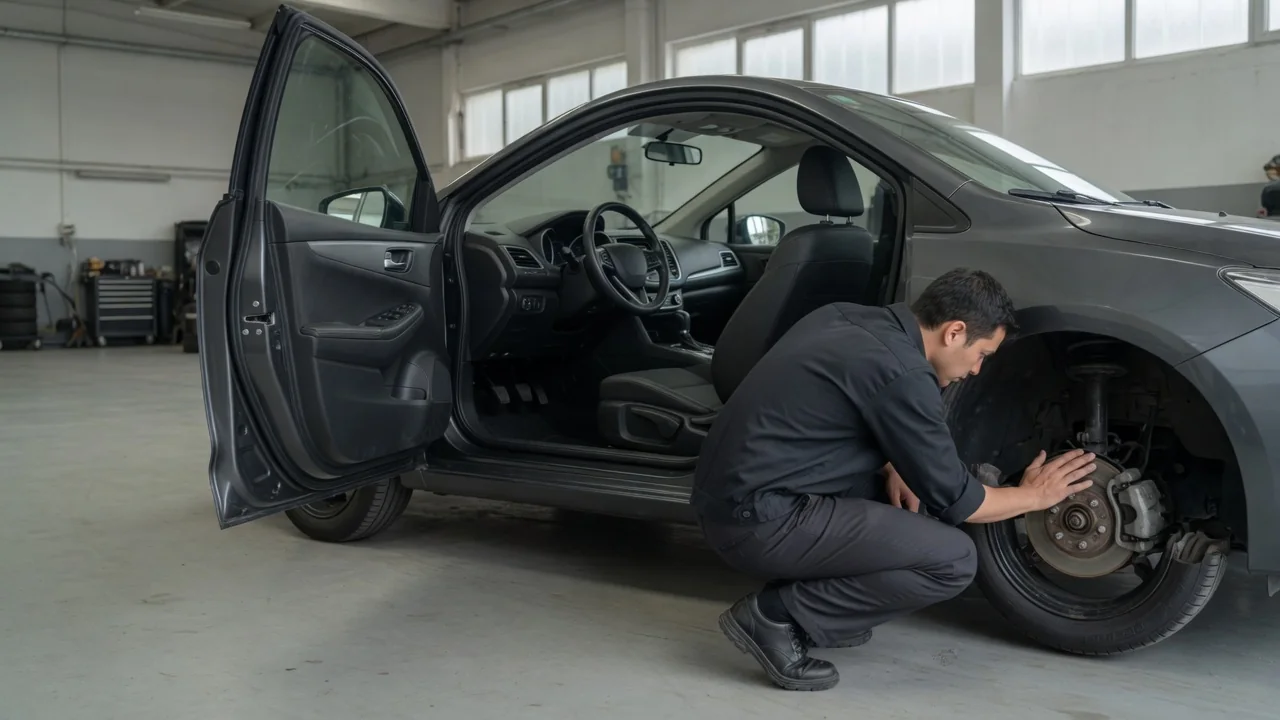
Structure-borne noise is sound that begins as mechanical vibration traveling through solid parts of a vehicle, such as mounts, subframes, and the body shell, before a surface radiates it into the cabin as audible sound. It differs from airborne noise, which reaches your ears through air gaps, seals, and openings. Understanding car structure-borne noise explains why a hum, drone, or buzz can persist with the windows closed and the seals in good shape, and why the fix is often somewhere other than where the sound seems to come from.
Vibration Path: From Source to Body
Every structure-borne noise problem has three parts: a source, a path, and a radiating surface. Common sources in a car include engine firing pulses and rotating imbalance, driveline components such as driveshafts, axles, and joints, tire contact with the road, and the exhaust system. Each produces vibration, often at frequencies tied to engine speed or wheel speed. That vibration enters the vehicle structure at attachment points: engine and transmission mounts, suspension bushings, subframe mounts, and exhaust hangers. From there it spreads through the body shell, a connected network of stamped and welded metal that carries vibration efficiently.
Isolators are the main defense along this path. Rubber, hydraulic, or other compliant mounts separate the vibrating component from the body so that less energy crosses into the structure. How well they work depends on frequency. An isolator that is effective against higher-frequency vibration may do little near its own resonance, and can even amplify motion there. The structure itself also has natural frequencies, and when an input matches one, the response grows noticeably. This is why a noise may appear only in a narrow band of engine or road speed and fade on either side of it. Mount types, locations, and tuning differ between vehicles, so the same symptom can have different causes in different designs.
Cabin Panels: Where Vibration Becomes Sound
Vibration traveling through the body is not heard until a surface moves the air. Large, relatively thin panels are the most effective radiators because they have a lot of area and flex easily. Typical examples are the floor pan, roof, firewall, door skins, rear package shelf, and cargo floor. When one of these panels is excited near its natural frequency, it behaves somewhat like a loudspeaker cone, turning small structural motion into audible sound inside a closed space.
Manufacturers commonly manage panel radiation in two ways. Stiffening features such as beads and ribs are stamped into the metal. Damping treatments such as bonded mastic pads or layered sheets convert vibration energy into small amounts of heat. The cabin is also an enclosed air volume with its own acoustic resonances. Low-frequency panel motion can couple with that air cavity and produce a boom or drone that you feel as much as hear. Interior trim adds another layer: plastic panels, clips, wiring, and loose items can be shaken by the same vibration and generate buzzes and rattles. Those secondary noises are related to the underlying structure-borne noise but are not the same thing, and treating one does not necessarily cure the other.
Diagnosis: Tracing Noise Back to Its Source
Because the sound is radiated far from where the vibration starts, the place you hear it is often misleading. A useful first step is to note the operating conditions. Noise that follows engine speed regardless of road speed points toward the engine, its accessories, or the exhaust. Noise that follows vehicle speed regardless of gear points toward tires, wheels, bearings, or driveline parts. Noise that changes with the road surface suggests a tire and suspension path. It also helps to check whether the noise occurs under load, while coasting, or at idle with the vehicle stationary. Make these observations safely, ideally with a passenger taking notes.
Hands-on checks can then narrow the path. With the vehicle safely parked, inspect mounts and bushings for cracked, collapsed, or separated rubber. Check exhaust hangers and heat shields for contact with the body, which can create a short circuit that bypasses isolation. If you touch or press on a suspect panel while the noise is present and the sound changes, that panel is part of the path. Technicians may also use electronic stethoscopes, or accelerometers with vibration analysis software. That software matches the dominant frequency to the rotational order of a specific component, which is often more reliable than listening alone.
Practical Implications and Limits
For owners, the main lesson is that treating the symptom and fixing the cause are different jobs. Adding damping material to a resonating panel can reduce what you hear, but it does nothing about a worn mount or an out-of-balance wheel feeding energy into the body. Conversely, replacing a failed isolator can remove a noise that no amount of interior treatment would solve. Aftermarket changes can work in the opposite direction. Stiffer mounts, harder bushings, or tires with a different construction may sharpen handling feel while transmitting more vibration into the structure.
There are limits to how far structure-borne noise can be reduced. Every vehicle design balances isolation against weight, cost, packaging, ride, and handling, so some low-frequency hum or road noise is an intended trade-off rather than a defect. Adding mass and damping produces diminishing returns, and heavy treatment adds weight. A noise that is new, has changed character, or comes with vibration in the steering wheel, pedals, or seat deserves inspection, because it may indicate wear or a loose component. For model-specific behavior and repair procedures, rely on the manufacturer's service information rather than general rules.