How Are Steel Tubes Used in Car Structure?
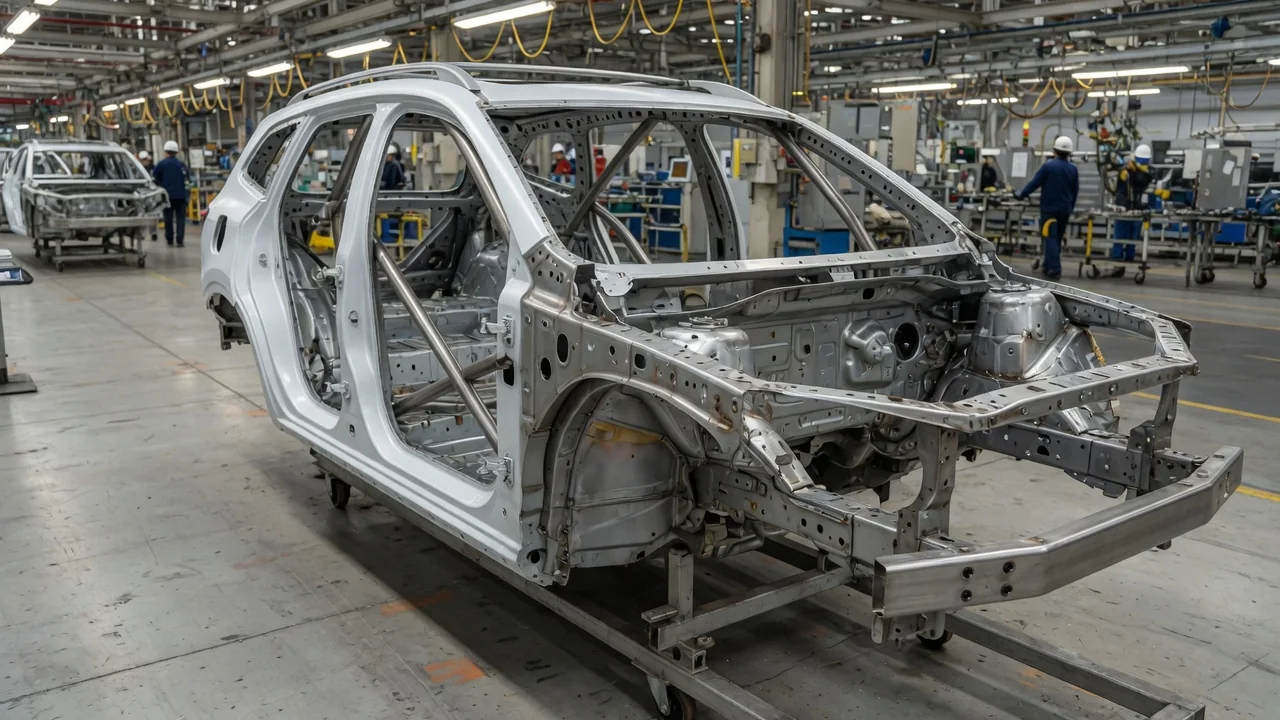
Steel tubes show up in more places in a car's structure than most owners realize. Some are obvious, like the bars of a roll cage or a tubular subframe. Others are hidden inside doors, behind the dashboard, or within pillars. So how are steel tubes used in car structure? Automotive structural steel tubing works because of its shape, depends on how it is mounted, and needs corrosion care that differs from that of flat sheet metal panels.
Shape and strength
A tube is a closed section, and that is the main reason engineers use it. When a structural member twists, an open shape such as a channel or angle tends to warp and lose stiffness quickly. A closed tube resists twisting far better for the same amount of material because the load can flow continuously around its wall. Bending stiffness also depends heavily on how far the material sits from the center of the section, so a larger-diameter tube with a thinner wall can be stiffer than a smaller solid bar while weighing less. This combination of torsional and bending stiffness per pound is why tubes appear in roll cages, race-car space frames, cross-car beams that support the instrument panel and steering column, and side-impact beams inside many doors.
Round and rectangular tubes behave differently. Round tubing resists torsion evenly in every direction and handles loads arriving from unpredictable angles, which suits roll cages and bars that may be struck from many directions. Square and rectangular tubing offers flat faces that are easier to join and mount components to, and it can be oriented so its taller dimension faces the main bending load, which is common in frame rails, subframes and cross-members. In production vehicles, manufacturers also use hydroforming, a process that expands a tube inside a die with internal fluid pressure, to create complex shapes with varying cross-sections. This lets a single tube follow the path a load needs to take instead of relying on many welded stampings.
Material and wall thickness matter as much as shape. Structural tubing ranges from mild steel to higher-strength alloys, and seamed (welded) tubing differs from seamless or drawn-over-mandrel tubing in uniformity and cost. A thin-walled tube can buckle locally before the full section reaches its strength, so designers balance diameter against wall thickness. Exact grades and dimensions are vehicle- and application-specific, so the correct values for any given part should come from the manufacturer's documentation or the governing rulebook for motorsport use, not from general rules of thumb.
Mounting
How a tube is attached determines how well it does its job. A tube is only as strong as the joints that carry load into and out of it, and a poorly designed mount can concentrate stress at a single point and crack the surrounding metal. In welded tubular structures, the ends of tubes are typically coped, or notched, so they fit closely against the tube or plate they meet. A tight fit-up allows a consistent weld around the full joint. Where several tubes meet, fabricators try to bring their centerlines to a common point, which helps loads pass through the joint as tension and compression rather than as bending.
When tubes attach to a unibody car, the thin sheet metal of the floor or pillars cannot carry concentrated loads on its own. Mounting plates, sometimes called spreader or backing plates, distribute force over a larger area of the body. Gussets add material at highly stressed corners. For bolted connections that pass through a tube, a sleeve or crush tube is often welded inside so that tightening the fastener does not collapse the tube wall and so the clamp load stays consistent over time.
Factory subframes and cross-members made from tubing are often attached to the body with bolts and rubber or hydraulic bushings rather than rigid welds. This isolates noise and vibration from the cabin while still locating suspension and drivetrain components. Fastener torque values, bolt grades and whether bolts are single-use vary by vehicle, so the service manual for the specific model is the authority when removing or reinstalling these parts.
Corrosion care
Tubes present a particular corrosion problem: the inside is hard to see and hard to protect. Moisture can enter through drain holes, fastener holes, unsealed ends or weld gaps and then sit inside the tube, where it may corrode the metal from within while the outer surface still looks sound. Factory parts typically rely on coatings such as electrocoat primer or zinc layers, along with drain paths designed to let water escape. Anything that blocks those drains, including mud, debris or carelessly applied undercoating, can trap water and accelerate damage.
Routine care focuses on keeping water moving out and protection intact. Rinsing the underside, especially after exposure to road salt, helps remove contaminants from around tube ends and mounts. Cavity wax or similar internal corrosion inhibitors can be applied through existing openings to coat interior surfaces, a common step on aftermarket and restored structures. Welding burns away coatings on both the outside and the inside of a tube near the joint, so fabricated or repaired joints need to be cleaned and recoated. Points where tubes contact other metals or clamp against brackets also deserve attention, since trapped moisture and abrasion can wear through protective layers.
Inspection should look for bubbling paint, rust staining near welds and seams, flaking scale and soft or perforated spots. Carefully tapping or probing a suspect area can reveal thinning that is not obvious visually. Because internal corrosion can be advanced before surface signs appear, a borescope inserted through an existing opening can be useful for checking critical tubes.
Practical implications and limits
For owners, the main takeaway is that tubular parts are often load-bearing, so changes to them carry consequences beyond the tube itself. Cutting, drilling, heating or welding a structural tube can alter how a vehicle behaves in a crash, how energy is managed through the body, and how systems such as airbags and seat belts perform. Many manufacturers restrict straightening, sectioning or heat repair of high-strength parts, and some components are specified as replace-only. Adding a roll cage or bolt-in bar may also change occupant clearance and, depending on location and use, can affect legality, inspection or insurance.
General principles explain why tubes work, but they cannot replace part-specific data. Two tubes that look identical may differ in steel grade, wall thickness or heat treatment, and that difference is invisible without documentation. For repair decisions on a road vehicle, the manufacturer's body repair or service information is the reference; for motorsport structures, the sanctioning body's rules govern materials and construction. When corrosion has thinned a structural tube or a mount shows cracking, professional assessment is safer than surface treatment alone.