What Are Tire Steel Belts? Tread Support, Strength and Separation
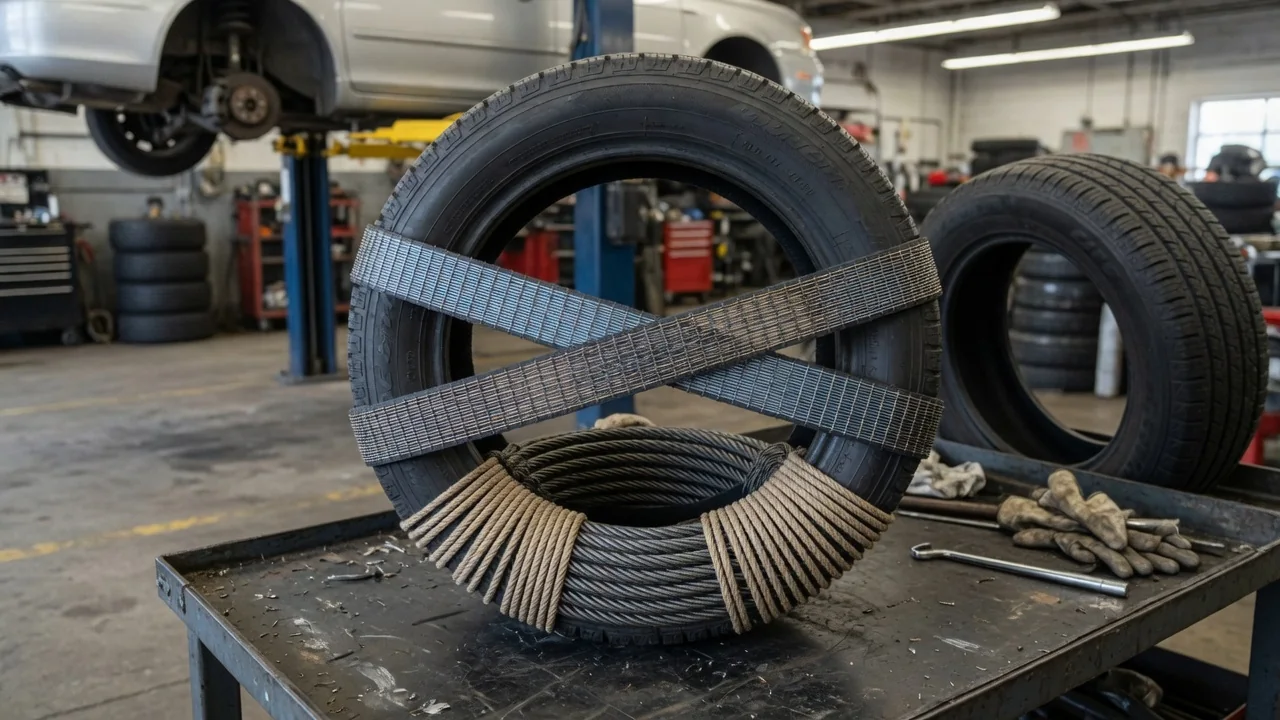
Tire steel belts are layers of thin, brass-coated steel cords embedded in rubber and wrapped around the tire beneath the tread. In a modern radial passenger tire, they sit between the tread rubber and the body plies, forming a stiff ring that shapes how the tread meets the road. If you have wondered what tire steel belts are or what purpose steel belts serve in a tire, the answer comes down to three ideas: tread support, strength, and what happens when belts separate.
Tread Support: Keeping the Crown Stable
A radial tire is built in layers. The body plies run from bead to bead across the tire, roughly at a right angle to the direction of travel, which lets the sidewalls flex. On their own, those flexible plies would let the tread squirm and bulge. The steel belts solve that problem. Most passenger radials use two belt layers laid at opposing angles to each other, so the cords form a crisscross pattern. That arrangement resists stretching in both the circumferential and lateral directions, turning the crown of the tire into a relatively rigid band while the sidewalls remain free to deflect over bumps and under load.
This stiff band keeps the tread flat against the road. As the tire rolls, the contact patch holds its shape more consistently, and the tread blocks move less as they enter and leave contact with the pavement. Less movement generally means more even wear, less heat generated by scrubbing, and more predictable steering response. Many tires also add a cap ply of nylon or a similar textile over the steel belts to help hold them in place at speed. That layer is a separate component, and whether it is used, and how, varies by tire design.
Strength: Why Steel Is Used
Steel is used because it combines high tensile strength with very little stretch. Belt cords are typically twisted from several fine filaments, which makes them flexible enough to wrap around the tire while still resisting elongation. Inflation pressure constantly pushes the crown outward, and centrifugal force adds to that load as speed rises. The belts carry much of that tension, helping the tire keep its intended diameter and profile instead of growing under pressure.
The belts also add puncture resistance across the tread area. A sharp object can still penetrate a steel-belted tire, but the dense steel layer makes it harder for many small road hazards to reach the inner liner. The brass coating on the cords matters as well, because it helps the rubber bond to the steel during curing. That bond is what lets steel and rubber behave as one composite material. Without strong adhesion, the stiffness of the steel would be largely wasted, since the cords could shift inside the rubber instead of sharing the load with it.
Separation: When the Belts Come Apart
Belt separation happens when the bond between a steel belt and the surrounding rubber, or between the two belt layers, breaks down. The belt edges are the most stressed region, because the cords end there and the rubber between the layers is sheared every time the tire flexes. Repeated flexing creates heat, and heat over time can weaken both the rubber compound and the adhesion between rubber and steel. Once a small crack forms at a belt edge, continued use can let it spread, and the tread and outer belt may eventually begin to detach from the layers below.
Common contributors include sustained underinflation, overloading, high speed in hot conditions, impact damage, improper or incomplete repairs, and moisture reaching the steel through a cut or puncture, where corrosion can attack the cords and weaken the bond. Manufacturing defects can also play a role, but whether a specific failure came from use or from production is something only a qualified inspection can determine. Age matters too, because rubber compounds change over time even on a tire that is rarely driven.
Separation often gives some warning before it becomes severe. Signs can include a bulge or uneven bump in the tread or shoulder, a localized wave in the tread surface, a vibration or thumping that changes with speed, or irregular wear concentrated in one area. None of these symptoms is unique to belt separation; a bent wheel or an out-of-balance tire can feel similar. That is why a tire showing them should be inspected rather than diagnosed by feel alone.
Practical Implications and Limits
For owners, the most useful takeaway is that belt health is largely protected by routine care. Keeping tires at the inflation pressure listed on the vehicle placard, usually found on the driver's door jamb, keeps flexing and heat within the range the tire was designed for. Staying within the vehicle's load rating and the tire's load index does the same. When a puncture occurs, a proper repair made from the inside of the tire, where a repair is permitted at all, reduces the chance of water reaching the steel.
Steel belts are a design feature, not a guarantee. Two tires described as steel-belted can differ in belt angle, cord construction, rubber compounds, and cap ply arrangement, and those differences affect ride, handling, and durability in ways a label does not reveal. How a particular vehicle feels on a given tire depends on suspension tuning, alignment, and the tire's overall construction, not on the belts alone. Tires sold in the United States generally carry sidewall markings that list the ply and belt materials in the tread and sidewall areas, which tells you what the tire contains but not how well it performs.
Internal belt damage also cannot always be seen from the outside. A tire that has been driven seriously underinflated or flat may look intact yet have damaged belts or a damaged inner liner, which is why tire professionals usually dismount such a tire to examine it. A visible bulge, exposed steel cords, or tread that appears to be lifting are reasons to stop using the tire and have it checked. In those cases replacement is the usual outcome, because separated or broken belts cannot be restored to their original strength by a patch.