How Is a Radial Car Tire Built? Carcass Plies, Belts, and Tread Explained
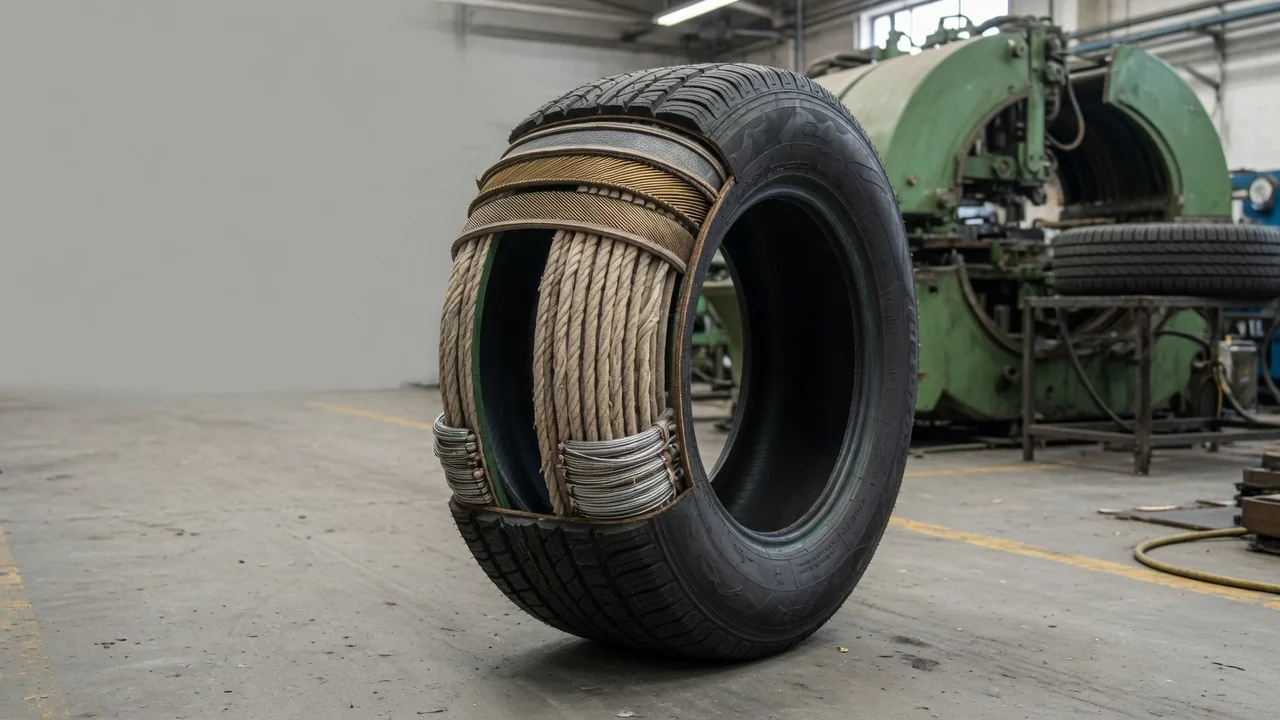
A radial car tire looks like a simple rubber ring, but it is a layered composite of rubber compounds, textile cords, and steel wire, each with a specific job. Radial tire construction comes down to three main structures: the carcass plies that form the body and contain air pressure, the belts that stiffen the area under the tread, and the tread that meets the road. Here is how those layers are built and how they work together.
Carcass plies: the tire's body
The carcass, sometimes called the casing, is the structural skeleton of the tire. It is made from one or more plies, which are sheets of parallel cords coated on both sides with rubber. In a radial tire, these cords run from one bead to the other at roughly a right angle to the direction of travel, so when you look at the tire from the side, they point outward from the center like the radii of a circle. That orientation is where the name radial comes from. Most passenger car tires use one or two carcass plies, commonly made with polyester cord, though other textiles and steel appear in some tire types.
The plies are anchored at the beads, the inner edges of the tire that seat against the wheel rim. Each bead contains a bundle of high-strength steel wire that resists stretching, so the tire stays locked on the rim under inflation pressure and cornering loads. The carcass ply wraps around this bead bundle and turns back up into the lower sidewall. A stiff rubber filler, often called the apex or bead filler, sits above the bead wire and smooths the transition from the rigid bead to the flexible sidewall. On the inside of the carcass is the inner liner, a layer of low-permeability rubber, typically a butyl-based compound, that replaces the old inner tube by keeping air from seeping through the casing.
The radial layout matters because it lets the sidewall flex largely independently of the tread. In older bias-ply construction, plies cross each other at an angle, so the sidewall and tread deform together as one unit. A radial carcass on its own, however, is quite flexible around its circumference, which is why it needs the next layer.
Belts: stabilizing the tread area
Between the carcass and the tread, a radial tire carries a belt package. In typical passenger tires this consists of two belts made of fine brass-coated steel cords embedded in rubber; the brass plating helps the rubber bond to the steel during curing. The cords in each belt are laid at a shallow angle to the tire's centerline, and the two belts are angled in opposite directions. Crossing the cords this way creates a stiff, triangulated layer that resists stretching around the circumference and keeps the tread from distorting as it rolls through the contact patch.
Many tires add a cap ply on top of the steel belts. This is usually nylon or a nylon-based hybrid cord wound around the tire at nearly zero degrees to the direction of travel. A full-width cap covers the whole belt package, while edge bands cover only the belt edges, where stress concentrates. The cap's main role is to restrain the belts against the centrifugal force that tries to expand the tread outward at speed, which is why cap plies are common in tires designed for higher speed ratings.
Together, the belts hold the tread flat and wide against the road while the radial carcass handles flexing in the sidewalls. This division of labor reduces tread squirm, the small sliding movements of tread elements in the footprint, which generally supports more even wear and lower rolling resistance than bias construction. The steel belts also add some penetration resistance in the tread area, but they do not make a tire puncture-proof.
Tread: compound, pattern, and final assembly
The tread is the thick rubber layer molded over the belts. It is not a single material but a formulated compound that blends natural and synthetic rubbers with reinforcing fillers such as carbon black and silica, along with oils, resins, and the chemicals that enable vulcanization. Changing the recipe shifts the balance among grip, wear resistance, rolling resistance, and behavior at different temperatures; improving one property usually costs something in another. Many treads use a cap-and-base design, with a grip-oriented compound on the surface and a different base compound underneath that manages heat and bonds the tread to the belt package.
The tread pattern is shaped from that rubber. Circumferential and lateral grooves channel water away from the contact patch, while ribs and blocks provide the edges that bite into the road. Sipes, the thin slits cut into tread blocks, add extra edges and flexibility, which is especially useful on wet, snowy, or icy surfaces. Raised tread wear indicators are molded into the bottom of the main grooves so you can see when the tread has worn down to its replacement point.
All of these parts come together on a building drum. The inner liner, carcass plies, beads, and sidewall rubber are assembled first, then the belts, cap ply, and tread are added to form what manufacturers call a green tire: an uncured assembly with the right layers but no final shape or pattern. The green tire goes into a curing press, where an inflatable bladder pushes it outward against a heated mold. Heat and pressure vulcanize the rubber, bonding the layers into one structure and imprinting the tread pattern and sidewall markings.
Practical implications and limits
Because a radial sidewall is designed to flex, an underinflated radial tire can look nearly normal while it is working much harder than intended. Excess flexing generates heat in the carcass and can stress the bonds between layers over time, so checking pressure with a gauge matters more than judging by eye. The correct cold pressure for a given vehicle comes from its door-jamb placard or owner's manual; the figure molded on the sidewall is the tire's maximum, not a recommended setting.
The layered structure also explains why some damage is serious even when it looks small. A hard impact with a pothole or curb can break carcass cords and produce a bulge in the sidewall, and that kind of damage generally cannot be repaired. A separating belt may show up as a vibration, a lump in the tread, or irregular wear. Puncture repairs are generally limited to the central tread area over the belts; injuries in the shoulder or sidewall fall outside accepted repair practice, and a professional inspection is the reliable way to judge them.
Finally, this is a general description, not a blueprint for any particular tire. Ply counts, cord materials, belt and cap designs, and compound recipes vary by manufacturer, size, and intended use, such as all-season, winter, performance, or light-truck service. The sidewall typically lists the ply materials used under the tread and in the sidewall, and the tire maker's documentation and your vehicle's manual remain the authority on how a specific tire should be used and maintained.