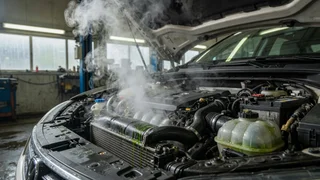
White Smoke Under the Hood: When to Stop and Seek Help
White smoke coming from under the hood is usually steam from leaking or boiling engine coolant. It can also be another fluid burning on a hot surface, or the start of a vehicle fire. You can't reliably tell which from the driver's seat. So treat white smoke from the hood as a reason to pull over safely and shut the engine off. Then decide whether to call for help based on what you see, smell and hear. This guide explains how to make that decision and what to do afterward.
The short answer: stop first, diagnose later
If you see white smoke from the front of the car while driving, signal, move out of traffic and stop where it is safe. Turn off the engine. The causes range from minor to dangerous, and an engine that keeps running can make every one of them worse. An overheating engine can damage itself quickly. A fluid leak onto the exhaust can catch fire. Electrical faults can escalate within moments.
Some situations call for leaving the vehicle and calling emergency services right away, before you try to work out the cause:
You see flames or an orange glow anywhere under the hood or beneath the car. The smoke is thick, rising fast, getting heavier, or turning gray or black. You smell burning plastic, rubber or electrical insulation. You hear popping, hissing that keeps growing, or crackling after the engine is off. The vehicle is a hybrid or electric vehicle and the smoke may be coming from the high-voltage battery area. You smell fuel.
In any of these cases, get everyone out and move well away from the vehicle, upwind if possible and clear of traffic. In the US, call 911. Do not go back for belongings.
Smoke from the hood vs. smoke from the tailpipe
Two different symptoms get described the same way, and they mean different things.
White smoke from the hood or the front of the car comes from the engine bay. Usually something is leaking, boiling or burning on a hot component. This is the more urgent of the two because it happens near hot exhaust parts, wiring and fuel lines.
White smoke from the exhaust pipe at the rear is a different symptom. A thin vapor on a cold morning that clears as the engine warms is normally just condensation burning off. Thick, persistent white exhaust smoke, especially with a sweet smell, can mean coolant is being burned inside the engine. That points to problems such as a failing head gasket or a cracked cylinder head. It needs prompt inspection, but it is not usually an immediate fire risk the way smoke from under the hood can be. On diesel engines, white exhaust smoke can also come from fuel that is not burning completely. Diagnosis depends on the engine configuration.
Common causes of white smoke from the car engine bay
Coolant leaks and overheating
This is the most frequent cause. Engine coolant (antifreeze) circulates under pressure. A leaking hose, radiator, water pump, heater hose or reservoir can spray or drip coolant onto hot parts, where it turns to steam. If the engine overheats, coolant may boil over through the reservoir. Typical signs include a sweet, syrupy smell, a temperature gauge climbing toward hot, a coolant or overheating warning light, and sometimes a puddle of green, orange, pink or blue fluid under the front of the car. Steam from coolant tends to be thin and wispy, and it fades fairly quickly once the engine is off.
Oil or other fluids burning on the exhaust
Engine oil leaking from a valve cover gasket, an oil filter or a recent oil change can drip onto the exhaust manifold or turbocharger. Power steering fluid and automatic transmission fluid can do the same. Burning oil gives off a sharp, acrid smell, and the smoke often looks bluish-white or gray rather than pure white. It may be light at first. Even so, oil and some other fluids can ignite on a hot enough surface, so this is a cause to take seriously.
Water evaporating from a hot engine
After driving through heavy rain, deep puddles or a car wash, or after an engine bay cleaning, water that splashed onto hot parts can steam briefly. This is usually harmless. It produces light wisps with no particular smell, no warning lights and a normal temperature gauge, and it stops within a short time. If the steam continues or comes with any of the warning signs above, assume it is something else.
Electrical faults
A shorting wire, a failing alternator, an aftermarket accessory installed poorly, or damage from rodents chewing on wiring can produce smoke. This smoke often looks gray, and it has a distinct burning plastic or insulation smell. Electrical smoke is a serious warning, because wiring runs throughout the engine bay and a fire can spread along it.
Hybrid and electric vehicles
Many hybrid and electric vehicles have relatively little under the hood that can steam or burn in the same way as a gasoline engine. They still have coolant circuits and 12-volt electrical systems. Smoke from a high-voltage battery, which is often mounted under the floor or rear seats, can indicate a battery fault that may escalate. If you drive a hybrid or EV and see smoke you can't explain, get out, move away and call emergency services. Tell the dispatcher it is an electric or hybrid vehicle. Follow any guidance in your owner's manual, because procedures vary by manufacturer and model.
Reading the symptom conditions
Once you are safely stopped with the engine off, observe from a safe distance. No single clue is conclusive, but together they help you decide what to do next.
What you notice | Likely source | What to do; Sweet smell, high temperature gauge, thin steam that fades | Coolant leak or overheating | Keep the engine off, let it cool, don't open the cooling system while hot, arrange inspection or a tow; Sharp burning-oil smell, bluish-white or gray smoke | Oil or another fluid on the exhaust | Keep the engine off, watch for flames from a distance, don't drive until inspected; Brief wisps after rain or washing, no smell, normal gauges | Water evaporating | Usually fine to continue once it stops; recheck if it returns; Burning plastic or electrical smell | Wiring or electrical component | Get out, move away, call 911 if smoke continues or grows; Fuel smell | Fuel leak | Get out, move away, call 911; do not restart; Flames, glow, thickening or dark smoke | Fire | Get out, move well away, call 911
What to do after you stop
Turn off the engine and set the parking brake. Switch on the hazard lights. If you are on a busy road, get out on the side away from traffic and move to a safe spot. Do not open the hood if the smoke is heavy, increasing or accompanied by any burning smell other than coolant. Opening it can let in a rush of air that feeds a fire, and you may be standing right over hot fluids. If smoke stops quickly, you only smell coolant, and there is no sign of fire, wait for the engine to cool before opening the hood. Never remove the radiator cap or coolant reservoir cap on a hot engine. The system is pressurized, and hot coolant can spray out and cause burns. Look for obvious leaks, split hoses or wet areas only once the engine is cool and you are confident there is no fire. Note which warning lights came on and what the temperature gauge showed. A mechanic will find this useful.
If you carry a fire extinguisher rated for vehicle fires and a fire is small, you may consider using it, but only if you can do so without putting yourself at risk. Many safety organizations advise drivers not to fight engine fires at all and to leave that to firefighters. Your safety matters more than the vehicle.
Can you keep driving?
In most cases, no. Driving with an overheating engine risks serious and expensive damage, such as a warped cylinder head or a blown head gasket. Topping up coolant on the roadside may get a car moving again, but only if the engine has cooled and the leak is minor. Even then, the safer choice is usually a short, careful drive to a repair shop while watching the temperature gauge constantly. Calling roadside assistance for a tow is safer still. If the smoke came from oil or another fluid hitting the exhaust, or from anything electrical, don't drive the car until it has been inspected.
The one common exception is brief steam from water after rain or washing that clears completely, with normal gauges and no warning lights. That is generally safe to drive on from.
Getting the problem diagnosed
A technician will usually start with a visual inspection of the engine bay for leaks, residue and heat damage. Next comes a cooling system pressure test, which can reveal leaks that only appear under pressure. They will also scan the engine computer for diagnostic codes. Codes related to engine temperature, misfires or sensor faults can help narrow the cause. If a head gasket problem is suspected, additional tests may be run to check for combustion gases in the coolant.
Have the following ready to speed things up:
When the smoke appeared, such as at startup, after highway driving, in traffic or after rain. What it smelled like and roughly what color it was. Any warning lights and what the temperature gauge showed. Recent work in the service history, such as an oil change, coolant service or new hoses. A loose cap or spilled fluid from recent maintenance is a common cause of smoke. Whether you have been topping up coolant or oil between services.
Coolant type, fluid capacities and service intervals vary by vehicle. Use what your owner's manual or the manufacturer specifications call for when the car is repaired or topped up.
Reducing the chance of it happening again
Check the coolant level in the reservoir regularly, with the engine cold. Watch the temperature gauge, and pull over if it rises above its usual position. Have hoses, the radiator and the water pump inspected during routine service, especially on older vehicles. Fix oil leaks promptly rather than living with them, particularly near the exhaust. After any fluid service, check for spills or loose caps before driving far. Have aftermarket electrical accessories installed by someone qualified.
Bottom line
White smoke from the car hood is most often coolant steam. That is a problem that needs fixing, but it is not usually an emergency once the engine is off. Still, you can't safely assume that from behind the wheel. Stop, shut the engine off and observe from a distance. If you see flames, thickening or dark smoke, or smell fuel or burning electrics, leave the vehicle and call 911. Otherwise, let the engine cool, avoid opening a hot cooling system, and get the car inspected before relying on it again.