Where to Get a Replacement Car Key Made
The short answer
You can usually get a replacement car key from a franchised dealership for your vehicle's brand, from an automotive locksmith, or, for simpler keys, from a hardware store or retail key-cutting counter. The type of key your car uses decides which of these will work. A plain metal key can be copied almost anywhere that cuts keys. A key with a security chip, a remote, or keyless push-button start also has to be programmed to the car, which narrows the choice to a dealership, an automotive locksmith, or a retailer whose equipment supports your specific model. Whether you still have a working key matters too. Copying an existing key is usually simpler than making one when every key is lost.
Why the key type changes where you can go
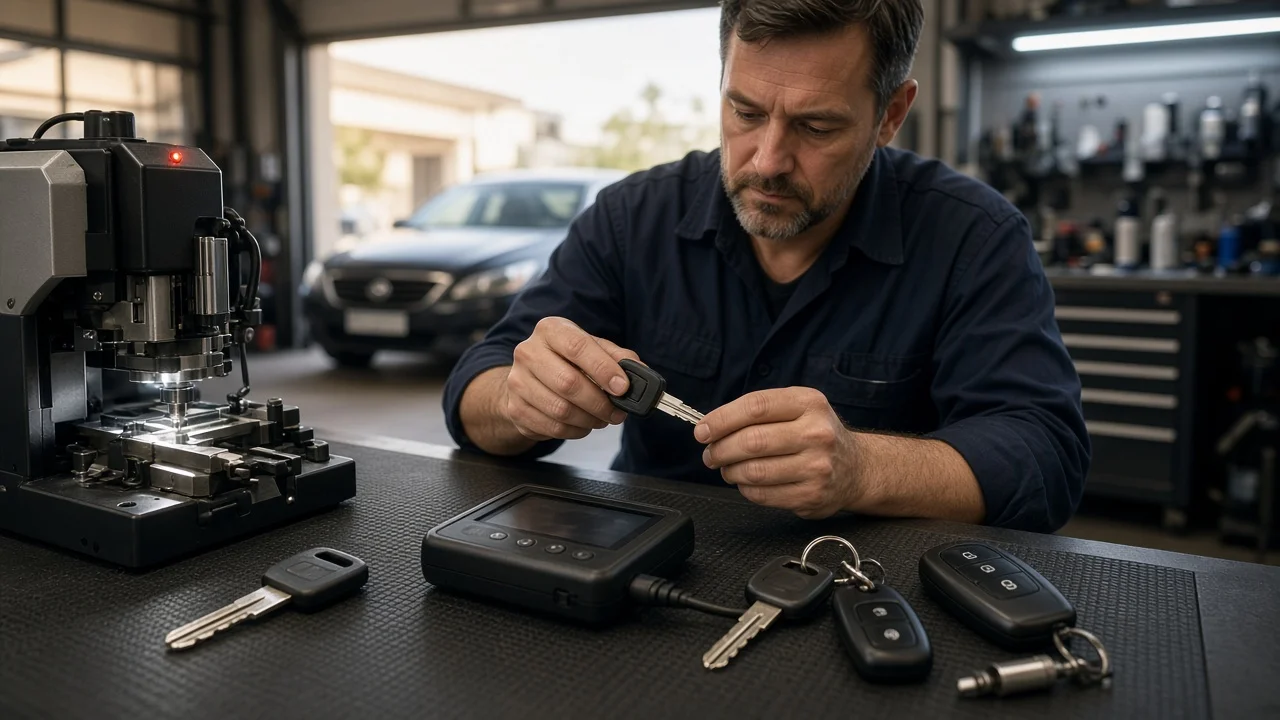
Most modern car keys do two jobs. The metal blade, or a hidden emergency blade, turns the lock mechanically. An electronic component tells the car's immobilizer that the key is authorized. The immobilizer is an anti-theft system that stops the engine from running unless it recognizes the key. A shop that can cut the blade but cannot program the electronics can only give you a key that opens the door, not one that starts the car.
Basic mechanical key: an all-metal key with no chip. It only needs to be cut, so most key-cutting services can handle it. Transponder key: looks like a basic key but has a thicker plastic head that contains a chip. It must be cut and also programmed or cloned so the immobilizer accepts it. Remote head key: a key blade and lock/unlock buttons combined in one unit. The blade needs cutting, the chip needs programming, and the remote buttons may need separate pairing. Switchblade or flip key: a remote head key with a blade that folds into the fob. It is handled the same way as a remote head key. Smart key or proximity fob: used with push-button start and keyless entry. It is programmed to the car rather than cut, although many contain a small emergency blade that also needs cutting. Laser-cut or high-security key: the blade has a groove milled along its face instead of notches on the edges. It needs specialized cutting equipment that not every shop has.
If you aren't sure which type you have, the owner's manual normally describes the keys supplied with the vehicle. A dealership parts department or a locksmith can also confirm it from the year, make and model. Keys that look alike can use different chips or blade profiles across model years, trims or markets. Give the provider the exact vehicle details instead of matching your key by appearance.
Dealership
A franchised dealer for your brand can supply a key made for your vehicle and has the manufacturer's programming tools. For some vehicles, especially newer or high-security models, the dealer may be the only practical option. Dealers can often look up the key cut code from the vehicle identification number (VIN). This helps when every key is lost. The trade-offs are that you may have to bring the car to the service department, the key may need to be ordered rather than made the same day, and dealer pricing is often higher than independent options. Ask for a quote and a timeline before you commit.
Automotive locksmith
An automotive locksmith specializes in vehicle locks and keys. Many work as mobile services that come to the car, which helps when you have lost every key and the car can't be driven or towed easily. Many can cut and program transponder keys, remote head keys and smart keys for a wide range of vehicles. Coverage still varies by locksmith and by model, so give the year, make and model when you call and ask directly whether they can program a key for that vehicle. Some may supply aftermarket keys or fobs rather than manufacturer parts. Ask which they will use and whether the work comes with a warranty.
Hardware stores and retail key counters
Hardware stores, home improvement stores and self-service key kiosks are a convenient choice for basic mechanical keys. Some can also clone certain transponder keys or supply certain remotes. This usually requires a working key to copy and depends on whether their equipment supports your vehicle. These services generally cannot help when no working key exists or when the car needs dealer-level programming. Confirm compatibility for your exact vehicle before buying anything.
Buying a key or fob online
Blank keys and fobs sold online can look identical to the original but may use the wrong chip, frequency or button layout for your model year or market. Even a correct part still has to be cut and programmed. Some dealers and locksmiths decline to program customer-supplied parts, and others won't guarantee them. If you go this route, check with whoever will do the programming before you buy.
Programming a key yourself
Some vehicles have a procedure for adding a key without special tools, often only when you already have one or more working keys. Whether this exists, and how many working keys it requires, depends on the make, model and year. The owner's manual is the place to check. If it doesn't describe a procedure, assume professional programming is needed.
What to bring: proof of ownership and vehicle details
Reputable dealers and locksmiths usually ask you to prove you own the vehicle or are authorized to have a key made. This is a security safeguard, so expect it and prepare before you go. Requirements vary by provider and state, so ask what they accept.
Government-issued photo ID. Proof of ownership, such as the vehicle title or current registration in your name. The VIN. It is usually visible through the windshield on the driver's side of the dashboard and printed on a label in the driver's door jamb. It also appears on the registration, title and insurance documents. The year, make, model and trim. Any existing working key, if you have one, even a damaged one. Any key code card or security code that came with the vehicle, if you still have it.
If you have lost every key
Losing all keys usually limits your options to a dealership or an automotive locksmith that can originate a key, meaning make one from the VIN, the key code or the lock itself. On some vehicles the programming process erases previously paired keys. That can be useful if you think a lost key might be found and misused. Ask whether this applies to your car. Some vehicles also limit how many keys can be paired. When you call, describe the situation exactly, including where the car is and whether it can be moved.
Questions to ask before choosing a provider
Can you cut and program a key for my exact year, make, model and trim? Is the key an original manufacturer part or aftermarket? Does the price include cutting, programming and any remote pairing, or are these charged separately? Do I need to bring the car to you, or can you come to it? Can it be done the same day, or does the key need to be ordered? What proof of ownership do you need? Is there a warranty on the key and the programming?
Gaps in this guide
This guide does not give prices, turnaround times or which specific stores or locksmiths support particular vehicles. These vary by provider, location and vehicle, and no confirmed figures were available. Compatibility also depends on model year, trim and market. Confirm details directly with the dealership or locksmith for your vehicle, and check your owner's manual for key types and any self-programming procedure.