Where the Alternator Is Located
The short answer
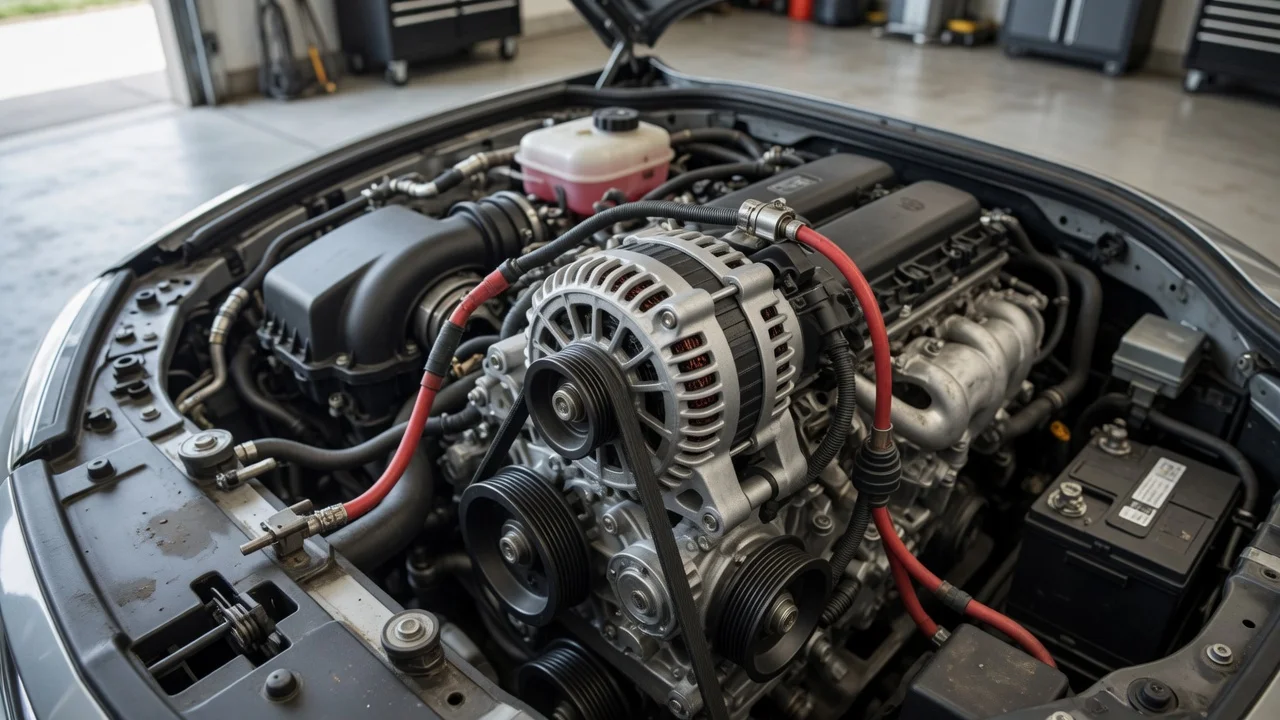
On most cars with a conventional combustion engine, the alternator is bolted to the engine and driven by the accessory drive belt, often called the serpentine belt. To find it, open the hood, locate the end of the engine where the belt runs around several pulleys, and follow the belt to its accessories. The alternator is one of the components that belt turns.
The exact position varies by vehicle. It may sit high on the engine and be easy to see, or low down and visible only from underneath or after removing covers. Engine layout, engine size, model year and generation all affect where it ends up, so no single location applies to every car.
When the answer changes: hybrids, mild hybrids and EVs
Powertrain changes the answer more than any other factor:
Conventional gasoline or diesel vehicles: usually a belt-driven alternator on the engine, as described above. Mild hybrids: some use a belt-driven starter-generator, which takes the alternator's place and also helps start the engine. It often sits where an alternator would be, but it is a different part. Full hybrids and plug-in hybrids: many have no conventional alternator. The 12-volt system is typically charged from the high-voltage battery through a DC-DC converter, with electric motor-generators doing the main generating work. Battery electric vehicles: no alternator, because there is no engine to drive one. A DC-DC converter keeps the 12-volt battery charged.
If you drive any kind of hybrid or electric vehicle, check the owner's manual or service documentation before assuming an alternator exists. High-voltage components in these vehicles are usually marked with orange cabling and should not be handled without proper training.
How to find it under the hood
Do this with the engine off, cooled down and the key removed. Never reach near the belt or pulleys while the engine is running.
Find the accessory belt. It is a long, flat ribbed belt looping around several pulleys at one end of the engine. On engines mounted lengthwise (common in rear-wheel-drive and many four-wheel-drive vehicles), that end usually faces the front of the car. On engines mounted sideways (common in front-wheel-drive cars), the belt is usually on the side facing a front wheel, often the passenger side, though this varies. Follow the belt to each pulley. Alongside the crankshaft pulley at the bottom, you will typically find the alternator, the air-conditioning compressor, the water pump on some engines, the power steering pump on some older vehicles, and one or more idler or tensioner pulleys. Look for the alternator's distinctive features (listed below) to pick it out. If you still cannot see it, it may be mounted low on the engine, behind a plastic engine cover, or behind other components. Some vehicles require viewing from underneath.
Many engines have a belt routing diagram on a sticker under the hood, often on the radiator support or the underside of the hood. If yours has one, the alternator pulley is usually labeled, often as ALT or GEN. This is one of the quickest ways to confirm it.
How to recognize an alternator
Shape: a roughly cylindrical metal housing, often aluminum, with a pulley on the front. Vents and fan: slots or openings in the housing for cooling. Many designs have a visible fan behind the pulley, while others cool internally. Electrical connections: a heavy cable attached to a threaded post, usually under a protective cap. This is the main output, which runs to the battery or a power distribution point. There is usually also a smaller plug-in connector for the control and warning-light circuits. Mounting: held to the engine with brackets and bolts, normally positioned so the belt can be tensioned around its pulley.
Parts that are easy to confuse with the alternator
Component | How it differs from the alternator; Air-conditioning compressor | Also belt-driven, but has refrigerant lines (metal or rubber hoses) attached and a clutch on the pulley on many designs. It has no heavy battery cable on a threaded post. Power steering pump | Belt-driven on vehicles with hydraulic power steering. It has fluid hoses and is often next to or topped by a fluid reservoir. Many newer vehicles use electric power steering and have no such pump. Water pump | Often driven by the same belt on many engines, but it is mounted against the engine block and connected to coolant passages. It has no vents or electrical connectors. On some engines it is driven by the timing belt or chain and is not visible. Starter motor | Also has a heavy battery cable, but it is not belt-driven. It is usually mounted low, near where the engine meets the transmission, and engages the flywheel or flexplate. Idler and tensioner pulleys | Plain pulleys with no housing or electrical connections. Tensioners are usually on a spring-loaded arm.
A safety note on the electrical connection
The alternator's main output terminal is connected directly to the battery, so it stays live even with the engine off. If you plan to touch the terminals or remove the alternator, disconnect the negative battery cable first. Follow the vehicle's service procedure, because some vehicles have specific steps for disconnecting the battery.
Confirming the location for your vehicle
This guide describes typical layouts and does not give the alternator position for any specific make, model, engine or model year. That information was not available here. To confirm where it sits on your car and how to reach it, check the owner's manual, a service or repair manual for your exact engine and model year, the under-hood belt routing diagram, or a dealer or qualified technician. If you are buying a replacement, match it to your vehicle identification number or engine code. Different engines in the same model can use different alternators, mounted in different places.