E36 alternator not charging
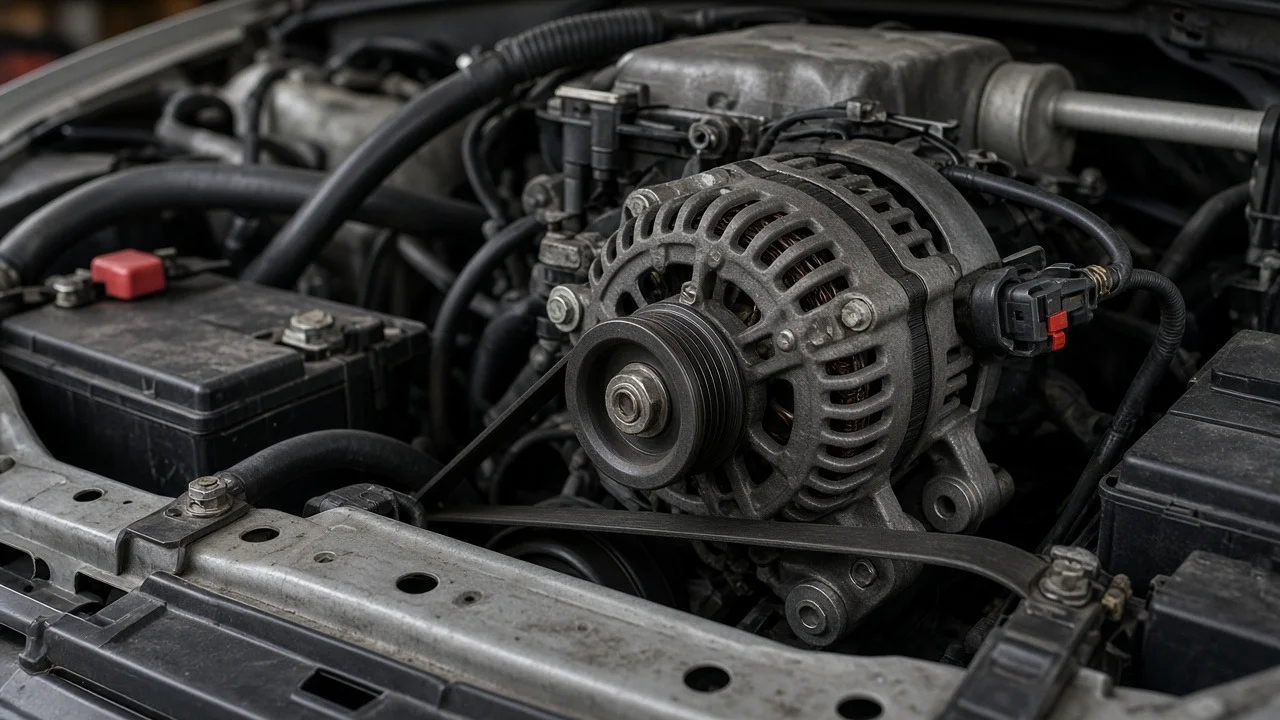
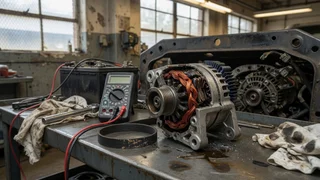
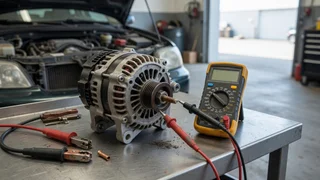
A BMW E36 that shows a charging system warning while driving is telling the driver that the battery is not receiving enough replenishment to support the ignition system, lighting, and other electrical loads. The phrase “E36 alternator not charging” describes a condition where the belt-driven generator either stops producing useful output or the wiring between it, the battery, and the vehicle body cannot carry that current. Narrowing the cause requires separating the alternator itself from the mounting, drive belt, connections, voltage sensing path, and battery condition before replacing parts.
Essential answer
The direct answer is that an alternator not charging on an E36 may be caused by the alternator itself, but it is also frequently caused by the circuit around it. The alternator produces current only when its rotor is spun by the accessory belt, its voltage regulator receives an excite or sense signal, and its output terminal has a complete path to the battery. If any of those links is weak, the cluster warning lamp may illuminate even though the alternator is capable of charging under proper test conditions.
The charging system on the E36 is not a sealed black box. The battery negative terminal connects to the chassis, the engine block connects to the chassis through ground straps, and the alternator case grounds through its mount. A corroded ground or a loose positive cable at the jump post or starter can reduce charging current. Likewise, a slipping belt or a failed voltage regulator can mimic a dead alternator, so charging behavior should be evaluated with the engine running and all major electrical loads switched on.