Where Is the Alternator? How to Find It in Your Engine Bay
The Short Answer
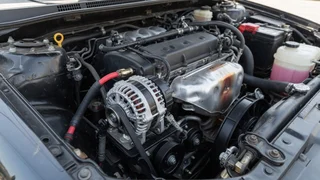
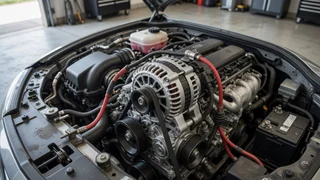
On most gasoline and diesel vehicles, the alternator is mounted on the engine itself, on the side where the accessory drive belt runs. The accessory belt is usually a single serpentine belt (one long, ribbed belt that winds around several pulleys). The alternator is one of the components that belt spins, so the quickest way to find it is to locate the belt and follow it around its pulleys.
Its exact position depends on the vehicle. It can sit high on the engine where it is easy to see after opening the hood, or low near the bottom where it is best viewed from underneath. It may be on the left or right side of the belt layout and partly hidden under engine covers, intake components, or wiring. The model year, engine and drivetrain layout all affect where it ends up, so for a specific vehicle, the owner's manual, a service manual or the belt routing diagram is the authority.
Hybrids and electric vehicles are the main exception. Many full hybrids and all battery-electric vehicles do not use a conventional belt-driven alternator. They keep the 12-volt battery charged with a DC-DC converter, an electronic unit that steps down voltage from the high-voltage battery. Some mild hybrids replace the alternator with a belt-driven starter-generator that sits in roughly the same place and looks similar but does more than a standard alternator.
Why It Sits Where It Does
The alternator turns the engine's mechanical rotation into electrical power. It runs the vehicle's electrical systems and recharges the 12-volt battery while the engine is running. Because it needs to be spun by the engine, it is mounted alongside the other belt-driven accessories, such as the air-conditioning compressor, the power steering pump on vehicles that still use one, and often the water pump.
The end of the engine that carries these accessories points in different directions depending on the drivetrain layout. That is why the alternator can seem to be in very different places from one vehicle to the next.
• Longitudinal engine (common in rear-wheel-drive cars, many trucks and SUVs): the engine runs front to back, so the belt-driven accessories, including the alternator, face the front of the vehicle behind the radiator and cooling fan. • Transverse engine (common in front-wheel-drive cars and crossovers): the engine sits sideways, so the accessory belt and alternator are at one end of the engine, facing the left or right side of the engine bay, often close to an inner fender. • V-shaped engines: the alternator may sit high on one side of the front of the engine or lower down. On some designs it is tucked beneath intake parts.
How to Recognize the Alternator
Several features together set the alternator apart from the other belt-driven parts:
• Shape: a roughly cylindrical or rounded body, typically made of bare or dull-finish aluminum. • Ventilation: slots, vents or openings in the housing, often with an internal or external cooling fan visible behind the pulley. • Pulley: a small grooved pulley on the front shaft that the ribbed belt wraps around. • Main output cable: a heavy wire attached to a threaded terminal on the back or side of the housing, usually under a rubber or plastic protective cap. This cable carries charging current toward the battery. • Electrical connector: a smaller plastic plug with one or more thinner wires, which handles the alternator's control and warning-light signals. • Mounting: bolted to the engine with brackets, sometimes with a belt tensioner nearby.
The combination of a heavy cable on a capped terminal and a vented housing is usually the strongest clue. Most other belt-driven accessories do not have a thick battery-style cable attached directly to them.
Parts That Are Easy to Confuse With It
Component | How it differs from the alternator; Air-conditioning compressor | Has refrigerant lines (metal pipes or thick hoses) attached, and its pulley often has a visible clutch plate on the front. Power steering pump | Connects to fluid hoses and usually has a reservoir on or near it; many newer vehicles use electric steering and have no pump at all. Water pump | Connects to coolant passages or hoses and is often mounted flush against the engine block rather than on a bracket. Starter motor | Also has a heavy cable, but it is not belt-driven; it sits low where the engine meets the transmission and engages the flywheel. Belt tensioner and idler pulleys | Plain pulleys with no body, wiring or hoses behind them.
Step-by-Step: Finding It in Your Vehicle
1) Park on level ground, switch the engine off, remove the key or put the push-button system fully off, and let the engine cool. 2) Open the hood and look for a belt routing diagram. Many vehicles have a decal on the underside of the hood, the radiator support or a fan shroud, and it often labels the alternator pulley, sometimes abbreviated as ALT or GEN. 3) Find the accessory belt at the end of the engine and follow it around each pulley. 4) At each belt-driven component, check for the identifiers above: a vented aluminum housing, a heavy cable on a capped terminal and a small wiring plug. 5) As a cross-check, trace the positive battery cable. On many vehicles, one branch of the positive circuit runs to the alternator, sometimes through a fuse box or junction block first. 6) If you cannot see it from above, remove any plastic engine cover that lifts or unclips easily, or look from underneath the front of the vehicle with a flashlight. Only go under a vehicle that is supported on proper ramps or jack stands.
When the Location Matters
Most people look for the alternator because of a charging problem. Common signs are a battery or charging warning light on the dashboard, dimming or flickering lights, a battery that keeps going flat, or a whining or grinding noise from the belt area. Knowing where the alternator is helps you inspect the belt for cracks, glazing or looseness, check that the cable and connector are secure and free of corrosion, and tell a mechanic what you have observed.
A visual check is reasonable for most owners. Before touching the alternator terminals or unplugging anything, disconnect the battery's negative terminal, because the main output cable is live even with the engine off. Removal and replacement range from straightforward to very involved depending on how the alternator is mounted and what surrounds it. If reaching it means removing other components or working under the vehicle, consult a service manual for your configuration or have a professional do the job.
Key Takeaway
If your vehicle has a combustion engine, the alternator is on the engine, driven by the accessory belt, and recognizable by its vented metal housing, front pulley and heavy output cable. Follow the belt, use the routing diagram if your vehicle has one, and trace the battery cable to confirm. Whether it sits high, low or off to one side varies by vehicle. If you drive a hybrid or EV, check whether it uses a DC-DC converter instead of a conventional alternator before searching the engine bay.