When fuel is being filled in a vehicle
The short answer
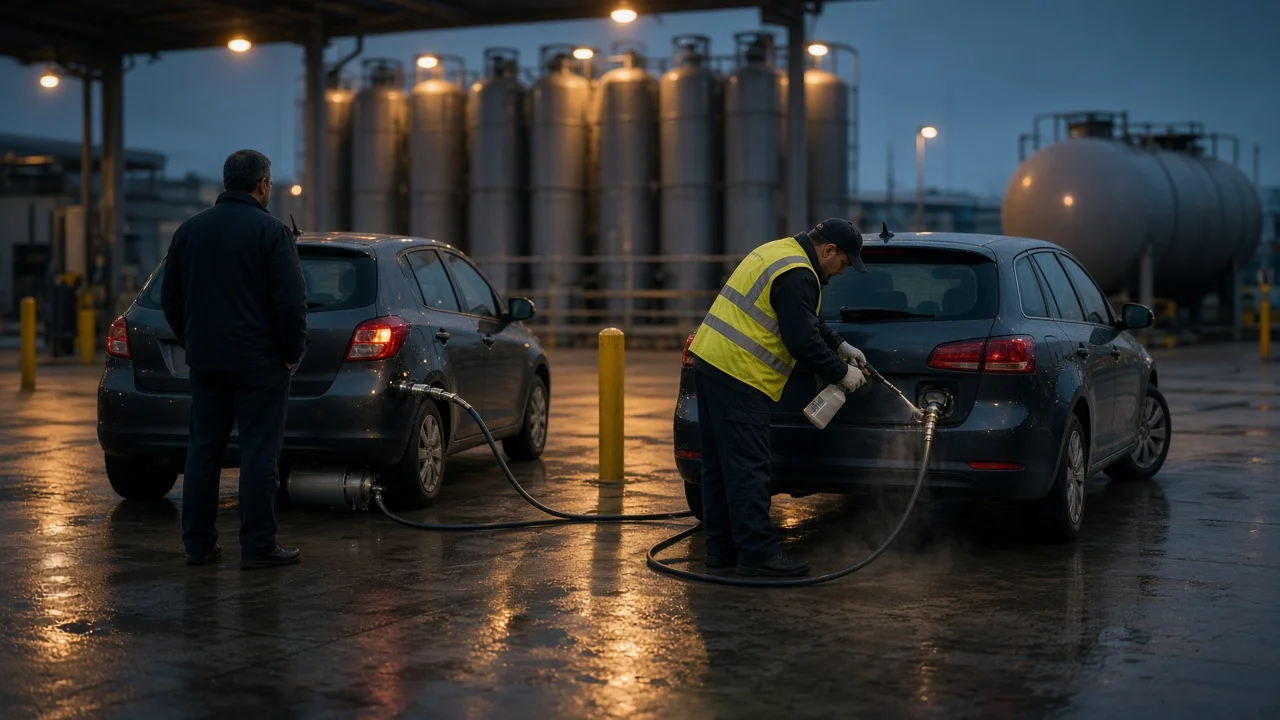
When fuel is being filled in a vehicle, the engine should be switched off and every possible ignition source kept away from the fuel point. That means no smoking, no open flames and no sparks. This applies to every fuel, but it matters especially for liquefied petroleum gas (LPG, mostly propane in the US) and compressed natural gas (CNG, mostly methane). Both are stored under pressure, and both are flammable if they escape.
An important qualification: the exact procedure depends on the vehicle, the fuel system and the station. Posted station rules, the vehicle owner's manual and the fuel system manufacturer's instructions take priority over any general guide. No model-specific or station-specific procedures were available for this article, so the guidance below covers general principles only.
Core precautions for LPG and CNG refueling
Stop the vehicle in the marked position, turn off the engine and set the parking brake. Do not smoke, and keep lighters, open flames and other spark sources away from the dispenser. Follow posted rules on phones and other electronics, since many stations restrict their use near the dispenser. Confirm the vehicle's tank or cylinder is in a condition the station permits for filling, and do not fill a tank you suspect is damaged or out of inspection. Connect the nozzle firmly to the fill receptacle before starting the flow, and follow the dispenser's on-screen or posted steps. Let the dispenser stop automatically, and do not try to top off or override the shutoff. Disconnect the nozzle as instructed, return it to the dispenser and confirm it is detached before moving the vehicle. Where a station or local rule requires passengers to leave the vehicle or requires an attendant or trained operator, comply.
How LPG and CNG refueling differ
Both fuels are dispensed through a sealed connection rather than an open filler neck. They behave differently, though, and that changes what to watch for.
Aspect | LPG (propane autogas) | CNG (compressed natural gas); How it is stored | As a liquid under moderate pressure | As a gas under high pressure; What leaked gas does | Heavier than air, so it can collect near the ground and in low spots | Lighter than air, so it tends to rise and disperse; Filling behavior | The tank is designed not to fill completely, leaving vapor space, with a fill limiter controlling this | The dispenser fills to a pressure target and stops; Handling concern | Escaping liquid propane is extremely cold and can cause cold burns, so protective gloves are commonly advised | High pressure makes a secure, correct connection and an undamaged cylinder especially important
Because LPG vapor sinks, a leak around the vehicle is more of a concern near drains, pits or enclosed low areas. Because CNG rises, ventilation overhead matters more in covered spaces. In either case, refuel only at a purpose-built dispenser and never improvise a fill from another container.
If you suspect a leak
Signs of a leak include a gas odor, a hissing sound or visible frost around a fitting, which is more typical with LPG. If any of these appear, stop fueling using the dispenser's stop control or emergency shutoff if one is provided. Do not start the engine. Move away from the vehicle and alert the attendant or station operator. Do not try to fix a leaking fitting yourself at the pump.
What this guide cannot confirm
Several things vary and are not covered here: requirements for passengers to exit, whether self-service gas fueling is allowed, inspection schedules for tanks and cylinders, fill pressures and exact connector types. They differ by state, station operator, vehicle generation and fuel system design. For those details, check the owner's manual, the labels on the fuel tank or cylinder, the instructions posted at the dispenser and the station staff.