Car Axle Length: What It Means and Why There Is No Single Figure
The Short Answer
There is no single standard axle length for cars. The figure depends on the specific vehicle, including its model year, generation, drivetrain layout, trim and market. It also depends on which measurement you mean, because "axle length" is used loosely for several different dimensions. Before you look up or compare a number, identify which of those dimensions your question is about.
No confirmed specifications for particular vehicles were available for this guide, so it gives no measurements. For an exact figure, use the manufacturer's documented specifications or a parts listing matched to the vehicle identification number (VIN).
What "Axle Length" Can Refer To
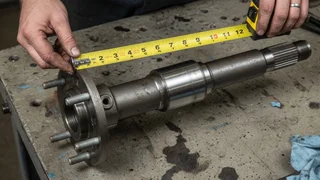
Term | What it describes | When it usually matters; Drive shaft or half-shaft (CV axle) | The shaft that carries power from the differential or transaxle to one wheel. CV stands for constant velocity, the type of joint at each end. | Ordering a replacement shaft or checking fitment after suspension changes; Solid axle width | On a beam or live axle, one rigid assembly spans both wheels. Width is often measured between the wheel-mounting surfaces, known as flange-to-flange width. | Axle swaps, wheel offset choices and fender clearance; Track width | The distance between the centers of the left and right tires on the same axle. It describes the vehicle's stance, not the axle part itself. | Comparing vehicles, stability and wheel or tire fitment; Wheelbase | The distance between the centers of the front and rear axles. It is often confused with axle length but measures the space between axles. | Comparing vehicle size, ride and turning characteristics
Why Left and Right Shafts May Differ
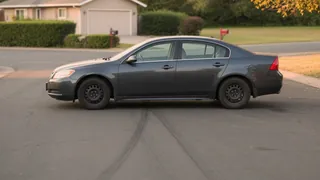
Many front-wheel-drive cars have a transversely mounted engine, meaning it sits sideways in the engine bay. In that layout the transaxle is often off-center, so the left and right half-shafts can be different lengths. Some designs add an intermediate shaft to bring the two sides closer to equal. Because of this, replacement shafts are usually listed by side as well as by vehicle.
Even within one model, all-wheel-drive and front-wheel-drive versions, or versions with different engines or transmissions, may use different shafts. Treat any length figure as specific to the exact configuration it was published for.
How to Find the Right Figure for Your Vehicle
For track width or wheelbase, check the owner's manual or the manufacturer's published specifications for your model year and trim. For a half-shaft, use a parts catalog lookup by VIN and specify the side and drivetrain. CV axles change effective length as the suspension moves, so the catalog match is more reliable than a casual measurement. For a solid axle, measure flange to flange only with the vehicle safely supported, and record exactly which surfaces you measured between so the number can be compared accurately. If the suspension has been lifted or lowered, confirm whether the standard shaft still suits the changed geometry before assuming the factory part will fit.
Gaps in This Guide
No model-specific measurements, part numbers or manufacturer data were available for this guide. It therefore explains what the terms mean and where to find reliable figures, but it does not state any actual axle lengths. Confirm any dimension against documentation for the exact vehicle configuration before buying parts or making modifications.