What Is Wheelbase Length Good for Understanding?
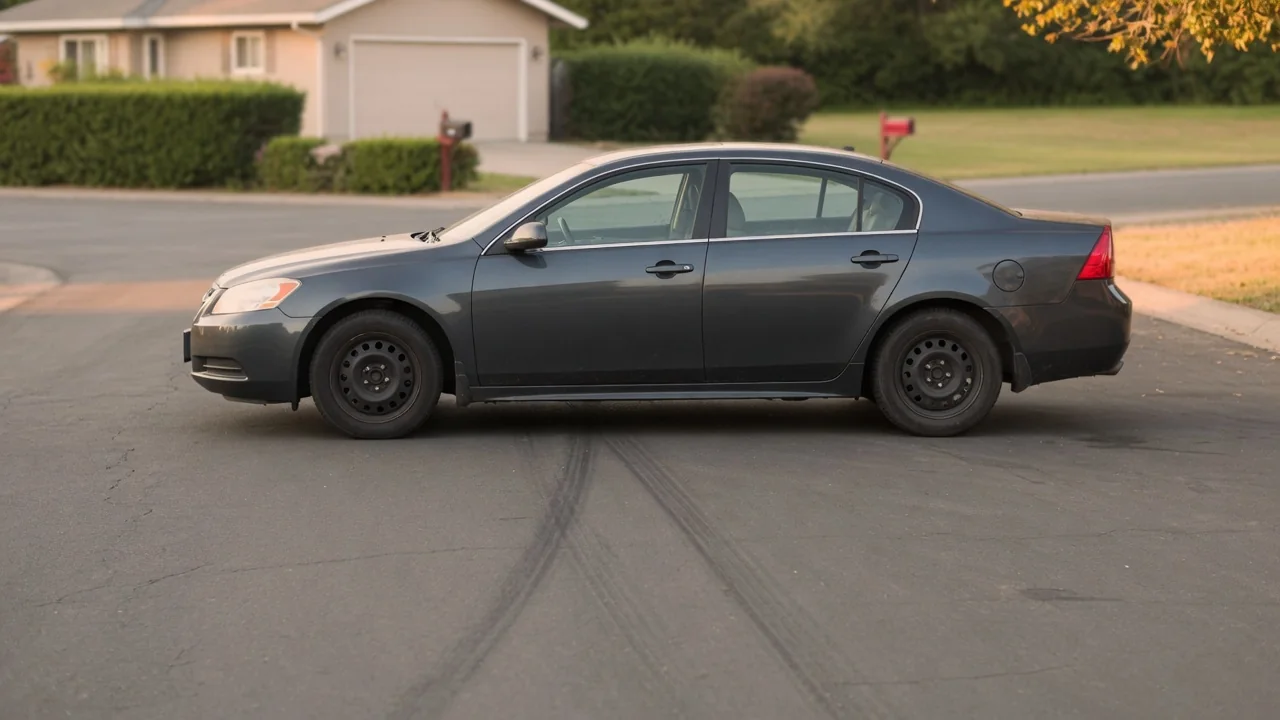
Wheelbase is the distance between the center of the front axle and the center of the rear axle. Drivers who ask what is wheelbase length good for understanding usually want to know how that single measurement shapes a vehicle. The short answer is that axle spacing helps explain cabin room, turning behavior, and ride character, though it never tells the whole story alone.
Cabin layout
The passenger compartment generally sits between the axles, so the space between the front and rear wheels sets a rough budget for seating. A longer wheelbase gives designers more length to divide among front legroom, rear legroom, and door openings. That is why two vehicles with similar overall length can feel very different inside: one may spend its length on long overhangs, while the other pushes the wheels toward the corners and gives the gained distance to the occupants.
You can see this by looking at a vehicle from the side. Notice where the rear wheel arch sits relative to the rear door and seat cushion; an arch that cuts into the door opening often signals a tighter back seat and narrower entry. Packaging still varies widely, though. Engine orientation, drivetrain layout, battery placement in electric vehicles, and roofline shape all affect how efficiently a given wheelbase turns into usable room, so published interior dimensions remain the better guide to actual space.
Turning
Axle spacing also shapes how much room a vehicle needs to change direction. When the front wheels steer, the rear wheels follow a tighter arc, and the farther back they sit, the more they cut inside the path of the fronts. With comparable steering angle, a longer wheelbase therefore tends to produce a wider turning circle, which is why long pickups and extended vans often need extra passes in a parking lot where a small hatchback swings around in one.
Wheelbase is only one input, however. The maximum angle the front wheels can reach, the width of the tires, the drivetrain layout, and the presence of rear-wheel steering all change the result, so a long vehicle with generous steering lock can out-turn a shorter one with limited lock. Drivers notice the difference when making U-turns, entering tight garages, or rounding curbs, where a long-wheelbase vehicle's rear tire tracks closer to the inside corner and asks for a wider approach.
Ride context
Ride quality is another area where wheelbase offers useful context. When a vehicle crosses a bump, the front axle meets it first and the rear axle follows a moment later. With the axles farther apart, the body pitches through a smaller angle for the same bump height, and the occupants sit farther from each axle, so the motion tends to feel calmer. Short-wheelbase vehicles can feel busier over expansion joints and broken pavement, with more noticeable fore-and-aft rocking.
At highway speed, a longer wheelbase generally contributes to straight-line stability, while a shorter one tends to make a vehicle feel quicker to rotate into a corner. These are tendencies rather than guarantees. Spring and damper tuning, tire sidewall height, vehicle weight, seat design, and suspension geometry often matter as much as the distance between the axles. A well-tuned compact car can ride more comfortably than a poorly sorted larger one, so wheelbase should frame expectations instead of settling them.
Everyday Use and Observations
In daily driving, the measurement shows up in small, repeatable ways. Parallel parking depends mostly on overall length, but how the vehicle pivots into the space depends on where the rear axle sits. Steep driveways and speed humps bring breakover angle into play: with more distance between the axles, the middle of the underbody is more likely to touch a crest unless ground clearance is generous. Truck and van buyers often see the same model offered in several wheelbases for exactly these trade-offs.
A test drive makes these effects easy to observe. Sit in the back seat behind a driver's seat set for your own height, then check knee room and how easily your feet clear the door opening. Make a full-lock turn in an empty lot and note how much pavement the vehicle uses. Drive over a familiar rough stretch and pay attention to pitching. Comparing two trims or body styles of one model back to back can isolate the wheelbase effect fairly well.
Limits and Next Steps
Wheelbase has clear limits as a predictor. It says nothing direct about overall length, width, cargo volume, headroom, or weight, and it cannot reveal how overhangs affect garage fit or approach and departure angles. Two vehicles with nearly identical axle spacing can differ sharply in cabin room and agility because of body style and engineering choices. Treat the figure as one line in a specification sheet that gains meaning only when read beside the other dimensions.
The sensible next step is to check the manufacturer's published figures for the exact model year, body style, and trim you are considering, since wheelbase, turning circle, and interior measurements can change between versions. Compare those numbers with the vehicles you already know, measure your garage or regular parking space if fit is a concern, and confirm impressions with a drive on your own routes. Used that way, wheelbase becomes a helpful starting point for comparison, not a verdict.