When a Seat Belt Needs Replacement: Warning Signs, Safety and Cost Factors
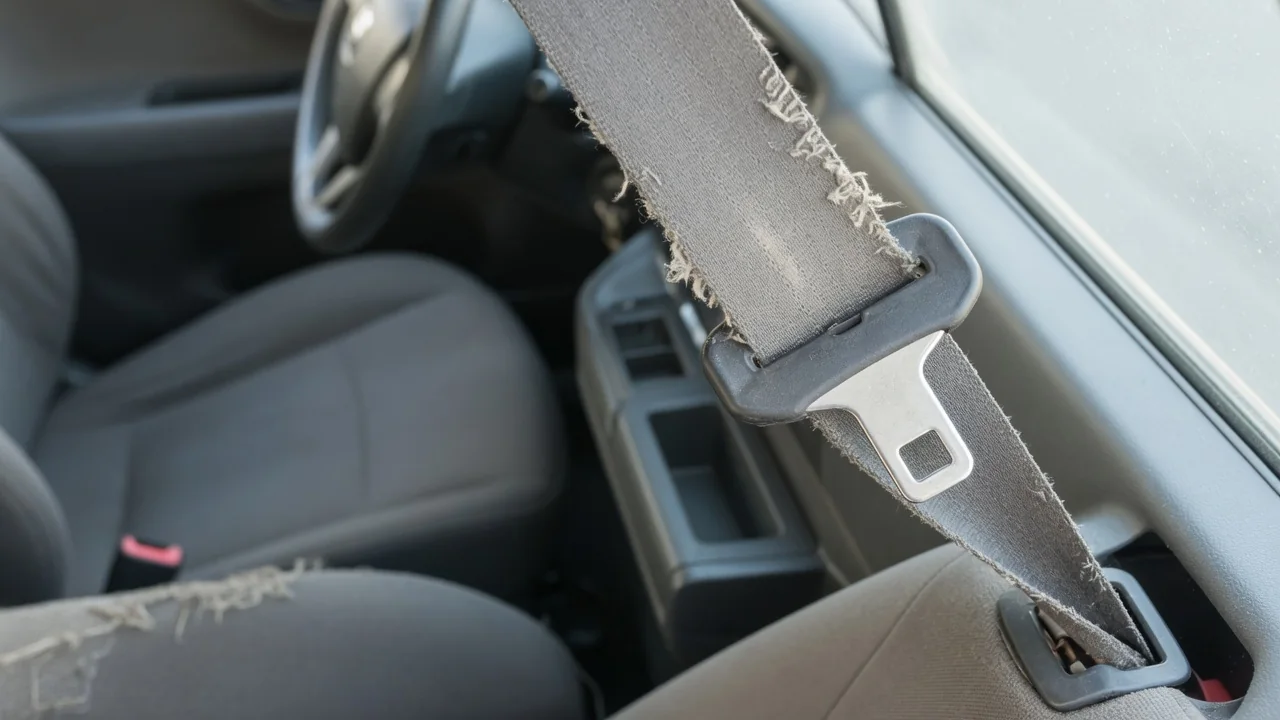
A seat belt rarely gets much attention until it stops retracting, refuses to latch, or comes through a crash. Knowing when to replace a seat belt matters because the restraint system only works if every part does its job in a split second. This guide covers the warning signs, post-collision concerns, what the job involves, and the factors behind seat belt replacement cost.
Warning Signs That a Seat Belt Should Be Replaced
Start with the seat belt webbing, because it is the easiest part to check safely. Pull the belt out to its full length in good light and run it through your fingers. Look for frayed edges, cuts, burns from cigarettes or heat, stiff or glazed spots, and discoloration from chemicals or sun. Areas that look stretched, narrower, or thinner than the rest suggest the fibers have been overloaded. Damage anywhere along the belt, including the section normally hidden inside the retractor, is reason enough to have it evaluated.
The seat belt retractor and buckle give their own clues. A retractor problem can show up as a belt that won't retract, retracts slowly, locks all the time, or doesn't lock when you give it a firm, quick pull. If the tongue won't latch, releases unexpectedly, or takes force to engage or release, the buckle may be at fault. A seat belt reminder or SRS warning light can also point to a belt fault, but what it means depends on the vehicle, and it needs proper diagnosis. All of these affect crash protection, so get the belt inspected promptly instead of putting it off.
Seat Belts After a Collision: Why Inspection Matters
A belt that held an occupant during a crash may have been loaded or stretched beyond its design limits, even if the webbing looks normal. Modern belts also contain parts that are meant to work only once. In certain impacts, a seat belt pretensioner fires to pull slack out of the belt. A load limiter lets the webbing pay out in a controlled way so the force on the chest stays manageable. Once either one has done its job, the assembly may not protect as well in a second crash.
For that reason, a post-collision inspection should follow the manufacturer's guidance rather than a judgment based on how the belt looks. Service information usually says which belt components to check or replace after a collision. Those requirements vary by vehicle, seat position, and crash circumstances, so no single rule applies everywhere. A deployed pretensioner usually leaves fault codes stored in the airbag system, and reading and clearing them takes a professional scan tool. Those codes are evidence for the technician to weigh alongside the physical inspection. They are not a final verdict on their own.
What Seat Belt Replacement Involves and Why It's Not a Casual DIY Job
A complete belt assembly usually includes the webbing, retractor, buckle, anchors, and often a height adjuster on the pillar. Depending on the design, a pretensioner may be built into the retractor, the buckle, or an anchor. Many buckles also contain a sensor that tells the restraint module whether the belt is fastened. Pretensioners use small pyrotechnic charges and are part of the SRS. Mishandling them, disturbing their wiring, or working on the system while it is powered can cause injury or set off an unintended deployment.
Correct installation matters as much as the part itself. Anchor bolt torque, webbing routing, and the right assembly all control how the belt spreads crash forces across the occupant, and a small mistake may go unnoticed until it counts. That is why any replacement involving a pretensioner, buckle sensor, or SRS wiring belongs with a qualified technician or dealer. The new part should be the correct OEM seat belt assembly or a verified equivalent for the exact vehicle, seat position, and trim, confirmed by VIN. Avoid generic or salvaged belts of unknown history.
What Affects Seat Belt Replacement Cost
The cost to replace a seat belt depends first on what actually failed. Frayed webbing or a worn-out retractor usually means replacing the combined retractor and webbing assembly, while a faulty buckle may be sold as a separate, simpler part. A fired pretensioner tends to add expense because it is an SRS component. Seat position matters too, since front, rear, and center belts are often different designs. The make and model also determine how complex and specialized the parts are.
Labor is the other big factor in seat belt replacement cost. On some vehicles, the belt can be reached by removing a few pillar trim panels. Others require removing the seat, especially when the belt is seat-mounted with an integrated pretensioner and buckle sensor. SRS diagnosis, clearing codes, and verifying the system afterward may show up as separate charges. Dealer OEM parts are made for the specific vehicle and its restraint system. Parts from other sources are acceptable only when they exactly match the original specification, so put safety and fit ahead of price.
How to Get an Accurate Estimate for Replacing a Seat Belt
An accurate seat belt repair estimate starts with good information. Give the shop the VIN, the affected seat position, and a clear description of the problem, such as a belt that won't retract or a buckle that sticks. Mention any crash history and any warning lights you have seen. Ask for an itemized quote that lists parts, labor, diagnosis, and SRS-related work separately. That shows you what drives the cost and lets you compare shops on equal terms.
Ask whether the estimate covers only the failed component or the entire belt assembly, and why. Sometimes the buckle or retractor is sold separately. Other times the manufacturer supplies them only as a unit, or the service information calls for full replacement after a crash. Confirm that the shop will test latching, retraction, and locking, and will make sure no SRS warnings remain when the work is done. Be wary of choosing the cheapest quote if it relies on used or unverified restraint parts, because the savings mean nothing if the belt fails when you need it.
Checking Coverage Before Paying for Seat Belt Replacement
Before you pay for a seat belt replacement yourself, check whether someone else might cover it. Some vehicles have restraint system coverage under a factory or extended warranty, so read your own warranty terms for language about seat belts and the airbag system. It is also worth checking for open safety recalls by VIN through the manufacturer or an authorized dealer, since recall repairs are normally done at no charge. These checks cost nothing and can change who pays.
When a belt needs replacing because of a crash, the seat belt and pretensioner work is often included in the collision insurance claim, depending on your policy and the adjuster's findings. Make sure the repair estimate lists the restraint items so they don't get missed. Keep records of the inspection findings, any codes found, the parts installed, and confirmation that the system was verified. Those records help with warranty or insurance questions and show a future buyer that the restraint system was properly repaired.