How Car Seat Belts Work: Parts, Pretensioners and When to Inspect Them
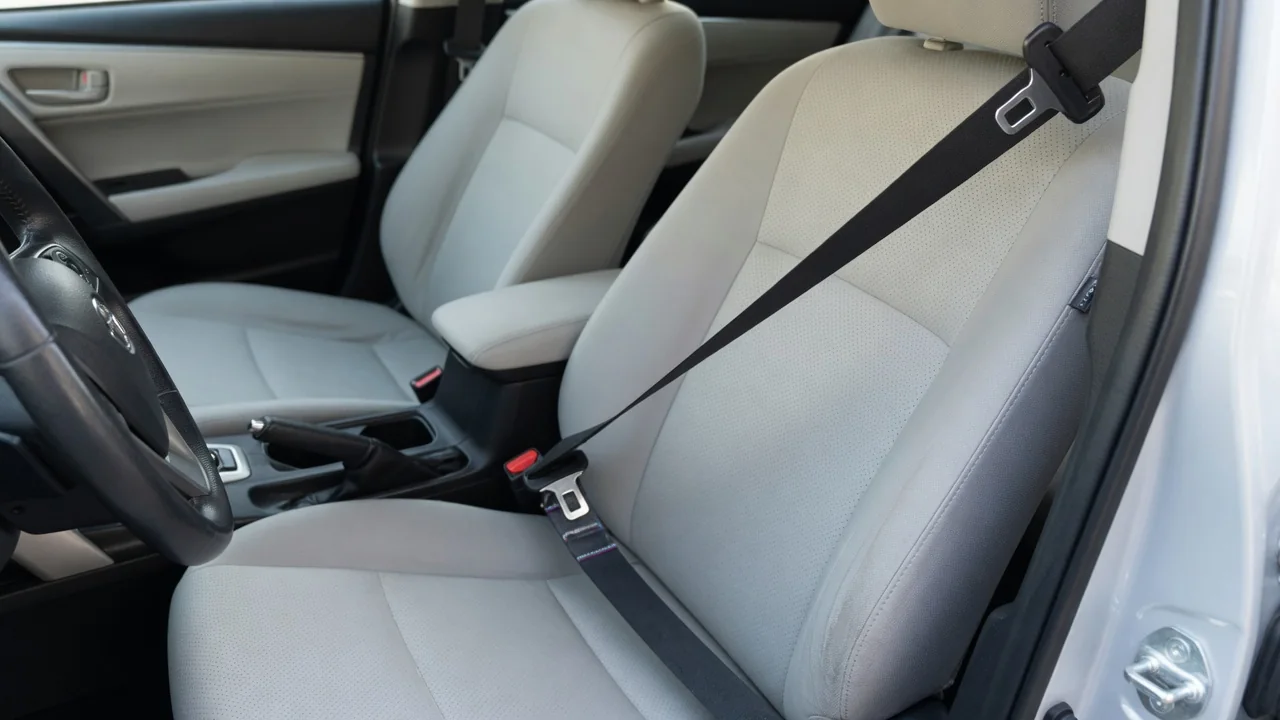
A seat belt looks simple, but the parts of the seat belt work as a coordinated system with the airbags and crash electronics. Knowing what each component does, what seat belt pretensioners are, and how to spot wear helps you judge when a belt is doing its job and when it needs a technician's attention. Here is how the assembly works and how to check it safely.
The Main Parts of a Car Seat Belt Assembly
The most visible part is the webbing, a tightly woven strap designed to stretch very little while spreading crash forces across the strong bones of the pelvis, ribs and shoulder. The webbing threads through a latch plate, often called the tongue, which clicks into the seat belt buckle mounted near the seat cushion. A retractor, usually hidden in the pillar or seatback, stores excess webbing on a spring-loaded spool, while an upper guide or D-ring routes the shoulder portion across the body.
Steel anchors bolt the system to the floor, pillar or seat frame so the load passes into the vehicle structure rather than the trim. Some vehicles add a height-adjustable upper anchor, which lets the shoulder belt cross the middle of the collarbone instead of rubbing the neck or slipping off the shoulder, where it cannot restrain the torso effectively. Layouts differ by make, model and seat position, so your owner's manual is the best guide to your own belts.
How the Retractor Lets the Belt Move and Then Locks It
During normal driving, the retractor spring keeps light tension on the webbing so you can lean forward, reach the controls and settle back while the belt follows you. That freedom matters because a belt that fights every movement tends to be worn loosely or misrouted. Inside the retractor, an emergency locking retractor mechanism watches for two conditions: sudden vehicle deceleration, often sensed by a weighted pendulum or ball, and rapid webbing payout, sensed by a centrifugal catch on the spool.
When either trigger trips, a pawl engages teeth on the spool and the belt stops extending, which is why a hard stop or quick tug makes it lock. That behavior is normal, not a fault on its own. Many passenger belts also have an automatic locking retractor mode, often engaged by pulling the webbing all the way out, that ratchets tight to hold a child seat. Confirm in your owner's manual whether your vehicle offers this feature and how it is engaged.
What Seat Belt Pretensioners Are and What They Do in a Crash
So what are seat belt pretensioners? They are devices that pull slack out of the belt in the first instant of a qualifying crash, drawing the occupant firmly into the seat before the body starts moving forward. Pretensioners belong to the supplemental restraint system alongside the airbags. Crash sensors feed data to the airbag control module, which decides whether the event warrants firing the pretensioners, the airbags, or both, based on its own programmed logic.
Many pretensioners use a small pyrotechnic charge that generates gas to drive a piston, cable or rotary mechanism, and depending on design they may sit at the retractor, the buckle or a lower anchor. Closely related is the load limiter, which allows some webbing to pay out in a controlled way once belt forces climb, reducing peak load on the chest. Deployment criteria and hardware vary widely between vehicles, so no single description fits every design.
What Happens to Seat Belts After a Pretensioner Fires
A pyrotechnic pretensioner is generally a one-use device. Once it fires, the manufacturer's procedures determine what must be inspected and replaced, which may include the belt assembly and other restraint components. After a crash, you might notice a belt that stays snug against your body, won't extend normally, or has retracted much shorter than usual. An illuminated SRS or airbag warning light is another strong signal that the restraint system has recorded an event or detected a problem.
Pretensioners contain energetic material and remain hazardous even when they look harmless, so owners should never remove, disassemble or probe them with a meter. Leave handling to trained technicians who follow the vehicle's service information. Have every belt and restraint component professionally inspected after any collision, including a low-speed impact that seemed minor, because a pretensioner can fire or a retractor can be strained without obvious damage to the cabin or bodywork.
How to Inspect Your Seat Belts Safely at Home
A home check takes only a few minutes and requires nothing more than good light and your hands. Pull each belt fully out and look along the webbing on both sides for cuts, fraying edges, burns, heavy sun fading, or areas that feel stiff or glazed. Inspect the stitching where the webbing loops around the anchors and latch plate, since torn or pulled threads can reduce strength. Any of these signs means the belt should be evaluated.
Next, insert the latch plate into the buckle and listen for a firm click, then tug to confirm it holds and press the release to make sure it lets go cleanly. Let the webbing retract and watch for smooth, complete travel without sticking. Finally, give the belt a quick, firm pull to confirm it locks. Repeat for rear and center positions, which are easy to overlook, and stick to observation without opening retractors, buckles or anchors.
Warning Signs That Need Professional Testing
Some symptoms go beyond what a home check can settle. A belt that won't latch, won't retract, won't lock on a sharp pull, or stays locked constantly needs a qualified technician, as does any lit SRS or airbag warning light. Symptoms alone rarely pinpoint the cause, because a single complaint could stem from a worn retractor, a buckle switch, wiring under the seat or a module fault, and restraint systems often need scan-tool diagnosis to sort that out.
Stored restraint fault codes are useful evidence, but they point to a circuit or condition rather than proving a specific part has failed. Many are manufacturer-specific, so they should be interpreted with the correct vehicle service information instead of generic code definitions. Until a faulty belt is repaired, don't seat a passenger or install a child seat in that position. Moving occupants to a seat with a properly working belt is the safer choice.
Everyday Care That Helps Seat Belts Keep Working Properly
Seat belt webbing picks up sweat, sunscreen and spills, but cleaning it needs a gentle touch. Use mild soap and lukewarm water with a soft cloth or brush, and avoid bleach, dyes and harsh solvents, which can weaken the fibers in ways you cannot see. Leave the belt fully extended until it is completely dry before letting it retract, because winding damp webbing onto the spool can trap moisture and encourage mildew inside the retractor housing.
Be cautious about aftermarket clips, comfort pads and extenders. Accessories that change belt routing, add slack or hold the webbing open can alter how the belt fits and locks in a crash. If you need a longer belt or a better fit, ask a dealer about manufacturer-approved options for your vehicle. Keep buckles clear of crumbs, coins and sticky drinks, since debris inside the buckle can stop the latch plate from engaging fully or releasing reliably.