What Type of Fire Does a CO2 Extinguisher Put Out?
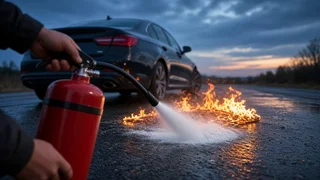
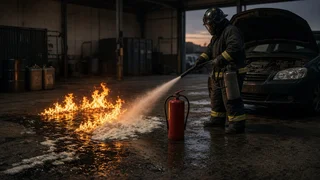
A carbon dioxide (CO2) extinguisher is designed for two classes of fire under the US classification system: Class B fires, which involve flammable liquids and gases such as gasoline, diesel, oil and solvents, and Class C fires, which involve energized electrical equipment. It is not a dependable choice for ordinary combustibles such as wood, paper, fabric or upholstery, and it is not suitable for burning metals, commercial cooking oils or lithium-ion battery fires. For drivers, that means a CO2 unit can tackle a small fuel or wiring fire under the right conditions, but it has real limits outdoors and inside vehicle cabins.
The Short Answer: Class B and Class C Fires
In the United States, fire extinguishers carry letter ratings that match the type of fuel feeding a fire. A CO2 extinguisher is typically labeled B:C, sometimes with a number in front of the B. Here is how that maps to the common fire classes.
Fire class | Fuel involved | Is CO2 suitable? Class A | Ordinary combustibles: wood, paper, cloth, plastics, seat foam | Not recommended; may knock flames down but does not reliably prevent reignition; Class B | Flammable liquids and gases: gasoline, diesel, motor oil, solvents | Yes, for small fires; Class C | Energized electrical equipment: wiring, alternators, control units, battery cables | Yes; CO2 does not conduct electricity; Class D | Combustible metals such as magnesium | No; Class K | Commercial cooking oils and fats | No; a wet chemical agent is required; Lithium-ion battery thermal runaway | Electric and hybrid traction batteries | No; requires emergency services
How a CO2 Extinguisher Works
A fire needs three things: heat, fuel (the combustible material) and oxygen. Take one away and the fire goes out. A CO2 extinguisher stores carbon dioxide as a liquid under high pressure. When you squeeze the handle, it expands rapidly through the discharge horn as a cold gas mixed with fine dry-ice particles.
The main effect is smothering. Carbon dioxide is heavier than air, so it pushes oxygen away from the burning surface and starves the flame. There is also a modest cooling effect from the very cold discharge. Because the gas simply evaporates afterward, it leaves no powder or residue, which is why CO2 is popular around electronics and machinery that a dry chemical agent could contaminate.
That same property explains its weaknesses. Once the gas disperses, oxygen returns. If the fuel is still hot enough, or if an ignition source such as a shorting wire or a hot exhaust component remains, the fire can reignite. This is why CO2 struggles with Class A materials: smoldering embers deep inside foam or fabric stay hot after the gas has drifted away.
Reading the Fire Extinguisher Rating
US extinguisher labels follow a format such as a number followed by B, then C. The number before the B indicates relative extinguishing capacity against flammable liquid fires; a higher number means the unit can handle a larger fire. The C carries no number because it only confirms the agent is safe to use on energized electrical equipment. If a label shows no A, the extinguisher has not been rated for ordinary combustibles. Always check the label on the specific unit rather than assuming every CO2 extinguisher carries the same rating.
Strengths and Limitations in a Vehicle Setting
Most vehicle fires begin in the engine compartment, often from leaking fuel or oil reaching hot components, or from electrical faults. On paper, those are exactly the Class B and Class C fires CO2 is rated for. In practice, roadside conditions expose several drawbacks.
Strength: no residue, so it will not coat wiring, sensors or engine components with corrosive powder. Strength: non-conductive, so it can be used on electrical fires without a shock risk to the user. Strength: fast knockdown of small liquid fuel fires in still air. Limitation: wind disperses the gas quickly, which greatly reduces effectiveness outdoors at the roadside. Limitation: short reach, so you have to get relatively close to the fire. Limitation: reignition risk once the gas dissipates, especially if fuel continues to leak or wiring stays live. Limitation: ineffective on burning seats, carpets, headliners and plastic trim, which are Class A materials. Limitation: heavier and bulkier than a dry chemical unit of comparable capability, which matters when space is tight. Limitation: in an enclosed cabin or small garage, a large discharge can lower oxygen levels enough to endanger people. Limitation: the discharge horn becomes extremely cold and can cause frostbite-type injuries if gripped.
Who a CO2 Extinguisher Suits
A CO2 extinguisher makes the most sense in an indoor workshop or home garage where vehicles, power tools, chargers and electrical panels are present, and where avoiding powder residue on equipment is a priority. Indoors, the gas stays concentrated long enough to work, though the space should be ventilated afterward before anyone lingers.
For carrying in a car, truck or RV, a CO2 unit is usually not the best single choice. A multipurpose dry chemical extinguisher rated A:B:C covers fuel, electrical and interior-material fires, holds up better in wind, and is more compact for its capability. The trade-off is messy, potentially corrosive residue. Whatever type you carry, mount it securely so it cannot become a projectile in a collision, and keep it where you can reach it after leaving the vehicle.
Responding to a Vehicle Fire
An extinguisher is a tool for small, early-stage fires only. Safe evacuation always comes first. If you see smoke or flames or smell burning while driving, follow this order.
1) Signal, pull over as soon as it is safe, and stop away from buildings, other vehicles and dry vegetation. 2) Switch off the ignition. This provides basic electrical isolation and stops the fuel pump on most vehicles, removing a potential ignition source and fuel supply. 3) Get every occupant out and move well away from the vehicle, upwind and off the roadway. Do not go back for belongings. 4) Call emergency services and give your location, the vehicle type and whether it is electric or hybrid. 5) Do not fully open the hood. A sudden rush of air can make the fire flare up toward you. If the fire is small, discharge through the grille, wheel wells or the gap at a partly released hood edge. 6) Use the extinguisher only if the fire is small, you have a clear escape route behind you, and the agent matches the fire. Pull the pin, aim at the base of the flames, squeeze the handle and sweep side to side. 7) Hold the CO2 extinguisher by its handle, never by the discharge horn. 8) Back away after use and watch for reignition. If flames return or grow, abandon the attempt and keep your distance until firefighters arrive.
If the fire involves the fuel tank area, is already in the passenger cabin, or affects the high-voltage battery of an electric or hybrid vehicle, do not attempt to fight it. Lithium-ion battery fires can reignite hours later and produce toxic smoke; they require professional firefighting resources.
Checking a CO2 Extinguisher
Unlike many dry chemical units, CO2 extinguishers usually do not have a pressure gauge, because the gas pressure inside changes with temperature rather than with the remaining charge. Their readiness is checked by weight against the full and empty weights stamped on the unit, along with a visual inspection of the horn, hose, pin and tamper seal. Periodic professional servicing and pressure testing are required at intervals set by the applicable standards, so have the unit inspected by a qualified service provider and replace or recharge it after any use, even a brief one.
Bottom Line
A CO2 extinguisher puts out Class B flammable liquid fires and Class C electrical fires, working by displacing oxygen and leaving no residue. It is a strong fit for indoor workshops and garages with sensitive equipment, but at the roadside, wind, short range, reignition risk and its inability to handle burning interior materials limit its usefulness. For a vehicle, a securely mounted multipurpose A:B:C extinguisher is generally the more versatile option, and in any vehicle fire, getting people out and calling for help takes priority over fighting the flames.