What to Check After a Minor Curb Contact
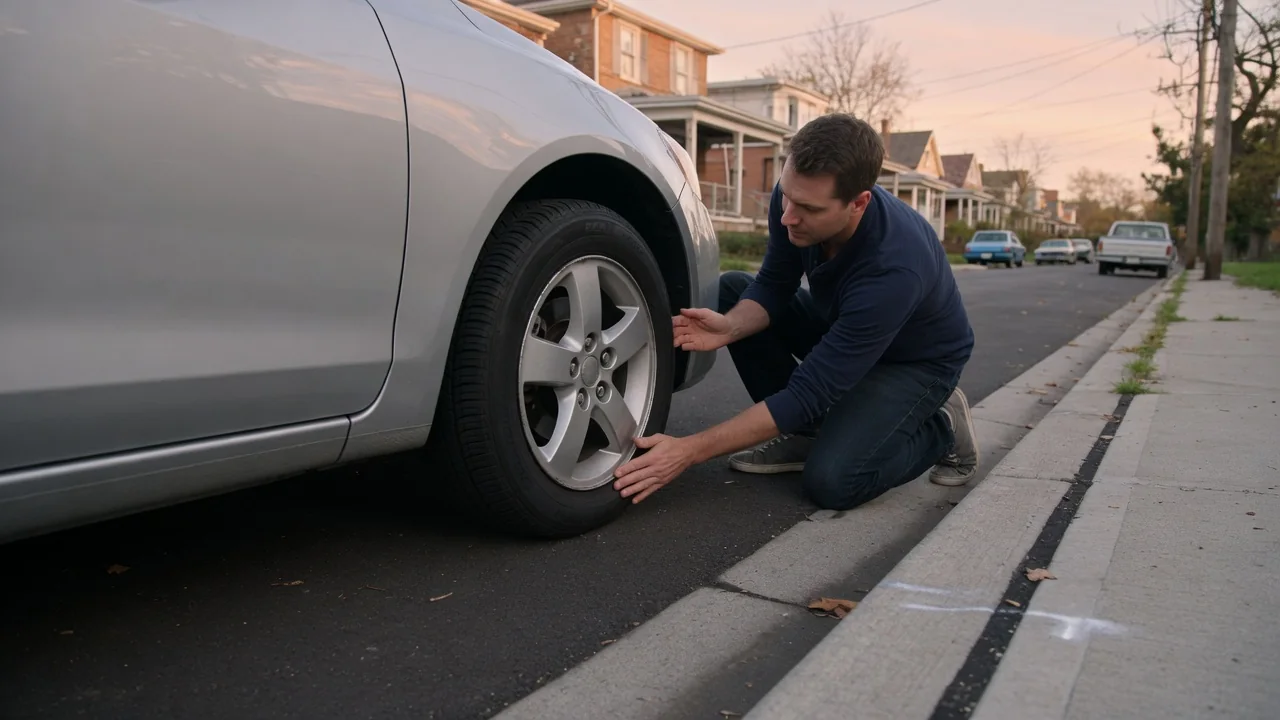
A low-speed brush with a curb can feel like nothing, yet the tire and wheel absorb that force in a very small area. Knowing what to check after a minor curb contact helps you decide whether the car is ready for normal driving or needs a closer look first. A few minutes of careful observation usually tells you a great deal.
Visible tire damage
Start with the sidewall, because it is the thinnest and most flexible part of the tire and the part most likely to be pinched between the curb and the wheel rim. Look for cuts, gouges, scuffed rubber, or any spot where cords or fabric show through. A raised bubble or bulge matters most, since it suggests the internal plies were damaged and air is pressing against the outer rubber alone. That kind of damage generally cannot be repaired and can fail without much warning.
Check the whole circumference, not just the part you can see. Rolling the car forward a few feet exposes the section that was resting on the ground, and turning the steering gives a better view of a front tire's inner sidewall. Low-profile tires leave less rubber between curb and rim, so they tend to show pinch damage more readily than taller sidewalls. Then look at the wheel itself for a bent lip, cracks, or deep scrapes near the bead, where the tire seals against the rim.
Wheel alignment feel
Once the tire and wheel look sound, pay attention to how the car steers on a straight, level road at modest speed. The steering wheel should sit centered when the car tracks straight, just as it did before. If it now rests a few degrees off center, or the car drifts steadily to one side with a light grip, the impact may have shifted the toe setting or bent a steering or suspension component. Road crown can cause a gentle drift, so compare on more than one surface.
Vibration tells a different story than pull. A shimmy in the steering wheel that grows with speed often points to a bent rim, a lost wheel weight, or a tire with internal damage, while a vibration felt through the seat may relate to a rear wheel. Notice whether the steering returns to center smoothly after a turn and whether it feels looser or heavier than usual. Vehicles with electric power steering or wider tires can mask or exaggerate these sensations, so judge against your own car's normal behavior.
Service need
Some findings call for a professional inspection before you resume ordinary driving. A sidewall bulge, exposed cords, a cut deep enough to catch a fingernail, a cracked or visibly bent wheel, or a tire that is losing air all belong in that group. So does any new pull, off-center steering wheel, clunk over bumps, or persistent vibration. These signs suggest the impact reached beyond cosmetic scuffing, and continued driving can worsen tire wear or leave a weakened part carrying load it can no longer handle reliably.
A shop can do things a driveway check cannot. With the car lifted, a technician can spin the wheel to check for runout, inspect the inner rim and sidewall, and examine tie rods, control arms, and the strut or knuckle for bends. An alignment measurement compares the actual angles with the manufacturer's specifications, which vary by vehicle. If a tire pressure warning or stability control light appears afterward, treat it as a clue to investigate rather than proof that a particular sensor or part has failed.
Everyday Use and Observations
Damage from a curb strike does not always show itself immediately, so the days that follow are part of the inspection. Check the pressure in the affected tire with a gauge when it is cold, then again over the next several mornings. A steady drop compared with the other tires can indicate a slow leak at the bead, a bent rim that no longer seals well, or a small puncture. The correct pressure for your vehicle is listed on the door jamb placard, not on the tire sidewall.
Listen and feel during routine trips as well. A new rhythmic thump, a hum that changes with speed, or a faint knock when turning into a driveway deserves attention, especially if it began after the contact. Glance at the tire when you park to see whether a bulge has developed that was not there before, since some appear only after heat and flexing. Over a longer period, feathered or uneven tread wear on one edge is a common sign that alignment changed.
Limits and Next Steps
A visual and driving check has real limits. Internal belt separation, a hairline crack on the back of an alloy wheel, or a slightly bent suspension arm can all exist with nothing visible from the outside and only subtle changes behind the wheel. How hard the hit was matters too: sliding against a curb while parking is very different from striking one squarely at speed, even if both leave similar scuffs. When the impact was sharp enough to jolt the car, a normal appearance is weaker reassurance.
If everything looks and feels normal, keeping speeds moderate for the first few drives and rechecking pressure is a reasonable approach. If anything is doubtful, avoid highway speeds and heavy loads until the tire and wheel have been examined, and fit the spare if the sidewall is visibly damaged. Mention the impact, which wheel was involved, and what you have noticed since when you book the inspection. That detail helps the technician focus on the right corner and decide whether an alignment check is warranted.