What Is Tire Sidewall Flex? Load, Ride, and Heat Explained
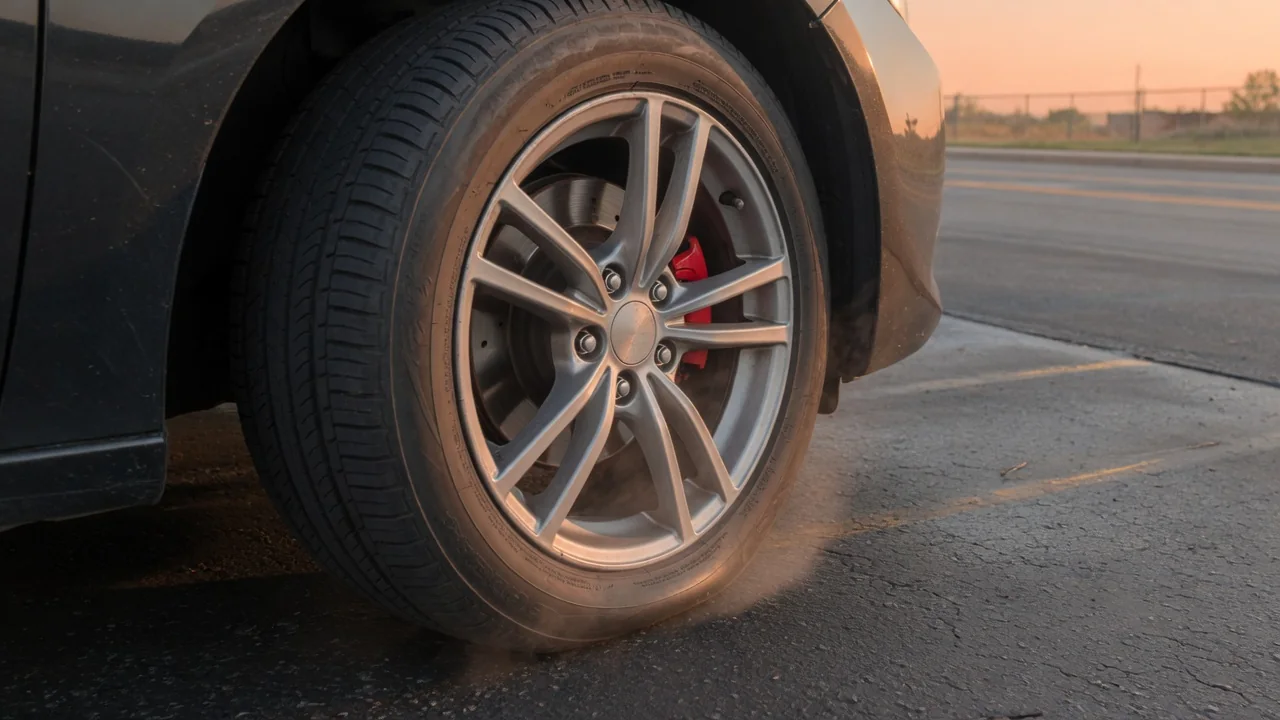
Tire sidewall flex is the bending and bulging of a tire's sidewall as it rolls, carries weight, and responds to bumps and cornering forces. Every pneumatic car tire flexes. What matters is how much it flexes, and whether that movement stays within the range the tire was designed for. Understanding car tire sidewall flex explains why inflation pressure, load, and tire profile have such a large effect on how a vehicle rides, handles, and holds up over time.
Load Support: How the Sidewall Carries Weight
Rubber stiffness alone does not carry a car's weight. The pressurized air inside the tire does most of the work, and the sidewall is the flexible structure that turns that pressure into support. Inside the sidewall are body plies, which are layers of cord embedded in rubber that run from bead to bead. Inflation puts those cords under tension, so the casing becomes a taut, load-bearing shape instead of a soft rubber ring.
Where the tread meets the road, the tire flattens into a contact patch. For that flat area to form, the sidewalls just above it must bend outward and lose some height. They straighten again as that part of the tire rolls away from the ground. This repeated deflection is sidewall flex in its most basic form. At correct pressure and with a load inside the tire's rating, the deflection is moderate and the cords share the weight evenly around the casing. Lower pressure or more weight lets the sidewall deflect further, which enlarges the contact patch and increases the bending on every rotation. The maximum load and pressure molded on the sidewall describe the tire's capacity. The pressure a specific vehicle should run is set by the vehicle manufacturer, usually on a placard in the door jamb or in the owner's manual.
Sidewall height also matters. A tire's aspect ratio expresses sidewall height as a percentage of section width, so a lower number means a shorter sidewall. A taller sidewall has more material that can bend, and a shorter one deflects less in absolute terms under the same load. Construction makes a difference too. Reinforced or run-flat designs use stiffer sidewall structures so the casing can support the vehicle for a limited distance after losing air.
Ride: How Sidewall Flex Affects Comfort and Feel
Sidewall flex is part of a car's suspension system, even though people rarely think of it that way. The tire sits between the road and the wheel, so it is the first spring and the first damper that any bump meets. When the car hits a short, sharp input such as an expansion joint, a pebble, or rough surface texture, the sidewall bends and absorbs part of it before it reaches the wheel, the suspension, and the cabin. A more compliant sidewall generally filters these quick impacts better, which is one reason taller-profile tires are often described as riding more softly.
The same flexibility affects how the car responds to the driver. In a turn, lateral forces push the tread sideways relative to the wheel, and the sidewall twists and leans before the tire fully develops cornering grip. More flex can make steering feel slightly delayed or less precise. A stiffer, shorter sidewall usually responds more quickly and directly, but it also passes more road harshness into the car. Neither approach is better for every use. Tire and vehicle engineers choose a balance for the intended purpose, and a car's suspension tuning is typically developed around a particular tire size and type.
Inflation pressure shifts this balance noticeably. Running below the recommended pressure increases flex, which may soften the ride but also makes handling vaguer and lets the tread squirm more. Running above it reduces flex, which can sharpen response but makes the ride firmer and leaves the tire less able to absorb impacts.
Heat: Why Flexing Warms the Tire
Each time a section of sidewall bends and recovers, the rubber and cords inside it are deformed and then released. Rubber compounds do not return all of that energy, and the part they lose turns into heat through a property called hysteresis. Every point around the tire flexes once per revolution, so this heating continues the whole time the car is moving. It increases with speed because the flex cycles happen more often. The same energy loss is a major contributor to rolling resistance, so tire flex affects fuel economy as well as temperature.
Some heat is normal, and tires are designed to run within a warm operating range. Problems begin when flex becomes excessive. Underinflation and overloading both increase how far the tire bends on each cycle, so the sidewall and shoulder area produce more heat than intended. Sustained high temperatures can degrade rubber, weaken the bond between rubber and cords, and contribute to tread separation or sudden failure. For this reason, tire care guidance stresses correct pressure and staying within load limits, especially on long highway drives in hot weather.
Practical Implications and Limits
For everyday owners, the most useful point is that pressure and load are the main ways to manage sidewall flex. Check pressure regularly with a gauge while the tires are cold, because looking at the sidewall is not reliable. Modern radial tires show a natural bulge at the bottom even when correctly inflated, and a significantly underinflated tire may look only slightly different. Heavy loads, towing, and long trips with full passengers and cargo are situations where the manufacturer may specify a different pressure, so check the placard and owner's manual before those trips.
Changing tire size also changes flex. Larger wheels with lower-profile tires leave less sidewall available to bend. That can change ride comfort and steering feel, and it can make the wheel and tire more vulnerable to pothole impacts. After any size change, the tire's load rating must still meet the vehicle's requirements, which is worth confirming with a qualified tire professional.
There are limits to what flex can tell you. A bulge, bubble, deep cut, or exposed cord on the sidewall means the structure is damaged. Because the sidewall flexes constantly, this kind of damage is generally considered unsuitable for repair, and replacement is the usual recommendation. Beyond that, the exact amount of flex depends on construction details that vary by tire design and cannot be seen from outside. General principles explain how flex behaves, but they cannot predict how one specific tire will feel or perform on one specific vehicle.