What Is Electronic Brakeforce Distribution? Axle Load, Pressure Balance and Limits
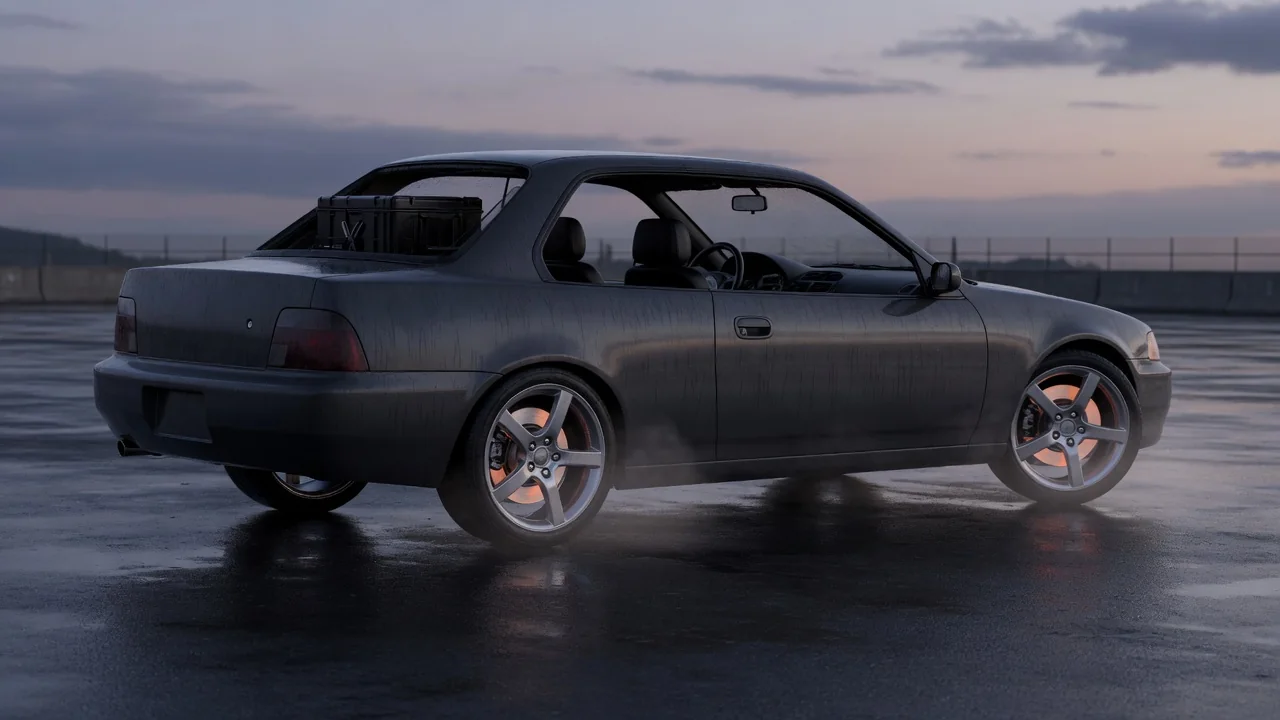
Electronic brakeforce distribution, usually shortened to EBD, is a control function that adjusts how much braking pressure reaches each axle, and on many systems each wheel, while the car is slowing down. It typically runs as a subfunction of the anti-lock braking system and uses the same wheel speed sensors and hydraulic valves. The goal is to let the rear brakes contribute as much as they safely can without locking before the fronts. Axle load, pressure balance, and system limits explain how it works.
Axle load and why it shifts under braking
When a vehicle decelerates, inertia acts at its center of gravity, which sits above the road surface. That creates a pitching moment that pushes the nose down and lifts load off the rear. The front tires are pressed harder into the pavement and can transmit more braking force, while the rear tires lose vertical load and therefore lose grip. The harder the stop, the larger this dynamic weight transfer becomes. If the rear brakes received the same share of pressure in a hard stop as they do in a gentle one, the lightly loaded rear wheels would reach their grip limit first. A locked rear axle is especially undesirable because the car loses directional stability and can begin to rotate.
Static load also changes from trip to trip. An empty car, a car with passengers in the back seat, a vehicle with a full cargo area, and one carrying trailer tongue weight all put different loads on the rear axle before braking even starts. Fuel level and the layout of the drivetrain add further variation. A fixed front-to-rear brake split can only be optimized for one of these conditions. Older designs addressed the problem with mechanical proportioning valves, and some used load-sensing valves linked to the rear suspension. Electronic brakeforce distribution performs a similar task, but instead of relying on a fixed hydraulic curve, it reacts to how the wheels are actually behaving.
Pressure balance: how EBD manages rear brake pressure
EBD does not normally measure axle load directly. It infers it. The control unit continuously compares wheel speeds from the sensors at each corner. During braking, every tire slips slightly relative to the road, and that slip rises as a wheel approaches its grip limit. If the rear wheels start slowing down noticeably faster than the front wheels, the system interprets this as a sign that the rear axle is closer to locking than the front. Because this comparison is based on relative slip rather than a weight measurement, the same logic adapts to an empty or loaded vehicle without any extra hardware.
Once rear slip reaches the threshold programmed by the manufacturer, the control unit closes the inlet valves for the rear brake circuits in the hydraulic modulator. This holds rear pressure at its current level even if the driver presses the pedal harder, so any additional pedal effort goes mainly to the front brakes. If the rear wheels continue to approach lock, the system can briefly open outlet valves to reduce rear pressure. When slip falls back into an acceptable range, the valves reopen and rear pressure can rise again. All of this typically happens before full anti-lock intervention would be needed, which is why EBD is often described as acting in the region below ABS control.
Because the valves are controlled per wheel on many systems, some implementations can also balance pressure from side to side, for example when cornering shifts load toward the outside tires. Whether a particular vehicle does this, and how its thresholds are tuned, is a vehicle-specific design choice. The general principle is the same: rather than following a fixed ratio, EBD allows the rear brakes to do more work when the rear axle can support it and limits them when it cannot.
System limits of electronic brakeforce distribution
EBD cannot create grip. The maximum braking force at any wheel is set by the tire, the road surface, and the vertical load on that tire. On ice, wet leaves, or loose gravel, the available friction is low, and no pressure strategy can shorten the stop beyond what the tires allow. In its basic form, EBD also works by holding or reducing pressure; it does not add braking force that the driver has not requested. Other functions that share the same hardware, such as stability control, may build pressure independently, but that is a separate control task.
The function depends entirely on its inputs and actuators. A failed wheel speed sensor, a damaged sensor ring, a wiring fault, or a modulator problem can prevent the system from judging slip correctly. In those cases, control units are generally designed to disable EBD rather than act on bad data, and the instrument cluster displays a warning. The conventional hydraulic brakes still operate, but the car may then behave more like a vehicle with a fixed brake split, with a greater risk of rear lock during hard stops. The exact warning combination and fallback behavior vary by manufacturer and are described in the owner's manual.
Because EBD reads relative wheel speed, anything that distorts that comparison can affect it. Tires of different diameters, mixed tread depths between axles, or incorrect inflation can make one wheel appear to slip more than it really does. Very rapid changes in surface grip can also outpace any control loop, since the system must detect slip before it can respond to it.
Practical implications and limits for drivers
In normal driving, most people never notice electronic brakeforce distribution at work. Unlike full ABS intervention, which often produces a pulsing pedal and a buzzing sound, EBD usually limits rear pressure quietly. A driver may simply find that the car stays straight and settles predictably during a firm stop with passengers or luggage aboard. That lack of feedback means the function is easy to forget, which makes the warning lights the main way a driver learns that something has changed.
If the dashboard shows the ABS warning, and especially if it appears together with the red brake system warning, treat it as a sign that brakeforce distribution may be unavailable. Check the brake fluid level if it is safe to do so, leave more following distance, avoid hard braking where possible, and have the system diagnosed with a scan tool that can read the brake control module. A red brake warning on its own can also indicate low fluid or an engaged parking brake, so the manual's description for that specific vehicle should guide the next step.
Ownership habits support the system as well. Keep matched tires on each axle at the recommended pressures, stay within the vehicle's rated payload and towing limits, and replace brake fluid at the interval the manufacturer specifies. During repairs such as wheel bearing or hub replacement, make sure the sensor ring or encoder is intact and correctly installed. Electronic brakeforce distribution improves how available braking is shared, but it relies on healthy pads, rotors, hydraulics, and tires to deliver a safe stop.