What Is DC Fast Charging for EVs
Drivers often meet DC fast charging when planning a highway trip or when a battery is low and a quick stop matters. In electric vehicles, this is the method that restores the most range in the shortest practical time by feeding high-voltage direct current straight into the pack. Understanding what DC fast charging means helps owners choose the right station, avoid unnecessary waiting, and protect battery health over thousands of miles.
Meaning
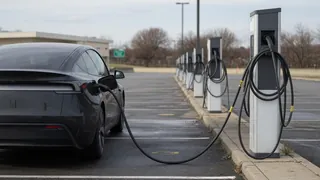
DC fast charging is a high-power way to replenish an electric vehicle battery using direct current. Unlike slower home setups that depend on the vehicle’s onboard converter, this approach delivers DC electricity directly to the battery through an external charging cabinet. The result is a much faster rise in state of charge during a stop, which is why the method is associated with road trips, commercial fleets, and drivers who need a quick turnaround away from home.
In everyday use, the term covers public stations and dedicated connectors built for elevated charging power. It is not a single plug but a category of equipment and vehicle compatibility. The practical significance is convenience: a compatible EV can add meaningful driving range while the driver takes a short break. However, actual speed always depends on the vehicle, the station, battery temperature, and current state of charge, so the label is a capability rather than a fixed result.
How it works
The key mechanism is an external power conversion stage. Most daily charging uses alternating current from a wall outlet or AC station, and the car's onboard charger rectifies it to direct current for the battery. In DC fast charging, the large converter lives inside the charging station instead. The station communicates with the vehicle through a charging protocol, adjusts voltage and current, and sends direct current along liquid-cooled cables to limit heat at high power levels.
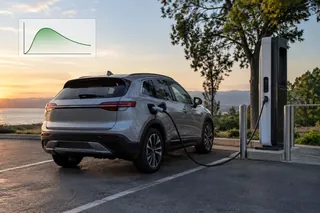
The battery management system controls the session. It requests a safe current based on pack voltage, temperature, and state of charge. Early in a session with a warm battery and low state of charge, the vehicle may accept high charging power. As the pack fills, the system tapers the current to protect cells. This is why a stop from twenty to eighty percent is usually more efficient than trying to reach a full charge at a fast station.
Key differences
The main comparison is between DC fast charging and Level 2 AC charging. Level 2 equipment usually operates at residential or commercial AC voltage and depends on the vehicle’s onboard charger, which is often limited in output. DC fast charging bypasses that onboard converter and can operate at much higher charging power. The practical difference is time: a public DC station may restore significant range in minutes, while a home AC session is better suited to overnight charging.
There are also differences in cost, infrastructure, and battery impact. High-power DC hardware is expensive to install and operate, so per-minute or per-kilowatt-hour pricing is normally higher than home electricity. Vehicle compatibility varies by connector standard and onboard voltage architecture. Frequent fast sessions can produce more heat in the pack than slower AC charging, which is why many manufacturers suggest using DC for travel and reserving routine charging for lower-power locations when possible.
Understanding a problem
If a DC fast charging session is slower than expected, the cause is often not a failure. Charging power normally falls as the battery approaches a high state of charge. Cold battery temperature also limits what the pack can accept safely, especially in winter. A shared station may split its supply capacity between two vehicles, reducing output to each one. These are normal operating behaviors rather than evidence of a damaged component.
A session that stops soon after starting deserves attention. The station or vehicle may detect a handshake problem, overheating in a connector, or a fault in the charging protocol. Drivers should note whether the car charges normally on another station and whether the vehicle displays a warning. Comparing results across stations helps separate a site issue from a vehicle concern, but a repeating failure should be diagnosed by a qualified technician.