What Is an Occupant Detection Sensor?
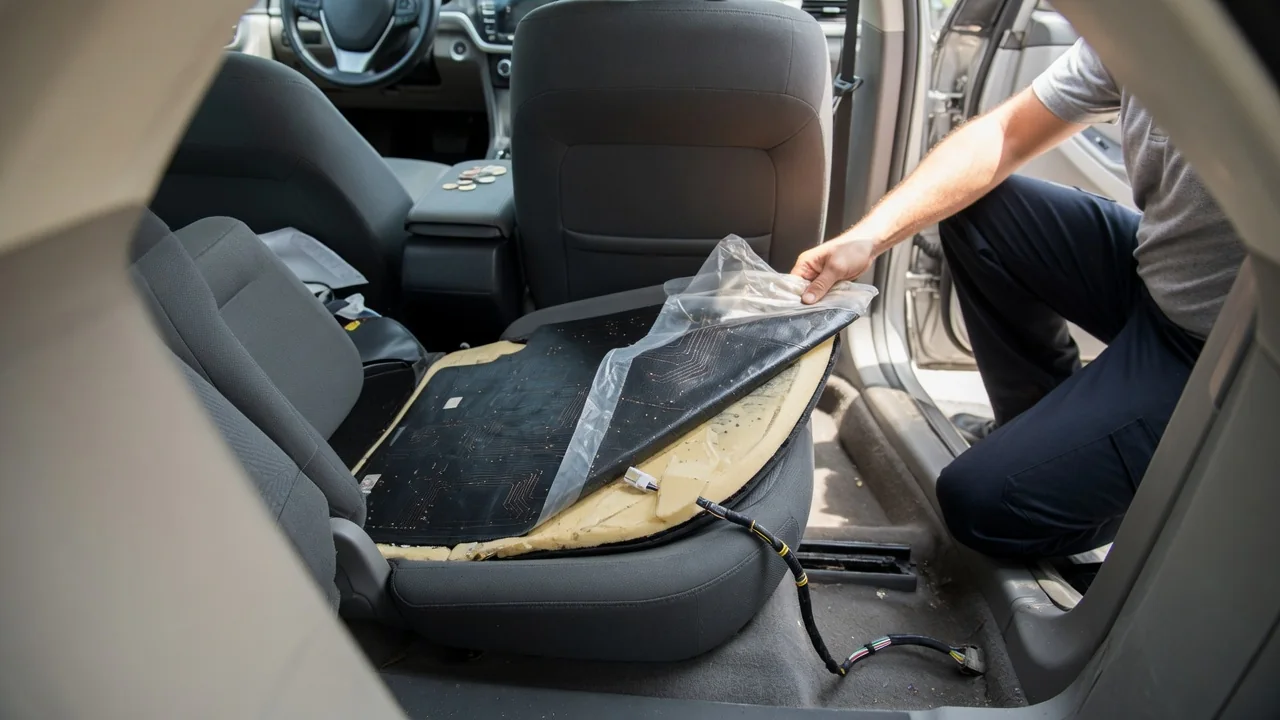
Anyone asking what is an occupant detection sensor is really asking how a car decides whether the front passenger seat holds an adult, a child, a bag of groceries, or nothing at all. The system gathers information from the seat and passes it to the airbag control module, which uses it to decide how the passenger airbag should behave in a crash.
Seat input
The seat itself is the starting point. Depending on the manufacturer, the passenger cushion may contain a pressure-sensitive mat, a fluid-filled bladder with a pressure transducer, strain gauges mounted in the seat frame, or a capacitive mat that reacts to the electrical properties of a human body. Each design aims at the same result: a signal that changes with what is resting on the seat. A dedicated control unit, often mounted under the seat, reads that signal and turns it into a classification.
That classification is usually broad rather than precise. The system is not weighing a passenger like a bathroom scale; it is sorting the seat into categories such as empty, small occupant, or adult. Many vehicles combine the seat reading with other inputs, including the seat belt buckle switch, belt tension, or seat track position. Which inputs are used, and how they are weighted, differs between makes and model years, so the owner's manual for a specific vehicle is the right reference for how its system behaves.
Airbag indicator
Most drivers encounter the system through a small indicator, commonly located on the center stack, overhead console, or near the rearview mirror. It typically shows a passenger airbag off message or a similar on and off pair of lamps. When the seat is classified as empty or occupied by a small occupant, the indicator generally shows that the passenger airbag is suppressed. With an adult seated properly, it normally shows the airbag is enabled, or the off lamp simply goes out.
This status lamp is different from the airbag warning light in the instrument cluster. The status lamp reports a normal decision the system has made, while the warning light, often a seated figure with a circle or the letters SRS, signals that the restraint system has detected a problem with itself. The two can appear together when a seat sensing fault is stored. Exact symbols, wording, and whether an empty seat lights the off lamp vary by vehicle, so a quick check of the manual prevents misreading normal behavior as a fault.
Service concerns
When the airbag warning light stays on, a scan tool capable of reading the restraint module can retrieve stored codes. A code pointing to the occupant classification circuit is a clue about where the system saw something unexpected, not a verdict that the seat sensor has failed. Similar symptoms can come from a disturbed connector under the seat, damaged wiring, a weak battery, moisture in the cushion, or a control unit that has lost its calibration. Many of these codes are manufacturer-specific and need the correct service information to interpret.
Seat work is a common trigger. Reupholstering, replacing a cushion, installing aftermarket seat heaters, or removing the seat for carpet cleaning can all disturb the sensing mat or its harness. Some systems require a recalibration, sometimes called a zero-point or rezero procedure, performed with factory-level equipment after such work or after a collision. Because these components belong to the supplemental restraint system, diagnosis and repair are best left to a qualified technician who follows the manufacturer's procedures rather than treated as a casual driveway project.
Everyday Use and Observations
In daily driving, the system mostly works unnoticed, but its decisions can be watched. Setting a heavy backpack, a case of water, or a toolbox on the passenger seat may cause the indicator to change, and some vehicles will also sound the seat belt reminder because they believe someone is sitting there. A lighter adult or a teenager may sometimes be classified as a small occupant, leaving the airbag off lamp lit. Moving such items to the floor or cargo area avoids confusing the classification.
Posture and accessories matter as well. A passenger who leans heavily on the center console, sits on the front edge of the cushion, or lifts weight off the seat with their feet braced can change the reading. Thick seat covers, cushions, beaded mats, and wet upholstery can interfere with certain sensor designs, particularly capacitive ones. Electronic devices resting on the seat have been known to affect some systems too. If the indicator looks wrong for an adult, sitting upright and centered, then watching the lamp again, is a reasonable first check.
Limits and Next Steps
The technology has limits worth respecting. It classifies; it does not guarantee protection, and it does not make the front seat an appropriate place for a child. Safety guidance consistently places children in the rear seat in a restraint suited to their size, regardless of what the indicator shows. A rear-facing child seat should never be placed in front of an active airbag. The sensor is also not a substitute for wearing a seat belt, which remains the primary restraint the airbag is designed to supplement.
If the indicator repeatedly shows the airbag off with a properly seated adult, or the cluster warning light remains on, the sensible next step is a professional diagnosis rather than guesswork. Until then, having that passenger ride in the rear seat is a cautious choice. It is also worth checking whether any open safety recall applies to the vehicle, since seat sensing components have been the subject of recalls on various models. Bypassing or simulating the sensor defeats a safety function and should not be considered.