Passenger Airbag Off Light: What It Means and When It Should Be On
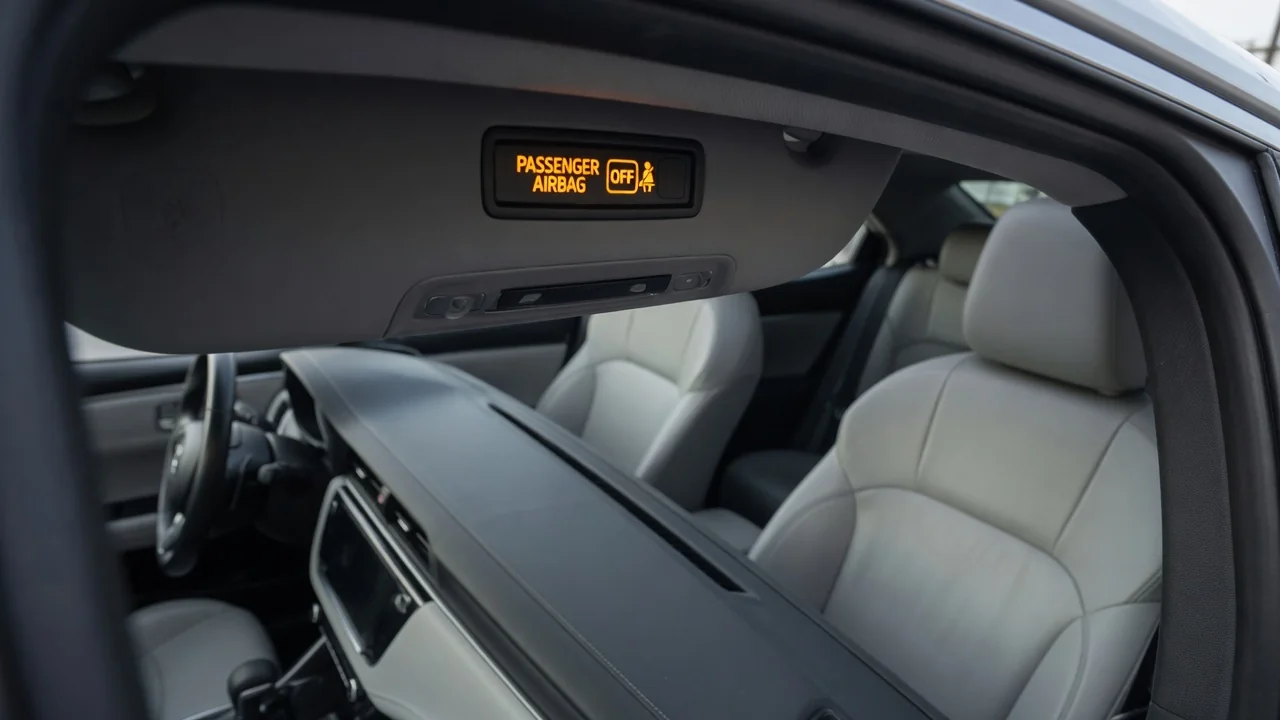
Seeing an airbag off light near the dashboard or overhead console can be unsettling when someone is riding beside you. In many vehicles, though, the passenger airbag off light is a normal status message, not a malfunction. This guide explains what the indicator means, when it should be lit, why it can misread an adult passenger, and when the supplemental restraint system needs professional attention.
What the Passenger Airbag Off Light Is Telling You
The passenger airbag off light is an airbag status indicator, not automatically a fault warning. It tells you whether the system has turned the front passenger airbag on or off at that moment. Many vehicles make that decision with an occupant classification system. This system may use a seat weight sensor, a pressure-sensing mat or a passenger presence sensor built into the seat. It estimates whether the seat is empty, holds a small occupant or holds an adult, then turns front passenger airbag deactivation on or off to match.
How the status is shown varies widely. Some manufacturers put the indicator in the center stack, others in the overhead console or instrument cluster. The wording, icon and lighting logic also differ. One vehicle may light only an off symbol, while another shows both on and off states. The indicator lights section of the owner's manual is the reliable reference for your exact vehicle. Many systems also run a brief bulb check at startup. A light that shows for a few seconds and then changes is often just a self-test.
Should the Passenger Airbag Light Be On or Off?
Should the passenger airbag light be on or off? The general expectation is simple. With an empty seat or a small child there, many systems switch the airbag off and show that status. With an adult properly seated, the airbag is normally expected to be on. When the passenger airbag light goes off after an adult sits down, the system has usually recognized that passenger and turned the airbag on. Some vehicles light the indicator only when the airbag is off, while others show both states. Confirm the exact behavior in your manual.
Child safety comes first. Never place a rear-facing child seat in front of an active airbag. Use a child seat in the front seat only when both the owner's manual and the child seat instructions allow it, and never rely on the indicator alone to protect a child. When checking the status for an adult, let the passenger sit down, buckle up and settle. Then watch the light for a moment instead of judging it in the first few seconds. This guide can't confirm the correct status for a specific make, model or year.
Why the Light Shows Off When an Adult Is Sitting There
When the indicator reads off with an adult in the seat, the occupant classification system has usually read the seat load as something other than a properly seated adult. Posture is a common reason. Leaning against the door, sitting forward on the cushion, sitting sideways or resting feet on the dash all shift weight away from the sensing area. A passenger with a light body weight may also be close to the system's threshold. Heavy objects on the seat, seat covers, extra cushions and items wedged under the seat are also worth checking, though none of them is a confirmed cause.
A simple observation step can help tell posture from a possible fault. Clear the seat and the area under it. Have the passenger sit upright with their back against the seatback and feet on the floor, then restart the vehicle and see whether the status changes. If the airbag status indicator now shows the expected state, positioning was probably the issue. If a correctly seated adult still gets the off status again and again, stop experimenting. That pattern points to a seat sensor or system problem that needs professional airbag system diagnosis.
Side Airbag Off Indicators in Some Vehicles
A side airbag off light exists in some vehicles, but many don't have one. Where it is fitted, it usually shows that a side airbag, often on the passenger side, has been switched off. Some designs may switch off a seat-mounted side airbag when the sensors judge the occupant to be small or out of position, such as a child leaning against the door. Whether your vehicle does this, and which signals it uses, depends entirely on the manufacturer's design.
Because designs vary, use the owner's manual to find out exactly which airbags your indicator refers to. Don't assume the front passenger logic described above also applies to side airbags. The conditions that trigger them, the icons and the indicator locations can all differ. If the side airbag indicator stays on unexpectedly while an adult is sitting upright and normally, have the vehicle inspected. The same applies if it behaves differently from what the manual describes. A persistent, unexpected indication may mean the system cannot judge the occupant correctly.
Passenger Off Indicator vs. the Main Airbag Warning Light
It helps to keep the passenger status indicator separate from the main SRS warning light in your mind. The status indicator reports a decision the system made about one airbag. The general airbag warning light usually shows a seated figure with a deployed airbag or the letters SRS. It typically means the supplemental restraint system has detected a fault and may not deploy as designed. Pay attention if that main light stays on after startup, flashes or comes on along with erratic passenger indicator behavior, because that combination suggests a wider problem.
Diagnosing an SRS fault starts with reading the stored codes. Those codes are manufacturer-dependent, so they must be interpreted with vehicle-specific service information. No single definition applies across brands. Many basic code readers that handle engine codes cannot access airbag module data at all, so a blank scan doesn't prove the system is healthy. Even when a code is retrieved, it is evidence to interpret, not proof that a particular part has failed. Wiring, connector, calibration and module problems can all produce similar results.
Safe Checks and When to Get Professional SRS Testing
Safe owner checks are limited to observation. Set the seat to a normal position and remove objects from the cushion and the floor beneath it. Note when the light changes and under what conditions, and read the owner's manual. A record of that behavior gives a technician useful clues. Do not unplug connectors under the seat, remove airbag components, or tamper with seat sensors or wiring. If an airbag system is handled incorrectly, it can deploy unexpectedly or be left unable to work, and either can cause serious injury.
Occupant sensor calibration and SRS repairs usually need manufacturer-level scan tools and trained technicians. Some seat sensors also need recalibration after replacement or other seat work. Book a professional inspection soon if the indicator behaves inconsistently with a properly seated adult or if a warning light stays on. When you schedule it, ask whether any manufacturer service actions apply to your vehicle. Until the system has been checked, seat children in the rear and don't assume the passenger airbag will deploy when needed.