What Is an Instrument Cluster?
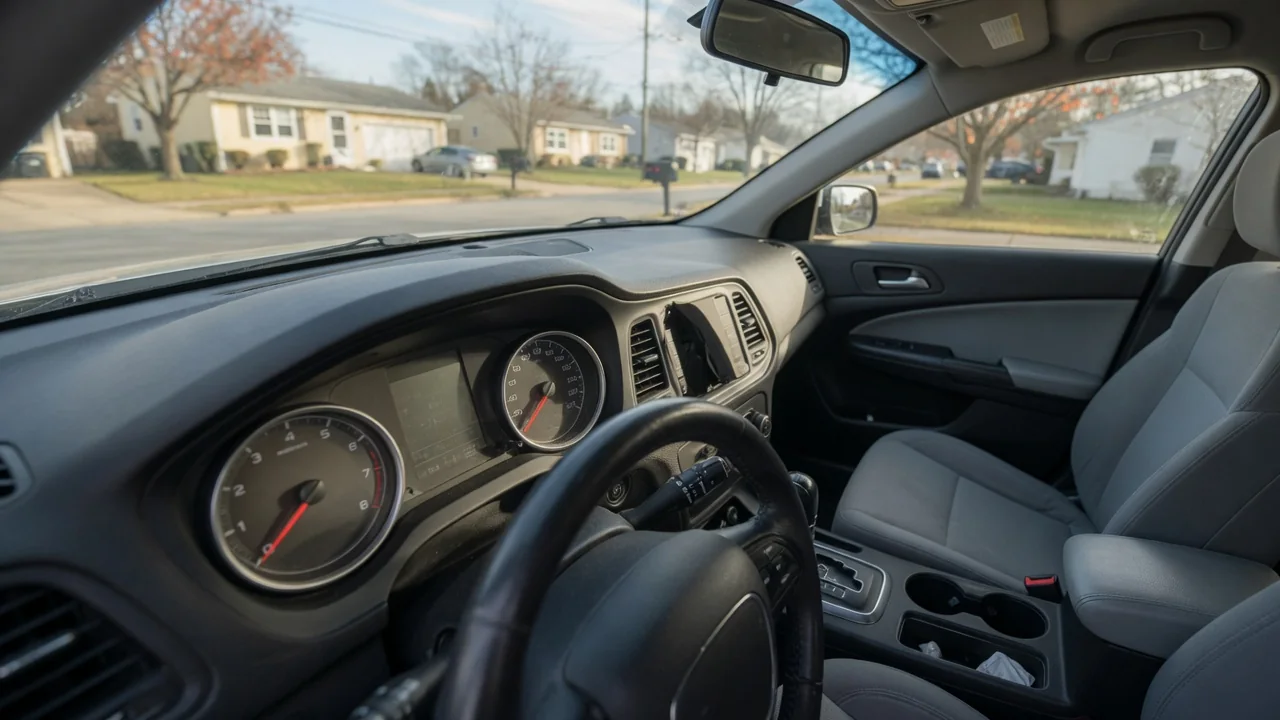
Drivers who ask what is an instrument cluster are really asking about the panel behind the steering wheel that gathers speed, engine, fuel and warning information into one glance. It translates signals from sensors and control modules into dials, lights and messages, so the person driving can judge the vehicle's condition without looking away from the road for long.
Gauge roles
Each gauge in the cluster answers a single question. The speedometer shows road speed, the tachometer shows engine revolutions, and the fuel gauge estimates how much remains in the tank. A coolant temperature gauge tracks how warm the engine is running, while the odometer and trip meter record distance. Together they let a driver compare what the vehicle is doing with what it should be doing, such as noticing the temperature needle sitting higher than its usual resting position on a long uphill grade.
Not every vehicle carries the same set. Some trucks and performance models add oil pressure, voltage or boost gauges, while many economy cars replace the temperature gauge with a simple blue or red lamp. Electric vehicles swap the tachometer for a power and regeneration meter and replace fuel level with battery state of charge and estimated range. Hybrids often show both. Because the layout depends on the manufacturer and trim, the owner's manual remains the reliable guide to what each dial on a particular dashboard measures.
Warning priorities
Warning lights are ranked largely by color. Red generally signals a condition that deserves prompt attention, such as low oil pressure, an overheating engine, a charging system problem or a brake system fault. Amber or yellow usually indicates something that needs checking soon but may not require stopping immediately, such as a check engine lamp, tire pressure alert or traction control fault. Green and blue lamps are informational, confirming that turn signals, headlights, high beams or cruise control are active.
Behavior matters as well as color. On many vehicles a steadily lit check engine lamp is treated differently from a flashing one, which often points to an active misfire that can harm the catalytic converter if driving continues. Some clusters pair a lamp with a chime or a text message to escalate urgency. Symbols are largely standardized, yet their exact meaning and the recommended response vary between makes, so an unfamiliar icon should be looked up for that specific vehicle rather than guessed at from a similar-looking one.
Digital layouts
Many newer vehicles replace mechanical needles with a screen, either a small information display set between two physical dials or a fully digital panel spanning the whole binnacle. Because the gauges are drawn by software, the same space can show a traditional pair of round dials, a large navigation map, driver assistance graphics showing surrounding lanes and traffic, or a minimal view with only speed and range. Steering wheel buttons typically cycle through these pages and the trip computer data within them.
Layouts often change with the selected drive mode. A sport setting may enlarge the tachometer and tint the display red, while an economy setting highlights efficiency coaching and energy flow. Some vehicles add a head-up display that projects speed and navigation prompts onto the windshield, repeating key cluster information higher in the line of sight. The degree of customization differs widely by brand and option package, and certain items, such as the speed readout and required warning lamps, generally stay visible regardless of the chosen theme.
Everyday Use and Observations
A useful habit starts at the ignition. When the vehicle is switched on, most warning lamps illuminate briefly as a bulb and system check, then go out once the engine starts or the system reports ready. A lamp that never lights during this check can hide a problem just as surely as one that stays on. Watching this sequence for a few seconds teaches a driver what normal looks like, which makes any later change far easier to notice.
On the road, patterns are more informative than single readings. A temperature needle that normally settles in the middle, a fuel gauge that drops at a familiar rate and a range estimate that tracks typical driving all form a baseline. Departures from it deserve attention, such as a needle that flickers, a gauge that reads empty right after a fill-up, or backlighting that dims on one side. Brightness can usually be adjusted for night driving, and maintenance reminders or distance-to-empty figures are estimates rather than exact measurements.
Limits and Next Steps
The cluster reports conditions but does not diagnose them. A warning lamp shows that a control module has detected a reading outside its expected range, and the stored fault code behind it is evidence to interpret rather than proof that a particular part has failed. A sensor, wiring connection or related component can produce the same lamp. Many codes are also manufacturer dependent, so their meaning needs to be confirmed against information for the exact vehicle before any conclusion is drawn.
The display itself can also be the fault. Erratic needles, dead pixels, a blank screen or several unrelated warnings appearing at once may point to the cluster, its power supply or the vehicle's data network rather than to the systems being reported. When a red warning appears, pulling over safely and consulting the manual is the sensible first move. For anything persistent, a qualified technician with a scan tool can read the stored data, test the circuit involved and confirm whether the reading reflects a real condition.