What Is an Average Speed Display in a Car?
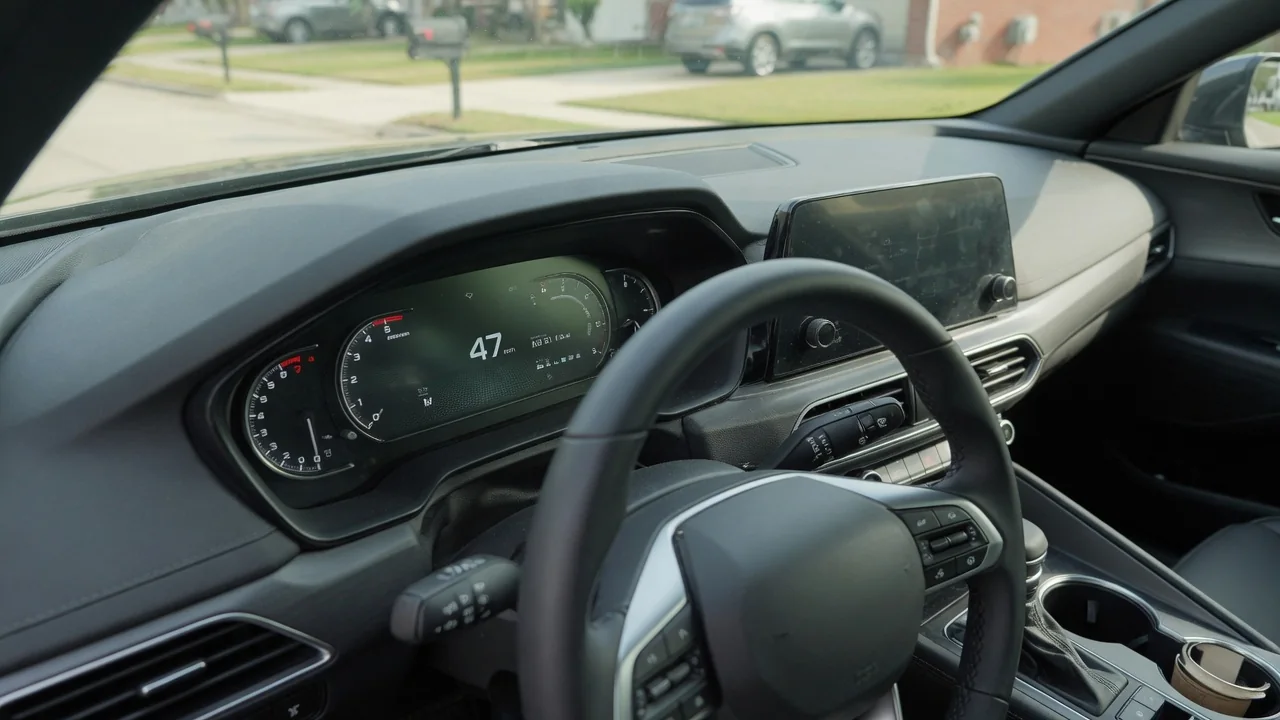
Drivers who scroll through the trip computer often ask what is an average speed display in a car and why the number looks so low. It is a running calculation of distance covered divided by elapsed time since the last reset. Read correctly, it reveals how a journey really unfolded, including the slow stretches a speedometer never remembers.
Trip time and distance
The figure comes from two values the vehicle already tracks: distance traveled and time elapsed. The trip computer divides one by the other, so sixty miles covered in an hour and a half shows as forty miles per hour, even if the cruise control sat at sixty-five for much of the route. Distance usually comes from the same wheel speed or transmission output signals that feed the odometer, while an internal clock supplies the time portion of the calculation.
How the clock runs is where vehicles differ. Many systems count time whenever the ignition is on, so waiting at a red light or idling in a driveway adds minutes without adding miles and pulls the average down. Others pause the timer when the vehicle is stationary or only count time while the engine runs. Hybrids and vehicles with automatic stop-start may handle those stationary moments in their own way, so the owner's manual is the reliable reference for a specific model.
Reset effects
Because the average is cumulative, the starting point matters as much as the driving. Reset the trip computer at the bottom of a highway on-ramp and the reading soon settles close to the cruising speed. Leave it untouched for months and it blends every commute, parking lot crawl and cold-morning warm-up into one figure, often landing somewhere in the twenties or thirties. Neither number is wrong; each simply describes a different stretch of time and distance.
Reset behavior varies by manufacturer. Some cars offer two trip memories, letting one track a single journey while the other accumulates over the long term. Some clear the average automatically after the vehicle has been parked for several hours or after refueling, and others hold the data until the driver presses and holds a steering wheel or stalk button. In many designs the average speed resets together with average fuel economy and trip distance, so clearing one value may erase the others as well.
Interpretation
An average speed reading is a summary, not a record of how fast the car was driven at any moment. A value of twenty-eight miles per hour after a week of suburban driving does not mean the car rarely exceeded thirty; it means stops, traffic and low-speed streets consumed a large share of the time. Short bursts at highway speed barely move a long-running average, because the slow minutes carry as much weight in the calculation as the fast ones.
Just after a reset the opposite is true. With only a few minutes of data, a single traffic light can drop the number sharply and a clear stretch can raise it just as quickly. As miles accumulate the display becomes steadier and harder to shift. Comparing it with the instantaneous speedometer therefore makes little sense; a more useful comparison is with the same route on another day, which shows whether conditions were smoother or more congested than usual.
Everyday Use and Observations
Commuters can use the display to judge routes honestly. Resetting at the start of two alternative drives to work shows which one keeps the car moving, regardless of posted limits or how fast each felt behind the wheel. On a road trip, the trip average helps estimate arrival time more realistically than the cruising speed does, because it already includes fuel stops, construction zones and town centers if the timer keeps running while the vehicle is stopped.
The number also pairs well with average fuel consumption. A low average speed generally signals stop-and-go operation, which helps explain disappointing mileage in a gasoline car, while an electric vehicle or hybrid may show the opposite pattern because of regenerative braking. Some owners also treat a persistently low average as a hint that the engine has accumulated many operating hours relative to its mileage, which is worth keeping in mind when a maintenance schedule distinguishes severe or urban use from highway driving.
Limits and Next Steps
The display has limits. It inherits any error in the distance signal, so tires of a different size than the original fitment or significant wear can skew it slightly, just as they affect the speedometer and odometer. It should not be mistaken for the average speed enforcement used on some roads, which measures travel time between fixed points using outside equipment. It is also unrelated to a speed limiter or cruise control setting, even when those functions share the same screen.
A reading that seems implausible is usually explained by an old reset point or by the way the timer treats idling, so the sensible first step is to clear the trip data and watch a familiar drive. If the result still disagrees badly with a simple calculation from the odometer and a watch, or if the speedometer and trip distance also behave oddly, a technician can check the speed signal and instrument cluster. The owner's manual explains the exact menus, reset rules and counting method for the vehicle.