Why Does a Car Have an Outside Temperature Display?
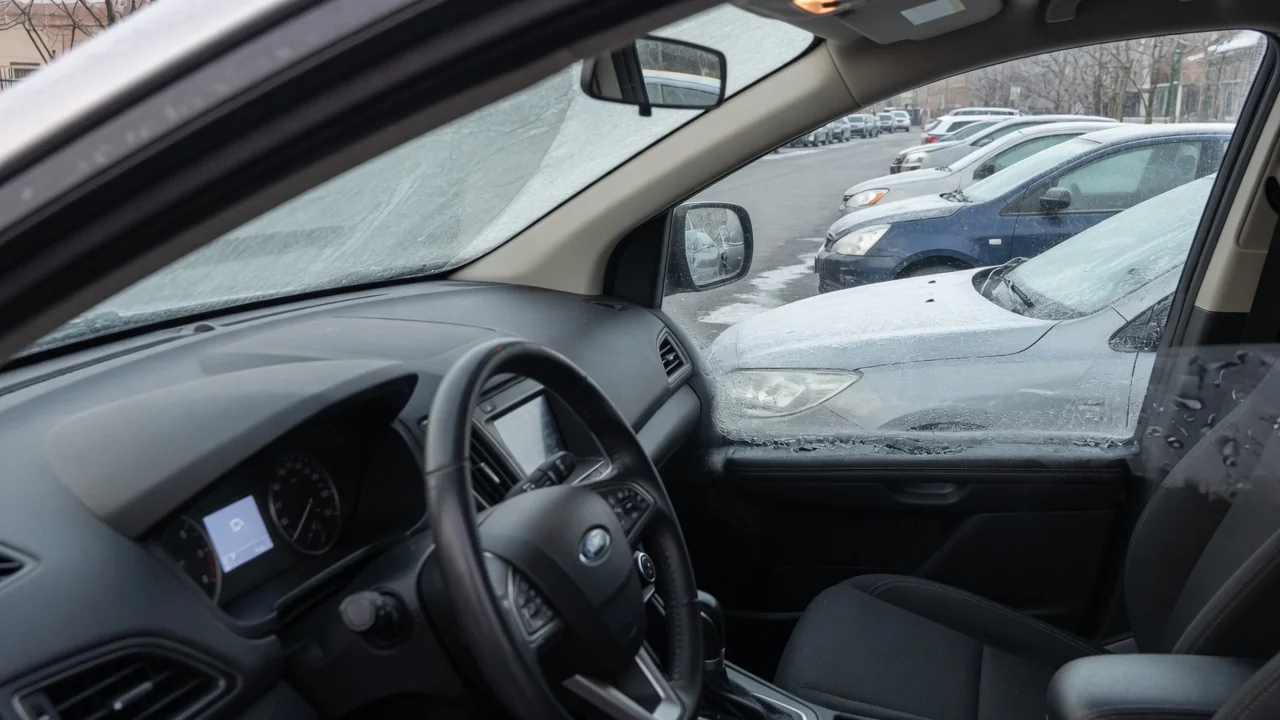
Why does a car have an outside temperature display? The short answer is that it warns drivers about conditions that affect traction and comfort, and it supplies information the climate control system uses. The number on the dash is useful, but it comes from a single small sensor with real limitations, so knowing how it works helps you judge when to trust it.
Sensor location
The reading comes from an ambient air temperature sensor, usually a small thermistor whose electrical resistance changes as it warms or cools. Manufacturers generally mount it where moving air reaches it but engine heat does not, which often means somewhere at the front of the vehicle: behind the grille, near the lower bumper opening, or ahead of the radiator support. Some designs place it in or under a side mirror housing instead. The exact position depends on the make and model, so the owner's manual or a service reference is the reliable guide.
Location shapes what the sensor actually measures. A unit tucked low behind the bumper sits close to the pavement and near the radiator and condenser, so it picks up warmth from both when airflow stops. A mirror-mounted sensor sits higher and farther from the engine bay, but it can be warmed by direct sun on the housing. You can sometimes spot the sensor as a small plastic probe clipped into a bracket behind the grille, and seeing where it lives explains many of the quirks drivers notice in the displayed number.
Lag and road heat
The display rarely reacts instantly, and that is partly deliberate. Many vehicles filter the signal in software so the number does not jump every time the car passes a warm exhaust plume or sits at a red light. A common strategy is to let the reading fall fairly freely but restrict how quickly it can rise when the vehicle is stopped or moving slowly, because rising values at low speed are more likely to be engine or pavement heat than a real change in the weather. The specific logic differs between manufacturers.
Road heat is the other major influence. Dark asphalt in summer sun can be far hotter than the air above it, and it radiates that warmth upward toward a low-mounted sensor. After a car has been parked on a hot lot, or idled in traffic, the display may show a figure well above the true air temperature and then drift downward over several minutes of steady driving. The opposite happens leaving a warm garage on a cold morning, when the reading starts high and takes a while to settle to the real outdoor value.
Driver interpretation
The most valuable use of the display is as an early hint about traction. When the number approaches freezing, moisture on the road may turn to ice, and many vehicles add a chime or a snowflake symbol somewhere a few degrees above that point. The margin exists because the road surface, especially on bridges, overpasses, and shaded stretches, can be colder than the air the sensor is sampling. A reading slightly above freezing therefore does not mean the pavement is safe; it means conditions deserve gentler steering, braking, and throttle inputs.
It helps to treat the figure as an estimate rather than a measurement of record. A difference of a few degrees from a weather app or a bank sign is normal, since those sources measure different places, heights, and moments. Trends are often more informative than the absolute number: a display that falls steadily as you climb a mountain pass or drive into the evening tells you conditions are changing, even if the exact value is slightly off. Readings taken after a period of steady highway driving are generally the most representative.
Everyday Use and Observations
Beyond informing the driver, the ambient reading feeds other systems. Automatic climate control typically uses it, along with cabin and sunload inputs, to decide how hard to heat or cool and how to manage defogging. On many vehicles the air conditioning compressor is also inhibited in very cold conditions based on this signal, which is why an implausible reading can sometimes show up as air conditioning that will not engage. How widely the value is shared between modules depends on the vehicle's design.
In daily driving, a few patterns are worth recognizing as normal. The number may climb at a long stoplight and fall again once you are moving. It may read high for the first part of a trip after the car sat in the sun, or after a run through an automatic car wash with warm water. Driving through a low valley, past a body of water, or out of a city center into open country can produce genuine swings of several degrees, because air temperature really does vary that much over short distances.
Limits and Next Steps
The display cannot tell you the temperature of the road surface, the wind chill, or whether black ice is present, and it should never replace attention to the pavement and a weather forecast. It can also simply be wrong. A reading that stays stuck at one value, shows dashes, or reports something absurd such as extreme cold on a warm day points to a problem in the circuit, which could be the sensor, its connector, damaged wiring, or the module interpreting the signal. Front-end impacts and bumper repairs are a frequent time for these faults to appear.
If the number seems unreliable, start by comparing it with a trusted outdoor thermometer after at least several minutes of steady driving, since that removes most heat soak effects. A persistent mismatch is worth mentioning at the next service visit, where a technician can read the live sensor value with a scan tool and inspect the wiring. Any stored fault code related to the ambient sensor is evidence to interpret, not proof that the sensor itself has failed, and code meanings vary by manufacturer, so vehicle-specific diagnosis should come before replacing parts.