What Is a Trunk-Mounted Bike Rack?
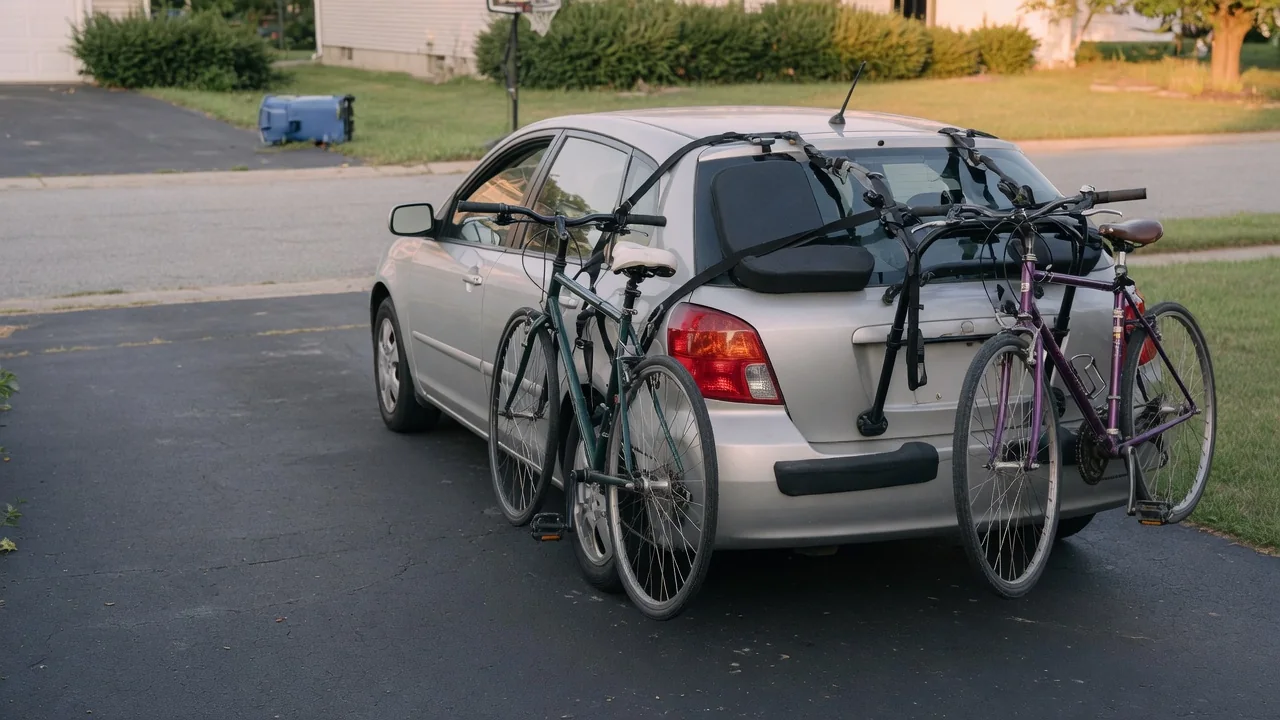
Anyone asking what is a trunk mounted bike rack is usually looking for a way to carry bicycles without a hitch receiver or roof bars. This style of carrier rests against the rear of the vehicle and is held in place by adjustable straps hooked to the edges of the trunk lid or liftgate. Understanding how it attaches helps you judge whether it suits your car.
Contact points
A trunk-mounted rack touches the vehicle in two ways. Padded feet or foam rails rest against the body, typically on the trunk lid, the liftgate, or the upper edge of the bumper, and carry the weight of the rack and bikes. Coated metal hooks at the ends of the straps then grip the seams around the lid, usually at the top, sides, and bottom. Tension in those straps pulls the frame firmly against the pads, so the whole assembly depends on balanced pressure rather than bolts.
Where those pads and hooks land matters a great deal. Sheet metal edges generally handle hook loads well, while glass, plastic spoilers, thin trim pieces, and badge areas may not. On a sedan the upper hooks often sit at the leading edge of the trunk lid, whereas a hatchback or SUV may place them at the top of the liftgate near the roof. Look at your own vehicle for spoilers, wiper arms, and panel gaps that could interfere, because body shapes differ widely between models.
Visibility
Bikes carried behind the vehicle sit directly in the driver's rearward line of sight. Wheels, frames, and handlebars can partly block the view through the back glass, so side mirrors take on more of the work when changing lanes or reversing. A backup camera mounted near the trunk handle may show little more than a tire or pedal, and parking sensors on some vehicles can react to the rack itself. Checking these views from the driver's seat before leaving is worthwhile.
Being seen by others is equally important. Depending on the height of the rack and the layout of the rear end, bikes can hang in front of the tail lights, brake lights, turn signals, or license plate. Rules about covered lamps and plates vary by state, so it is sensible to confirm local requirements. Walk around the loaded vehicle with the lights on and have someone press the brake pedal, then judge whether drivers following behind would clearly read every signal.
Load guidance
Every trunk rack has a maximum weight and a set number of bikes it is designed to hold, and those figures come from the rack manufacturer rather than from the vehicle. Because the load hangs from straps and presses on body panels, staying within the stated limit protects both the carrier and the paint and metal beneath it. Heavier bicycles, including many electric models, can exceed what this style of rack is intended for, so weigh the actual bikes rather than guessing.
How the weight is arranged also affects stability. Placing the heaviest bike closest to the vehicle keeps the load nearer the support pads and reduces leverage on the upper straps. Alternating the direction of each bike helps handlebars and pedals nest without rubbing. Frames with sloping or unusual top tubes may sit at an angle on the support arms and sometimes need an adapter bar to hang level. Many rack makers publish fit guidance by vehicle, which is worth consulting before buying.
Everyday Use and Observations
In daily use, the first thing most owners notice is that the trunk or liftgate becomes awkward to open. Opening the lid slackens the straps and can shift the hooks, so luggage is best loaded before the rack goes on. Straps made of woven webbing can also loosen slightly as they settle, particularly on a first drive or after rain. Stopping after a few miles to check tension and retighten the buckles is a routine habit rather than a sign of a problem.
Paint care deserves attention as well. Grit trapped between a pad and the body acts like sandpaper once the load starts to vibrate, so cleaning both surfaces before fitting makes a real difference. Loose strap tails flapping in the wind can mark the finish and should be tied off. Watch for a pedal or wheel swinging toward the bodywork, and note that hot exhaust gases near low-hanging tires can damage rubber. Extra length behind the car also changes how you judge parking spaces.
Limits and Next Steps
This type of carrier is not suitable for every vehicle. Rear spoilers, frameless glass hatches, plastic or composite body panels, and rear-mounted spare tires can leave nowhere safe for the hooks or pads to bear. Security is another limitation, since straps can be cut and the rack itself is easy to remove, so bikes left unattended are more exposed than on a locking hitch carrier. Frequent riders or those hauling several heavy bikes may find a hitch or roof system better matched to their needs.
A practical next step is to compare your vehicle against the rack maker's fit information and read the owner's manual for any warnings about loads on the trunk lid or liftgate. Then do a trial fitting at home, loading the bikes and checking pad placement, strap routing, light visibility, and ground clearance before the first trip. If anything shifts, contacts glass or trim, or blocks a lamp, treat that as a reason to adjust the setup or choose a different carrier style.