What Is a Third-Row Seat?
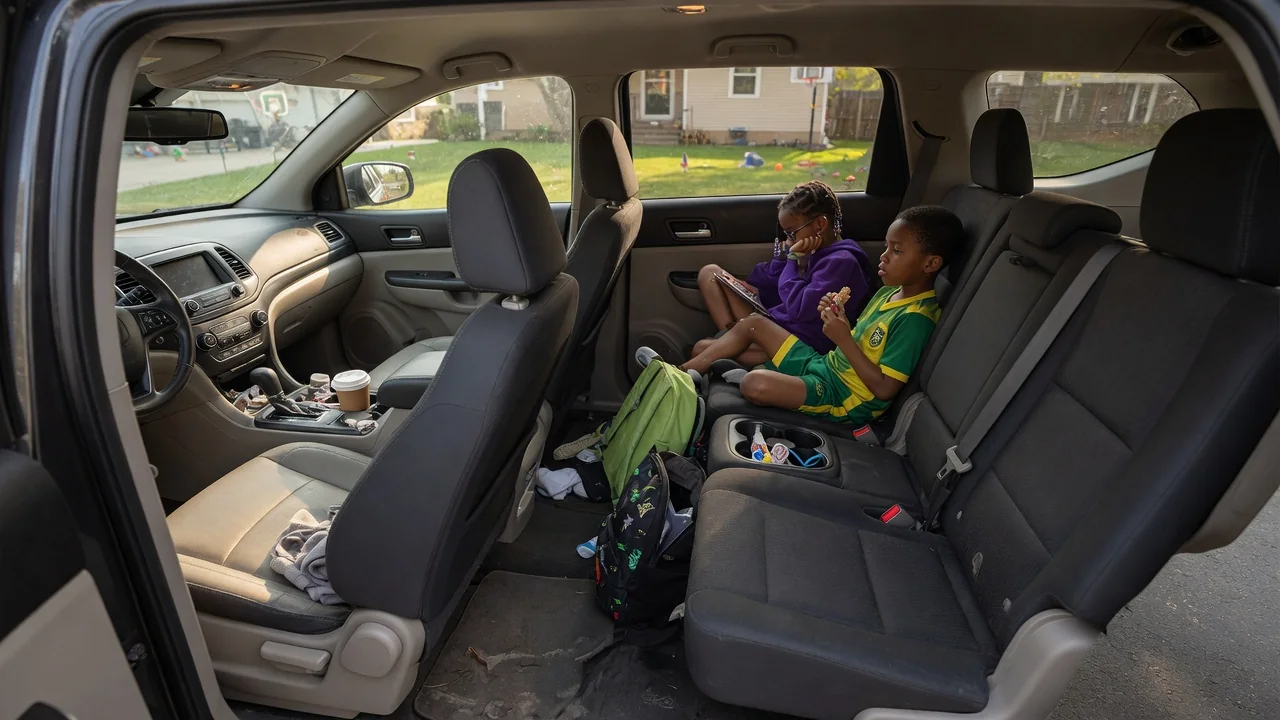
What is a third-row seat? It is an additional bench or pair of seats mounted behind the second row in many SUVs, minivans, and some wagons, raising passenger capacity beyond five. Because it sits over or near the rear axle and shares room with the cargo area, it brings tradeoffs in comfort, access, and luggage space worth understanding before relying on it.
Access
Reaching the rearmost row usually means getting past the second row, and how that happens differs widely. Many vehicles use a second-row seat that tilts and slides forward, opening a gap behind the rear door. Others offer captain's chairs with a center aisle, letting passengers walk between them. Minivans with sliding doors generally provide the widest opening, while SUVs with conventional hinged doors and a raised floor ask occupants to step up and duck at the same time.
Shoppers can judge access by trying it themselves in a parking lot. Notice how much effort the release lever or button takes, whether the seat returns and latches securely, and whether a child seat installed in the second row blocks the tilt function. Some designs allow the second-row seat to move with a child restraint attached, and others do not, so the owner's manual and the seat labels are the place to confirm what a particular vehicle permits.
Space
Room in the back row is shaped by the vehicle's packaging. The floor often rises to clear the rear axle, suspension, fuel tank, or a battery pack, which leaves the cushion close to the floor and pushes an adult's knees upward. The roofline commonly tapers toward the tailgate, trimming headroom. For those reasons the third row in many midsize crossovers suits children or shorter adults on brief trips, while larger SUVs and minivans tend to offer a more natural seating posture.
Legroom is also negotiable rather than fixed when the second row slides fore and aft. Moving the middle seats forward a few inches can make the back usable, at the expense of the people sitting ahead. When comparing vehicles, sit in the third row with the second row set where a real passenger would want it. Check toe room under the seat ahead, shoulder width across the bench, and whether the head restraint rises high enough for the occupant's height.
Folding
Most third rows are designed to disappear when not needed. Common layouts split the bench into two sections so one side can stay upright for a passenger while the other folds for long items. In many SUVs the seatback drops forward onto the cushion to create a load floor, while many minivans tumble the whole seat rearward into a deep well behind it. Operation may be manual, using straps or levers, or powered through switches in the cargo area.
The folded result matters as much as the mechanism. Look at whether the floor is flat or stepped, whether gaps open between the folded sections where small items can fall, and where the head restraints go. Some must be lowered or flipped before the seat will fold. Power folding is convenient but slower, and the seat's path has to be clear of cargo first. A few vehicles use removable seats instead, which frees more space but requires lifting and storing them.
Everyday Use and Observations
In daily driving the main tradeoff is between people and luggage. With the third row raised, the cargo area behind it in many vehicles shrinks to a narrow strip suited to grocery bags or a folded stroller rather than suitcases for everyone aboard. Families often keep the row folded most of the time and raise it for carpools, visiting relatives, or team outings. Roof boxes, hitch-mounted carriers, or underfloor storage bins can recover some capacity on full-occupancy trips.
Comfort features back there vary just as much as space. Observe whether the row has its own air vents, cup holders, charging ports, and windows large enough to reduce a closed-in feeling, since riders sitting over the rear axle typically feel more bounce and may be more prone to motion sickness. Raised head restraints can also narrow the driver's view through the rear window. Check as well which positions have child-seat lower anchors and top tether points, because not every seat is equipped.
Limits and Next Steps
A third row adds seating positions, but it does not raise what the vehicle can safely carry. The payload figure on the tire and loading placard inside the driver's door covers passengers and cargo combined, and seven or eight occupants can use much of it before any luggage goes in. A fully loaded vehicle will also accelerate, brake, and handle differently, and tire pressures may need to follow the placard's guidance for heavier loads. Towing with every seat filled deserves particular attention to those limits.
The sensible next step is an honest count of how often the extra seats will be used and by whom. Occasional use by children points toward a compact third row, while regular adult passengers or long trips favor a larger SUV or minivan. Bring the actual passengers, child seats, and a typical load of bags to a test drive. Then confirm seating capacity, anchor locations, folding operation, and load ratings in the owner's manual for the exact model and trim being considered.