Why Do Some Cars Have Captain's Chairs in the Second Row?
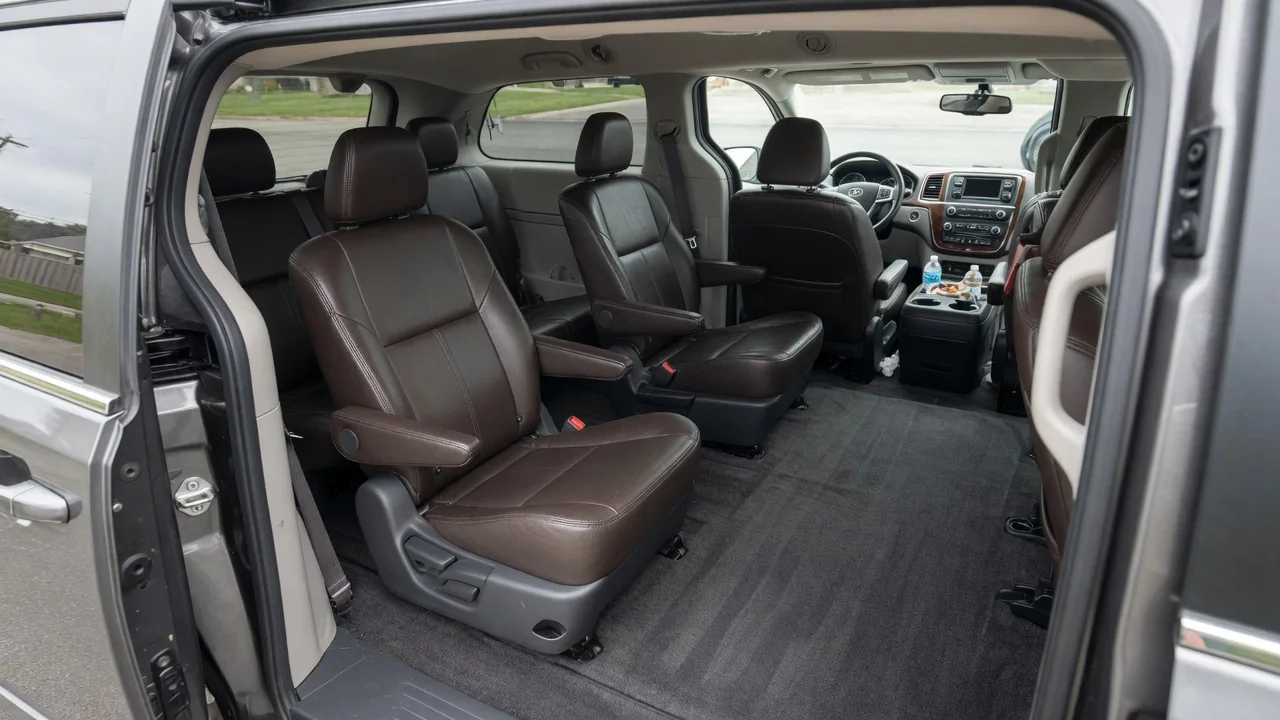
Why do some cars have captain's chairs in the second row? The short answer is that two individual seats, separated by an open aisle, change how people sit, move, and reach the third row. Automakers offer this layout in minivans and three-row SUVs because many families value comfort and easy access more than one extra seating position.
Seat layout
A second-row captain's chair is a freestanding seat with its own backrest, cushion, and usually its own armrests, much like the front seats. Instead of one bench spanning the cabin with three seating positions, the vehicle carries two separate chairs with a gap between them. That gap may be left open as a walkway to the third row or filled with a console holding cupholders and storage. The result is typically a seven-passenger cabin where a bench version of the same vehicle would seat eight.
Because each chair stands alone, engineers can shape it more generously than a bench position. Cushions can be wider, side bolsters deeper, and each seat can often slide and recline independently of its neighbor. Some vehicles add heating, ventilation, or leg supports on upper trims. What a shopper actually finds varies considerably by model and trim level, so the specific adjustments, the width of the aisle, and whether a console occupies the center are details worth checking on the exact vehicle under consideration.
Passenger movement
The open aisle is the most practical reason this layout exists. With a bench, third-row passengers usually wait for someone to fold or tilt a second-row seat, then climb past it through the rear door opening. With individual chairs, a child or agile adult can step between the seats and walk straight to the back. That matters most when second-row seats hold installed child restraints, since a seat carrying a child seat often cannot be tilted forward without removing the restraint first.
Getting out works the same way in reverse. Third-row riders can leave without disturbing anyone ahead of them, which shortens stops at school pickup lines or crowded parking lots. The aisle also lets a parent reach back toward the third row more easily when parked. How comfortable this passage feels depends on the vehicle's interior width, floor height, and roofline. Minivans generally offer a low, flat floor and a wide gap, while some SUVs have a narrower aisle or a raised floor that makes the step-through tighter.
Cargo tradeoff
Choosing individual chairs involves giving something up. The most obvious loss is the middle seating position, so a family that regularly carries eight people will find the bench more useful. Cargo flexibility changes too. A folded bench usually creates one continuous surface across the cabin, which suits wide, flat items such as sheets of plywood or boxed furniture. Folded captain's chairs leave a gap between them, so small objects can slip into the aisle and wide loads may rest unevenly.
The aisle can also work in the owner's favor. Long, narrow cargo such as skis, lumber, or a rolled rug can slide between the chairs while both second-row passengers stay seated, something a bench cannot allow without folding a section. Vehicles differ in how the chairs stow. Some fold flat into the floor, some tumble forward, and some must be physically removed to open up the full load area. A fixed center console, where fitted, blocks the pass-through and changes this equation, so the folding mechanism deserves a hands-on look.
Everyday Use and Observations
In daily driving, the separation between seats has a quieter benefit that many parents notice quickly. Siblings who each have a defined space, with an armrest and a gap between them, tend to have fewer disputes over elbows and territory than those sharing a bench. Each passenger can set their own recline and seat position without affecting the other. On longer trips, the individual support of a contoured chair is generally less fatiguing than a flat bench cushion, particularly for adults or teenagers.
There are also small habits the layout encourages. The aisle becomes a natural spot for a bag, a cooler, or a dog, though loose items there should be secured so they do not shift during braking. Families with pets often find that animals wander through the opening between rows. Drivers may notice a clearer line of sight to third-row occupants in the mirror. On the other hand, a toddler in the third row can reach the second row more easily, which some parents count as a drawback.
Limits and Next Steps
Captain's chairs are not the better choice for every household. The layout reduces maximum passenger count, and on many vehicles it is tied to higher trim levels or option packages, which can affect the purchase price. Child seat planning also deserves attention. The number and location of lower anchors and top tether points differ between vehicles and between bench and chair configurations, so the owner's manual for the specific model is the reliable source for where restraints may be installed.
The most useful next step is to try the configuration in person with the people and gear that will actually ride in it. Bring the child seats, have the tallest regular passenger walk the aisle to the third row, and fold every seat to see what the load floor looks like. Compare that with the bench version of the same vehicle if one is offered. Seeing how each layout handles a typical week of commuting, carpooling, and hauling will show which arrangement suits the household better than any general rule.