What Is a Resonator in a Car Exhaust?
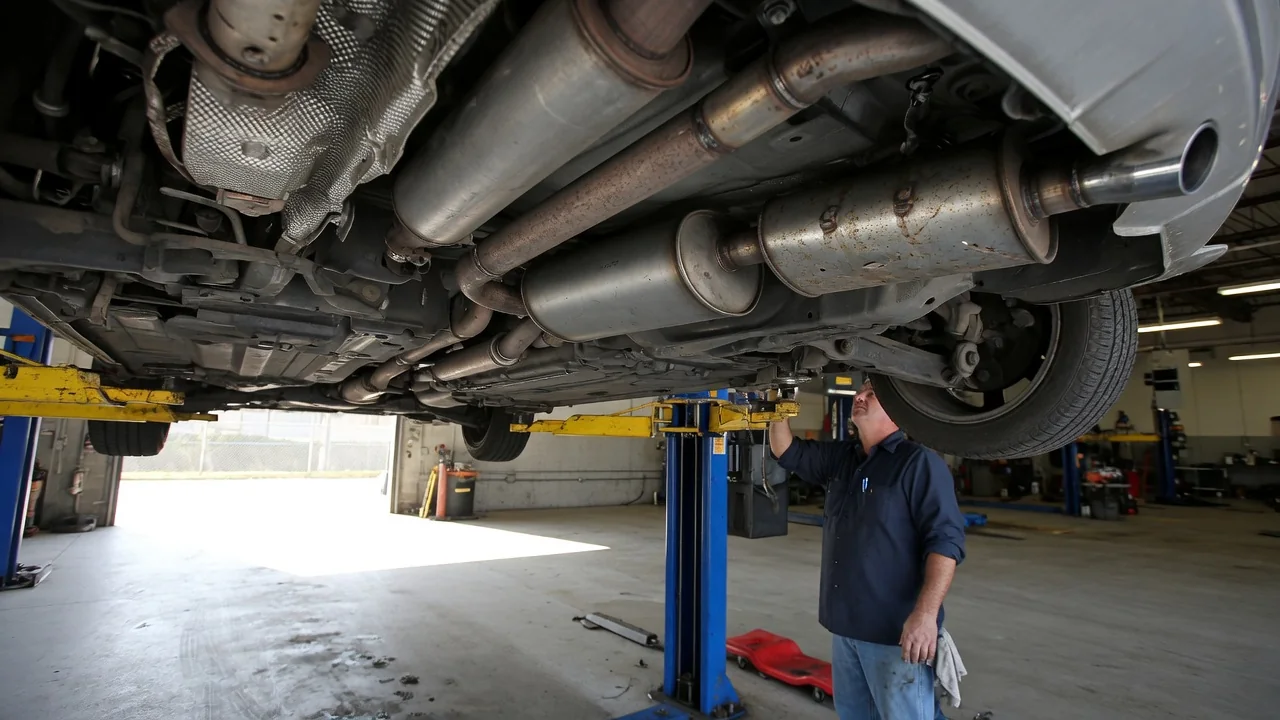
Anyone asking what is a resonator in a car exhaust is usually trying to separate it from the muffler. A resonator is a tuned chamber or straight-through section of the exhaust that targets specific sound frequencies rather than overall loudness. It shapes tone, trims drone and harshness, and leaves the muffler to handle the broader job of reducing volume across the rev range.
Sound frequencies
Exhaust noise is not one sound but a mix of pressure pulses leaving the engine at different frequencies. As engine speed rises, those pulses arrive faster and the pitch climbs. Certain frequencies stand out as a boom, a buzz, or a rasp, depending on engine layout and pipe dimensions. A resonator is sized so that sound waves entering it reflect and meet the incoming waves out of phase, which cancels a narrow band of that unwanted noise before it reaches the tailpipe.
The muffler, by contrast, uses baffles, chambers, or absorbent packing to lower volume across a wide range. That difference explains why a car can be quiet overall yet still hum annoyingly at a steady highway speed if its resonator is missing or damaged. Drivers often notice the effect as a drone at one particular engine speed that fades when they accelerate or slow down. Four-cylinder engines, V6s, and V8s produce different pulse patterns, so the frequencies an automaker chooses to target vary by vehicle.
Placement
On many vehicles the resonator sits in the middle of the exhaust system, downstream of the catalytic converter and ahead of the muffler. In that position it treats the sound before the muffler finishes the job. From underneath, it typically looks like a smaller, slimmer canister than the muffler, often round or oval, welded or clamped into the mid-pipe. Some designs are straight-through tubes with perforations and packing inside, so exhaust gas flows with little restriction while the surrounding shell handles the acoustic work.
Layout is far from universal. Some vehicles carry more than one resonator, some place a small one after the muffler near the tailpipe, and others use a side-branch design, a closed-end tube teed off the main pipe. A few models have no separate resonator at all and rely on the muffler's internal tuning. Dual exhaust systems may have one on each side. Because of this variation, a service diagram or a look under the specific vehicle is the reliable way to confirm what is fitted and where.
Rattle clues
A failing resonator often announces itself with a rattle rather than a change in volume. Internal perforated tubes or partitions can break loose after years of heat cycling and corrosion, producing a metallic buzz or a sound like loose gravel in a can. The noise commonly appears at idle, on cold start, or at one specific engine speed when vibration matches the loose piece. Rust-through at the seams may add a hissing or puffing leak sound, and the exhaust note may turn raspier or begin to drone.
Rattles from this area are easy to misattribute. A loose heat shield, a worn rubber hanger, a failing clamp, or broken material inside a catalytic converter can sound very similar from the driver's seat. A sound that comes from inside the canister suggests loose internals, while a tinny vibration from the thin shield above it points elsewhere. Exhaust parts stay hot long after a drive, so if the source is unclear, a shop can raise the vehicle and isolate the noise safely without guesswork.
Everyday Use and Observations
In daily driving, a working resonator is something you never notice. The cabin stays free of booming at cruising speed, conversation and audio remain clear, and the exhaust has a smooth, even tone as revs climb. It needs no routine adjustment and has no moving parts in conventional designs. Its lifespan depends largely on environment: short trips that leave condensation in the pipes, road salt, and humid climates encourage corrosion from the inside and outside, while long highway runs help dry the system out.
Owners sometimes consider a resonator delete, replacing the unit with straight pipe to change the sound. The result is usually not much louder at full throttle but noticeably different in character, with more rasp and a greater chance of highway drone. The resonator is an acoustic part rather than an emissions control device, yet local noise regulations and inspection rules differ, and how a given engine responds is hard to predict without hearing a similar setup on the same vehicle first.
Limits and Next Steps
A resonator has clear limits. It cannot quiet an exhaust on its own, it does not clean emissions, and it will not cure a noise that originates from a leaking manifold gasket, a cracked flex pipe, or a worn-out muffler. Adding or changing one alters tone within a narrow band, so expectations should be modest. It also rarely triggers a warning light; if a check engine light accompanies an exhaust noise, any stored code is a starting point for diagnosis rather than proof that a particular component has failed.
When a new drone, rattle, or leak sound appears, the sensible next step is an inspection on a lift, where the pipes, hangers, shields, and canisters can be checked together. Exhaust leaks ahead of the cabin deserve prompt attention because fumes can enter the interior. Replacement options range from a direct-fit part that preserves the original sound to universal units that require cutting and welding, and the right choice depends on the vehicle's pipe diameter, layout, and how closely the owner wants to match factory tone.