What Is a Preservation Restoration? Keeping a Classic Car Original
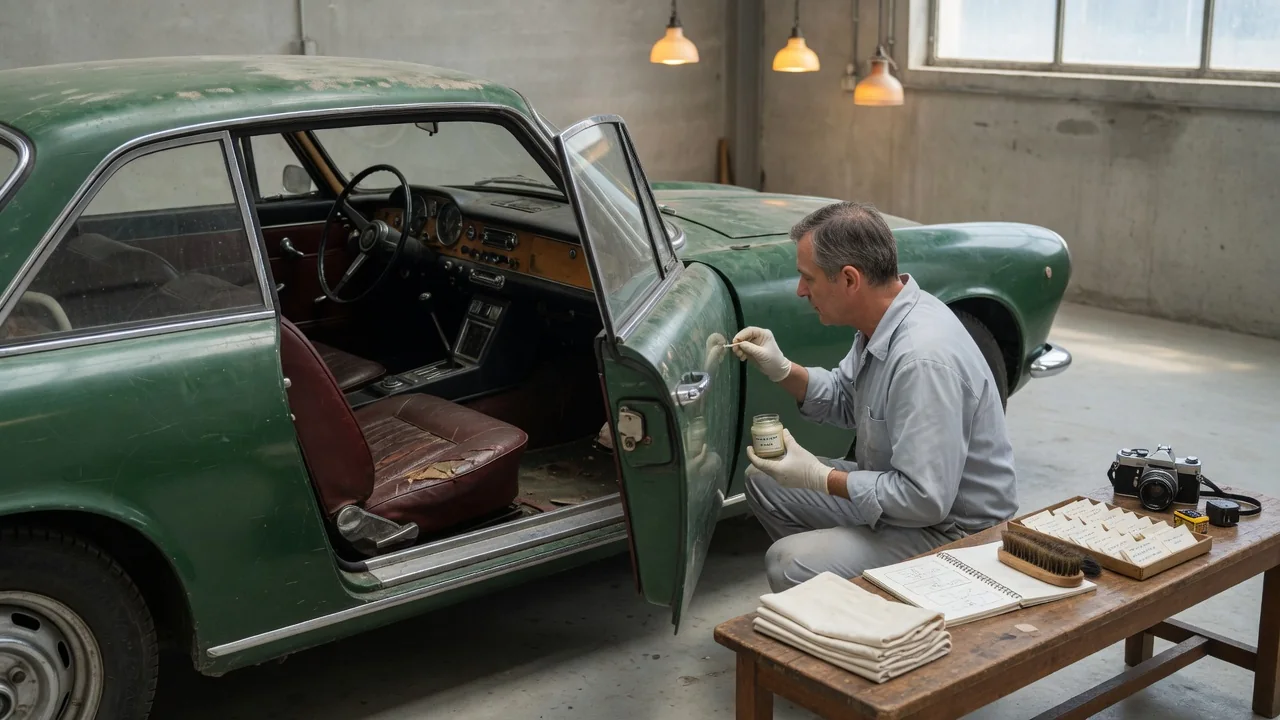
A preservation restoration brings an older vehicle back into reliable use while keeping as much of its factory-original material as possible. It does not strip the car and rebuild it to look new. Instead, the work focuses on stabilizing what exists, repairing what must function, and respecting the visible marks of age. This classic car preservation approach treats the vehicle as both a machine and a historical record. That view shapes every decision about cleaning, repair, and replacement.
Retain original material
The central principle of a preservation restoration is simple: once original material is gone, it cannot be recreated. Factory paint, upholstery, carpets, trim, fasteners, wiring harnesses, inspection markings, and even production-line overspray all record how the car was built and how it has lived since. Reproduction parts may look similar, but they often differ in material, texture, color, finish, or markings. A car rebuilt largely from new components loses much of that record. In preservation work, the default question is therefore not whether a part looks tired. It is whether the part can be kept safely.
In practice, retaining original material means choosing the least invasive method that solves the problem. Surfaces are cleaned gently rather than refinished. Loose trim is refastened rather than replaced. Tears and cracks are stabilized so they do not spread. Where possible, methods are reversible, so a future owner could undo the work without further loss. Before anything is disturbed, careful owners photograph and note the existing condition. Any part that must come off is labeled and kept rather than discarded. That documentation becomes part of the car's history and supports later decisions.
Deciding what counts as original also takes judgment. Some cars carry period repairs, dealer-installed accessories, or replacement parts fitted decades ago. These can be part of the vehicle's story rather than errors to correct. Factory documentation, service manuals, and parts catalogs for the specific vehicle help separate original equipment from later changes. The details vary widely between manufacturers and production years, so general rules should not be applied without that research.
Functional repairs
Preservation is not the same as leaving a car untouched. A vehicle that will be driven must stop, steer, and run safely, so its mechanical and safety systems get whatever attention they need. Tires, brake hoses, fuel lines, belts, coolant hoses, and seals deteriorate with age even when mileage is low. Replacing them is generally accepted even in the most conservative preservation work. Old fluids are usually drained and renewed. The brakes, steering, suspension, fuel system, cooling system, and electrical system are inspected before the car returns to regular use.
When a functional component can be repaired rather than replaced, preservation favors repair. A carburetor, brake caliper, or wheel cylinder can often be rebuilt with new internal seals while keeping the original housing. Original wiring can sometimes be repaired in sections instead of being swapped for a new harness. When a part truly has to be replaced, the original is commonly kept with the car. Some owners accept discreet modern safety improvements, while others avoid them to keep the car authentic. That is a personal choice, but safety should not be compromised to protect originality.
Corrosion is where functional repair and preservation meet most directly. Surface aging can often be stabilized. Structural rust is different: rust in frame rails, floors, mounting points, or other load-bearing areas affects safety and must be properly repaired, which may require new metal. In that case, the preservation goal is to limit the repair to the damaged area. As much of the surrounding original material and finish as possible should stay in place.
Patina
Patina is the accumulated evidence of age and use. It includes paint softened by sunlight, leather creased where drivers sat, slightly dulled chrome, switches and pedals polished by hands and feet, and small marks from decades of ordinary life. A preservation restoration treats patina as character worth keeping rather than a defect to erase. It shows that the car is genuinely old and has not been remade. That is a large part of why preserved vehicles appeal to many enthusiasts.
The key distinction is between patina and active damage. Patina is generally stable: it looks worn but does not get worse on its own. Active damage keeps destroying original material if left alone. Examples include spreading rust, rot in wood or fabric, growing cracks, and flaking paint that exposes bare metal. Preservation work stops that progression, for example by cleaning and sealing affected areas, while leaving stable wear in place. Touch-ups are kept small and are meant to protect the surface rather than disguise it.
Caring for patina also means avoiding well-intended damage. Heavy machine polishing can cut through thin original paint. Harsh chemicals can strip finishes from interior surfaces. Aggressive cleaning can remove markings that cannot be replaced. The usual tools are gentle cleaning, suitable conditioners, and protective coatings matched to each material. Artificially aging new parts to imitate patina works against the whole idea, because it creates the appearance of history without the substance.
Practical implications and limits
Choosing preservation is partly a decision about the future, because it is essentially a one-way choice. A car can be preserved now and fully restored later. Once original paint, upholstery, or components are replaced, however, they cannot be brought back. When an owner is unsure which path suits a particular car, starting with stabilization and essential repairs keeps both options open while the vehicle is researched and evaluated.
Not every vehicle is a good candidate. Some cars have already been repainted and retrimmed, heavily modified, stripped of major original parts, or weakened by extensive structural corrosion. Such a car may have little original material left to protect, and a conventional restoration can be the more practical route. Preservation also does not automatically cost less. Bodywork and paint expenses may be lower, but rebuilding original mechanical components and sourcing correct small parts can take specialist time. Market interest in unrestored cars varies by vehicle, condition, and buyer, so no particular effect on value should be assumed.
A preserved car also needs ongoing attention to stay preserved. Storage that limits humidity, temperature swings, and direct sunlight helps slow deterioration. Regular inspection catches leaks, corrosion, or wear before they spread. Periodic use keeps seals and mechanical parts working. A record of every intervention helps future owners understand what is original and what has been serviced. Where a task exceeds an owner's skills or tools, specialists experienced in conservation-minded work can help.