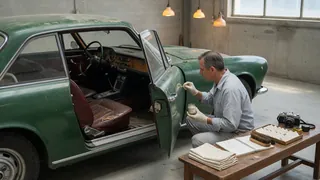
Classic car generator (dynamo) restoration
When charging voltage fades on a vintage automobile, attention often turns to the original classic car generator still mounted in place. Unlike a modern alternator, this direct-current unit depends on large commutator segments, field windings, and serviceable carbon brushes. Classic car generator restoration returns the housing, armature, and pole shoes to sound electrical condition so the vehicle can recharge its battery at period-correct engine speeds. A measured approach separates surface deterioration from internal faults, because weak output can stem from brush bedding, commutator wear, field continuity losses, or incorrect regulator adjustment rather than one failed component.
Essential answer
Classic car generator restoration is the process of cleaning, testing, refinishing, and electrically renewing a period DC generator rather than substituting a modern alternator. A classic car generator produces direct output through a rotating armature and stationary field coils, with current transferred by brushes riding the commutator. Restoration therefore addresses both visible condition and hidden electrical function. The practical qualification is that the generator must be judged as a system: a smooth armature and bright commutator matter little if the field circuit is open or a drive-belt pulley is worn beyond proper alignment and tension.
On many older vehicles, the original unit can be rebuilt successfully with basic hand tools and careful inspection, provided the windings are not shorted or grounded. Weak charging is often first visible as a low ammeter reading or a battery that discharges after repeated short drives. However, the same symptom can appear when the voltage regulator points are pitted or the battery cable connections are corroded. For that reason, direct testing with a voltmeter and an understanding of brush and commutator condition should guide the restoration decision before replacing any part.